Thursday, 2 May 2019

What to expect from Google I/O 2019

Developer season has begun! Next week, Google will be putting on a big party at the pointy outdoor amphitheater in Mountain View. It’s shaping up to be a biggie, too, if this week’s Google earnings call was any indication. Sundar Pichai teased out a number of upcoming offerings from the company that we can expect to see on full display at the show.

From the looks of it, there’s going to be a LOT of news coming hot and heavy out of the South Bay, from new Android and Assistant features, to some rare hardware debuts. Here’s a quick rundown of what we’re expecting from the big show.

More Q
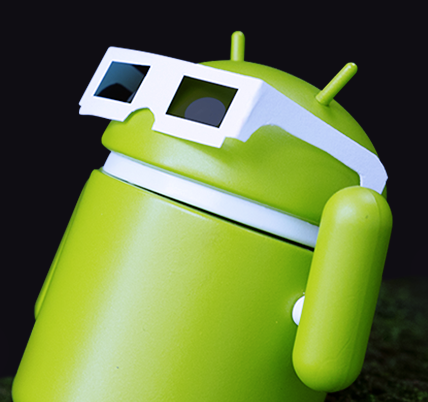
Quiche? Quindim? I had to look up the latter — it’s a “popular Brazilian baked dessert, made chiefly from sugar, egg yolks, and ground coconut” according to Wikipedia. Basically Brazilian custard.

We’re probably not getting a name either way at the event, of course. We will, however, get our best look yet and Pie’s successor. As ever, the latest version of Android will take center stage at I/O. With an expected arrival date of this summer, we’ve already seen some key pieces of Android 10 courtesy of a couple of betas.

So far, the keys are improvements to privacy/permissions and multi-tasking through Bubbles. Expect a lot more here. Rumors include pressure sensitive touch features and across the board dark mode.

Unfolding foldables
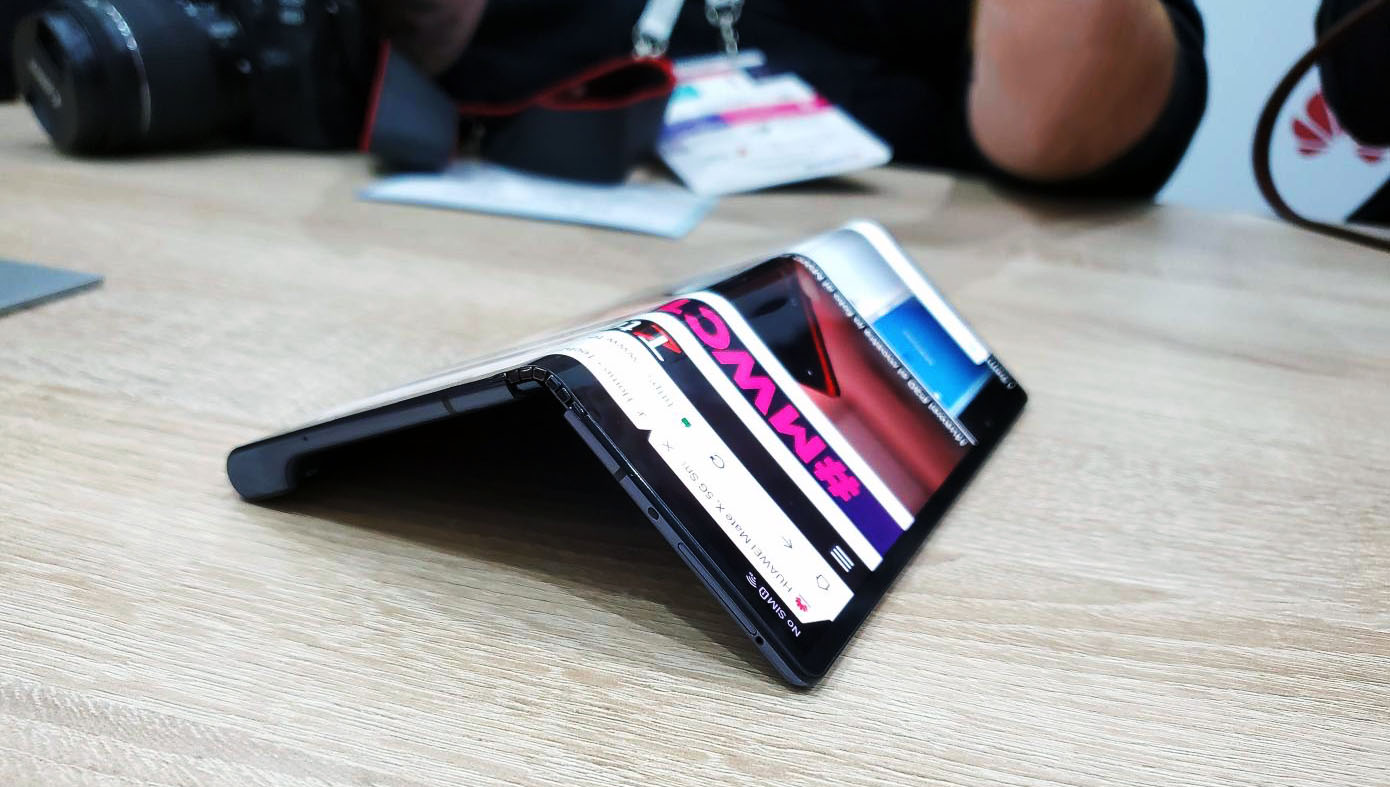
It’s admittedly been a tough couple of weeks for the ascendent form fact, thanks almost exclusively to malfunctioning Galaxy Fold units. On this week’s call, however, the company reiterated that it’s still bullish on the tech. And it kind of has to be. Google’s devoted a lot of mind share to making Android more foldable friendly, in hopes of jumpstarting a stagnant smartphone industry.

And while the Fold has been put on hiatus, we do expect a release date soon, along with Huawei’s Mate X and upcoming models from Motorola, Xiaomi, TCL and more. Expect to see the form factor positioned as the future of Android interaction.

The budget Pixel
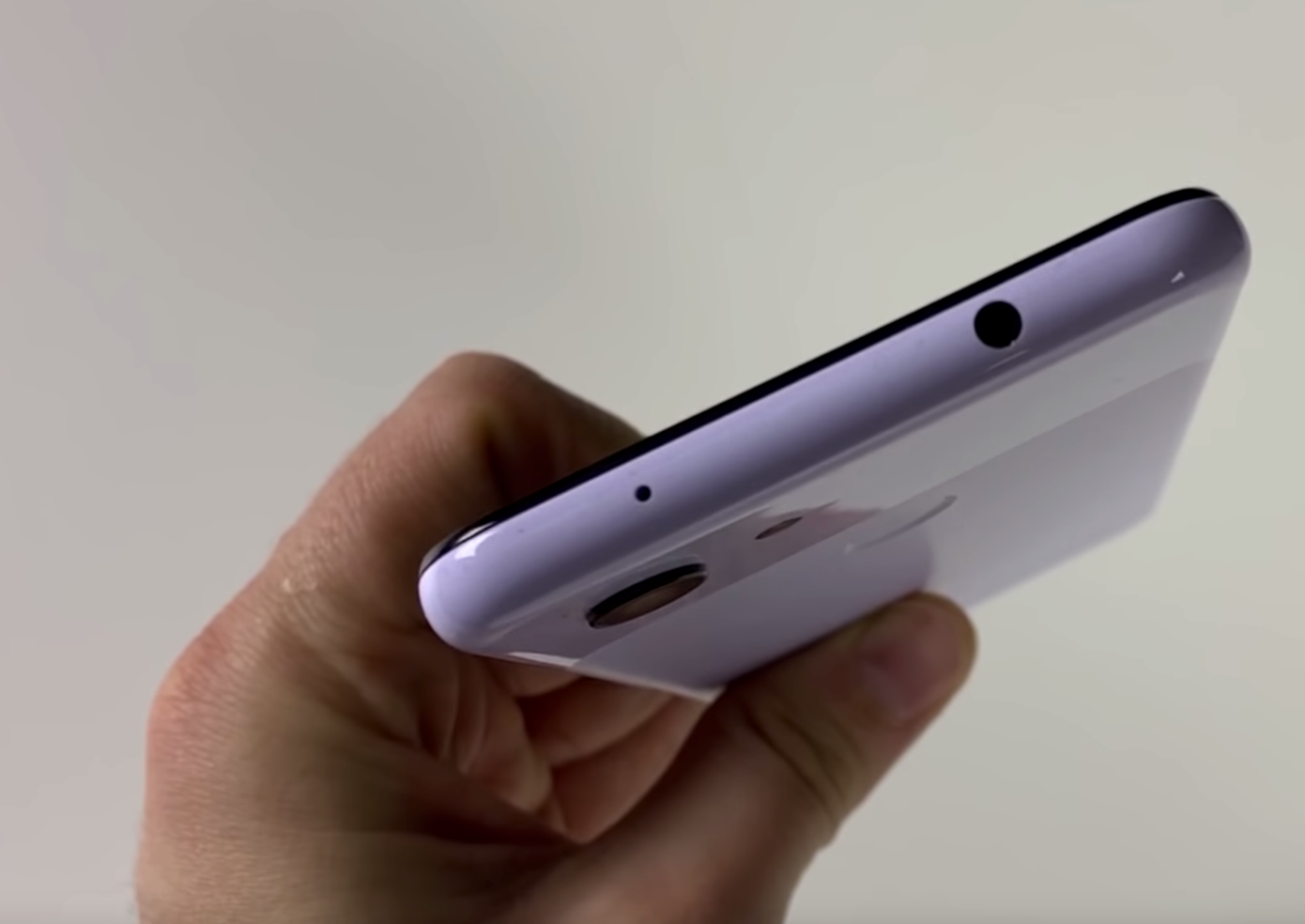
Like other developer-focused shows, I/O isn’t really much of a consumer hardware event. That’s likely to change this year, however. In an earnings call this week, Sundar Pichai all but confirmed the long rumored arrival of the Pixel 3a. Initially floated as the Pixel Lite, the budget take on the company’s flagship is designed to curb stagnate smartphone sales by offering some flagship features at a lower price point.

Rumors so far have the product somewhere in the neighborhood of $500 and include, among other things, the return of the headphone jack — an acknowledgment that bluetooth headphones are still cost prohibitive. Equally interesting, this would make a push to roughly a six month release cycle for Pixel products, assuming the 4 arrives around an October timeframe.

Google’s made it clear that the Pixel line is about more than just showing off the latest version of Android, and a massive investment in HTC’s hardware team that includes a new Taipei campus certainly demonstrate that it’s not screwing around here.

Gaming
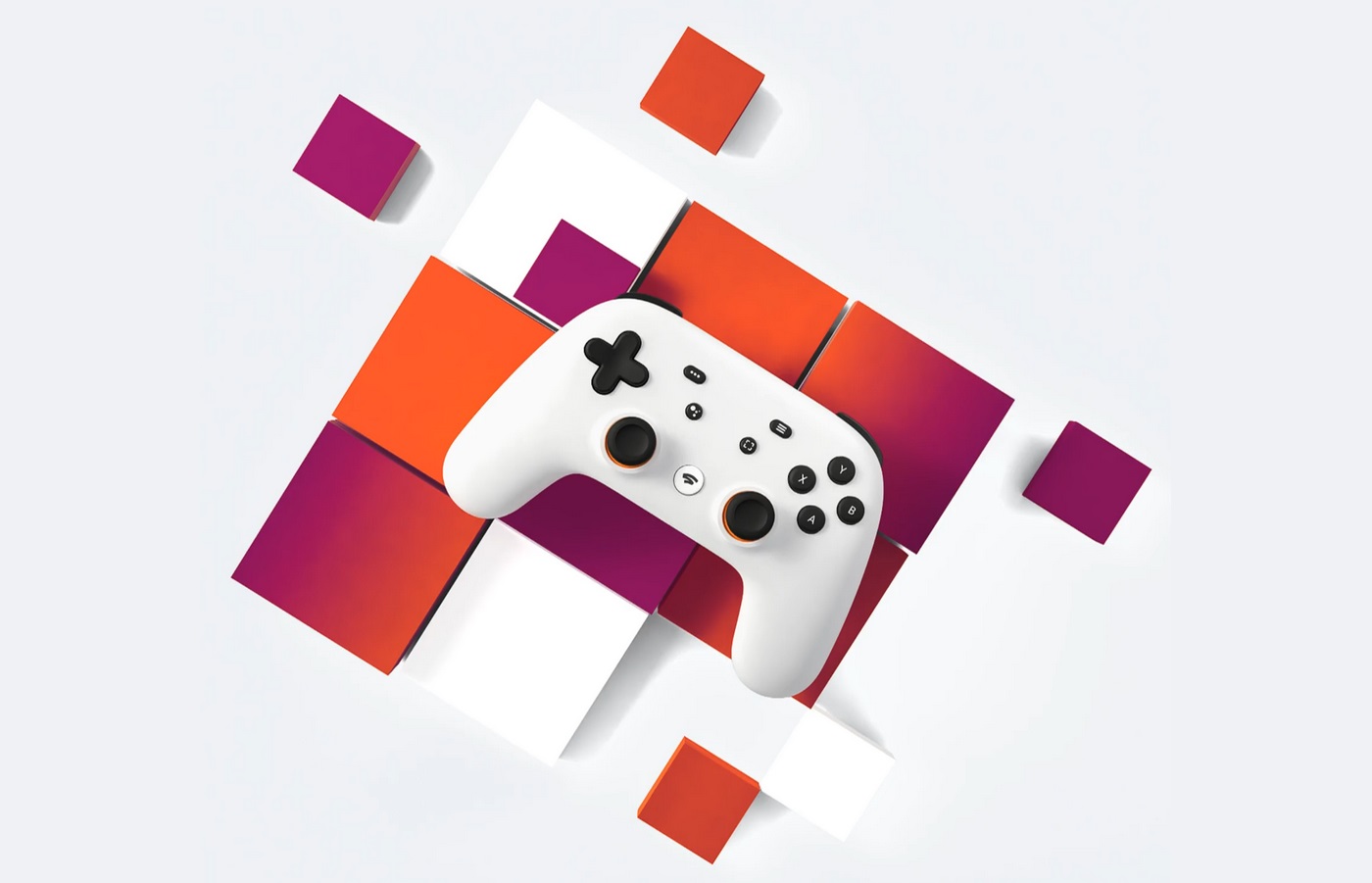
Stadia had its moment back at GDC back in March. The company is harnessing its live-streaming technology to finally help gamers realize the promise going hardware agnostic. Stadia was far and away the buzziest announcement out of the gaming show, but Google held back a lot of detail, only to have Apple reveal its own gaming strategy a couple of weeks later.

Pichai talked the service up during Alphabet’s earnings call, seemingly priming the pump for some stage time at I/O next week.

Smart Home
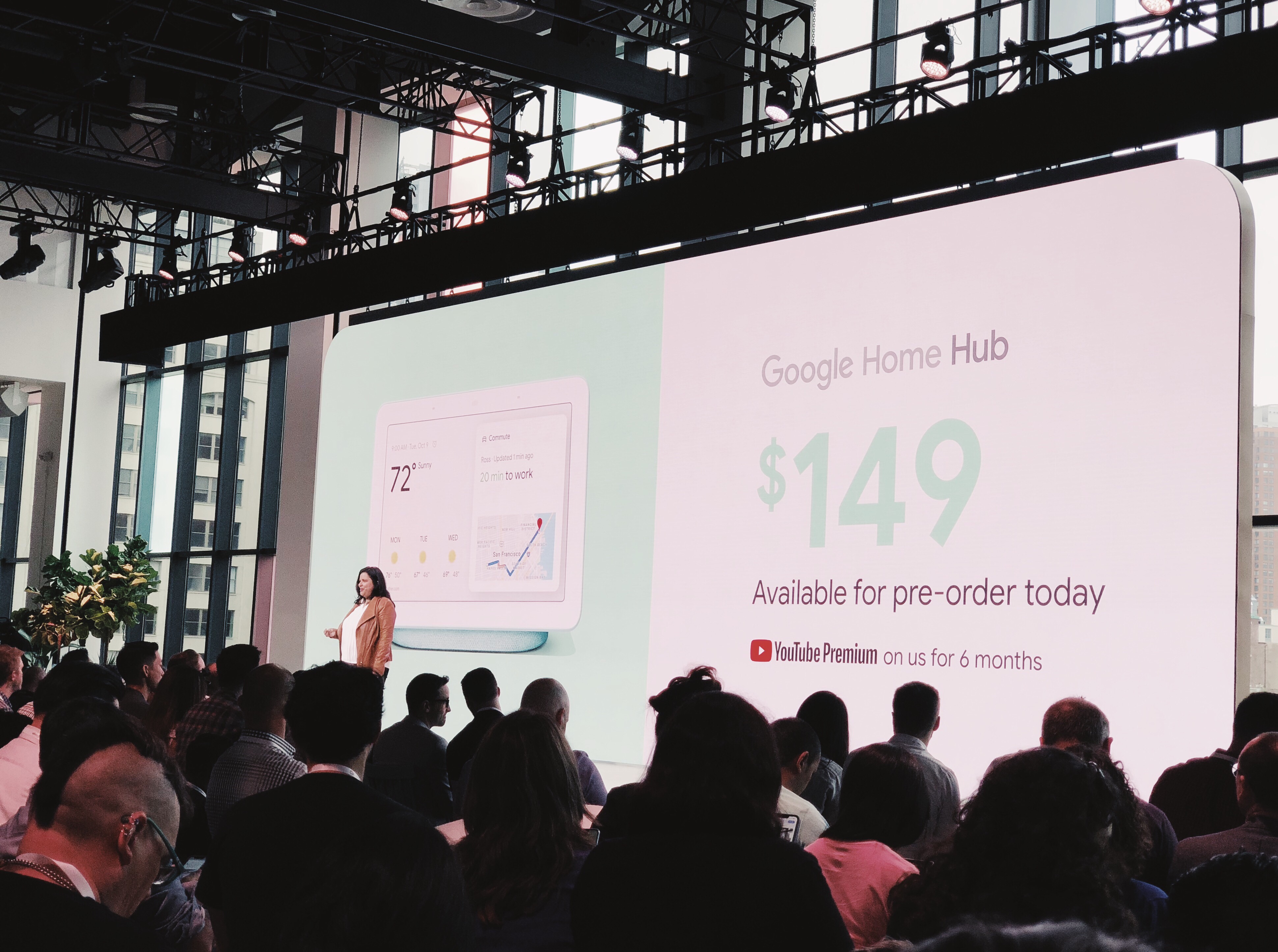
Google Hardware Event 2018

Growing its smartphone business has been a struggle, but Google’s been firing on all cylinders on the home front. Assistant is a stronger offering than Alexa, and hardware like the Home Mini and Hub have been selling briskly. We’ll undoubtedly see a lot more tricks out of Assistant this time around, including a bit focus on AI and Machine Learning smarts.

In addition to a new Pixel, we may also be getting a smart home piece of hardware from Google in the form of the Nest Hub Max. As the name implies, the device is a bigger take on the smart screen — 10 inches, according to rumors — with a focus on serving as a centralized smart home panel. The device will no doubt be primed to work well with other Google Home and Nest offerings, at a higher price point than Hub.

Etc.

Expect more on the ARCore front at the show. The oft-neglected Wear OS, which just got a nice update this week, could get some love as well. Ditto for Android Automotive. ChromeOS, will be getting some face time, as well, though I’d be surprised to see much in the way of hardware from any of the above.

Whatever comes, we’ll be on-site at Mountain View next week, bringing it to you live.


from Android – TechCrunch https://tcrn.ch/2vHk8xn
via IFTTT

Wednesday, 1 May 2019

Google opens Android Automotive OS to Spotify, other media app developers

Google is opening its Android Automotive operating system up to third-party developers to bring music and other entertainment apps into vehicle infotainment systems, starting with the Polestar 2, an all-electric vehicle developed by Volvo’s standalone electric performance brand.

Google announced Wednesday that media app developers will be able to create new entertainment experiences for Android Automotive OS and the Polestar 2, starting at Google I/O 2019, the annual developer’s conference that kicks off May 7.

Google is starting with media app developers such as Spotify and other entertainment sites. However, the company plans to expand into other categories of apps as well such as navigation, Haris Ramic, Google’s product lead for Android Automotive told TechCrunch in a recent interview.

Android Automotive OS shouldn’t be confused with Android Auto, which is a secondary interface that lies on top of an operating system. Android Automotive OS is modeled after its open-source mobile operating system that runs on Linux. But instead of running smartphones and tablets, Google modified it so it could be used in cars.

Polestar  introduced in February its first all-electric vehicle, a five-door fastback called the Polestar 2, ahead of the Geneva Motor Show. The Polestar 2’s infotainment system is powered by Android Automotive OS and, as a result, brings into the car embedded Google services such as Google Assistant, Google Maps and the Google Play Store.

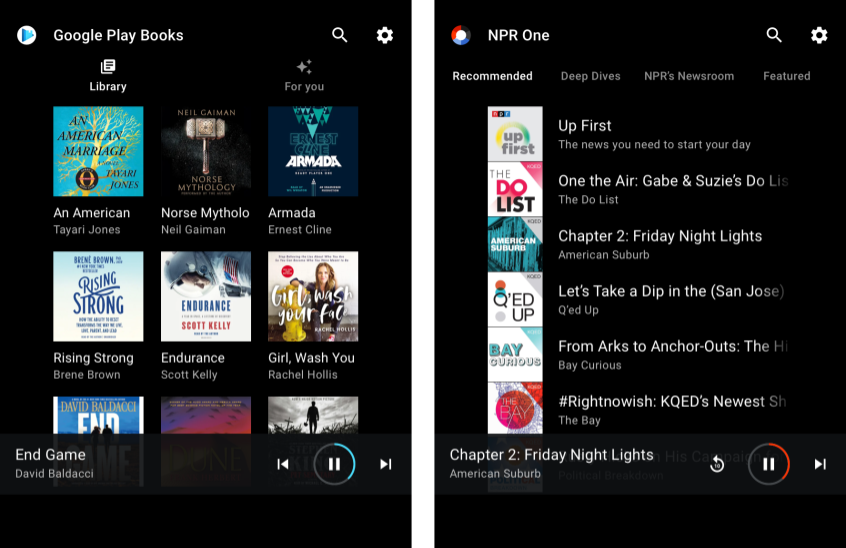
Ramic noted that the system shown in Geneva has improved and now has updated Google Maps and a media center that allows third-party applications like Spotify, NPR and YouTube Music to function more seamlessly in the vehicles. These applications will be ready when the vehicle goes into volume production, which is slated to begin in early 2020 at its Chengdu, China factory. The company is initially targeting sales in China, the U.S., Canada and a handful of European countries that include Belgium, Germany, the Netherlands, Norway, Sweden and the U.K.

Polestar isn’t the only company with plans to incorporate a version of its Android operating system into its car infotainment systems. Volvo announced in 2017 that it would use the Android OS and a year later said it would embed voice-controlled Google Assistant, Google  Play Store, Google Maps and other Google services into its next-generation Sensus infotainment system. lvo.

Fiat Chrysler Automobiles announced Tuesday that it will use tech from Harman and Google to build out its connected-car services. Google’s Android Automotive OS will power FCA’s next version of its Uconnect infotainment system, while Samsung-owned Harman’s Ignite cloud platform will handle the out-of-car services.

Renault-Nissan-Mitsubishi Alliance has also publicly announced plans for Android Automotive OS as well as other automakers that Google can’t reveal at this time, Ramic said.

“Interest is very high,” Ramic said, noting that a growing number of companies have come to see the value in leveraging Google’s expertise.

That’s a shift from the traditionally protective stance of automakers intent of keeping Google out of the car. But as the divide between the capabilities of smartphones and in-car infotainment systems grows, automakers have been more willing to turn to Google.


from Android – TechCrunch https://tcrn.ch/2LqIshI
via IFTTT

Tesla sued in wrongful death lawsuit that alleges Autopilot caused crash

The family of Walter Huang, an Apple engineer who died after his Tesla Model X with Autopilot engaged crashed into a highway median, is suing Tesla. The State of California Department of Transportation is also named in the lawsuit.

The wrongful death lawsuit, filed in in California Superior Court, County of Santa Clara, alleges that errors by Tesla’s Autopilot driver assistance system caused the crash that killed Huang on March 23, 2018. Huang, who was 38, died when his 2017 Tesla Model X hit a highway barrier on Highway 101 in Mountain View, California.

The lawsuit alleges that Tesla’s Autopilot driver assistance system misread lane lines, failed to detect the concrete media, failed to brake and instead accelerated into the median.

A Tesla spokesperson declined to comment on the lawsuit.

“Mrs. Huang lost her husband, and two children lost their father because Tesla is beta testing its Autopilot software on live drivers,” B. Mark  Fong, a partner at law firm Minami Tamaki said in a statement.

Other allegations against Tesla include product liability, defective product design, failure to warn, breach of warranty, intentional and negligent misrepresentation and false advertising. California DOT is also named in the lawsuit because the concrete highway median that Huang’s vehicle struck was missing its crash attenuator guard, according to the filing. Caltrans failed to replace the guard after an earlier crash there, the lawsuit alleges.

The lawsuit aims to “ensure the technology behind semi-autonomous cars is safe before it is released on the roads, and its risks are not withheld or misrepresented to the public,” said Doris Cheng, a partner at Walkup, Melodia, Kelly & Schoenberger, who is also representing the family.

In the days following the crash, Tesla released two blog posts and ended up scuffling with the National Transportation Safety Board, which had sent investigators to the crash scene.

Tesla’s March 30 blog post acknowledged Autopilot had been engaged at the time of the crash. Tesla said the driver had received several visual and one audible hands-on warning earlier in the drive and the driver’s hands were not detected on the wheel for six seconds prior to the collision.

Those comments prompted a response from the NTSB, which indicated it was “unhappy with the release of investigative information by Tesla.” The NTSB requires companies who are a party to an agency accident investigation to not release details about the incident to the public without approval.

Tesla CEO Elon Musk would soon chime in via Twitter to express his own disappointment and criticism of the NTSB.

Three weeks after the crash, Tesla issued a statement placing the blame on Huang and denying moral or legal liability for the crash.

“According to the family, Mr. Huang was well aware that Autopilot was not perfect and, specifically, he told them it was not reliable in that exact location, yet he nonetheless engaged Autopilot at that location. The crash happened on a clear day with several hundred feet of visibility ahead, which means that the only way for this accident to have occurred is if Mr. Huang was not paying attention to the road, despite the car providing multiple warnings to do so.”

The relationship between NTSB and Tesla would disintegrate further following the statement. Tesla said it withdrew from its party agreement with the NTSB. Within a day, NTSB claimed that it had removed Tesla as a party to its crash investigation.

A preliminary report from the NTSB didn’t make any conclusions of what caused the crash. But it did find that the vehicle accelerated from 62 mph to 70.8 mph in the final three seconds before impact and moved left as it approached the paved gore area dividing the main travel lane of 101 and Highway 85 exit ramp.

The report also found that in the 18 minutes and 55 seconds prior to impact, the Tesla provided two visual alerts and one auditory alert for the driver to place his hands on the steering wheel. The alerts were made more than 15 minutes before the crash.

Huang’s hands were detected on the steering wheel only 34 seconds during the last minute before impact. No pre-crash braking or evasive steering movement was detected, the report said.

The case is Sz Hua Huang et al v. Tesla Inc., The State of California, no. 19CV346663.


from Apple – TechCrunch https://tcrn.ch/2XZVGDq

The Daily Crunch: Apple stock jumps after earnings

The Daily Crunch is TechCrunch’s roundup of our biggest and most important stories. If you’d like to get this delivered to your inbox every day at around 9am Pacific, you can subscribe here.

1. Apple’s stock jumps 5 percent after beating expectations

Apple released earnings for its fiscal second quarter yesterday, reporting revenue of $58 billion, a decline of 5% from the year-ago quarter. It also reported quarterly earnings per diluted share of $2.46, down 10%.

The market seems to approve, with shares jumping after the numbers were released.

2. Facebook Dating opens to friends with Secret Crush

Facebook announced at its F8 conference that Dating is opening in 14 more countries, bringing the total to 19. It will launch in the U.S. before the end of the year.

3. Eric Schmidt and Diane Greene are leaving Alphabet’s board of directors

Along with the departures, Alphabet is also announcing the appointment of Robin L. Washington to its board.

LONDON, ENGLAND – MAY 01: Wikileaks Founder Julian Assange leaves Southwark Crown Court in a security van after being sentenced on May 1, 2019 in London, England. (Photo by Jack Taylor/Getty Images)

4. Julian Assange jailed for 50 weeks for breaching UK bail conditions

WikiLeaks founder Julian Assange was jailed to 50 weeks for violating his U.K. bail conditions in 2012 at a sentencing hearing at Southwark Crown Court.

5. Hulu tops 28 million customers, unveils new shows and a ‘binge watch’ ad experience

The streaming service also unveiled its new slate of shows and original programming, alongside other content deals and a new “binge advertising experience” that’s designed to be less intrusive.

6. A16z ushers in new fund strategy with $2.75B

Axios reported that Andreessen Horowitz, the storied venture capital firm with investments in Airbnb, BuzzFeed and Coinbase, has closed on $2.75 billion for two new funds.

7. YouTube sets a goal of having half of trending videos coming from its own site

YouTube wants to have half of the featured videos in its trending tab come from streams originating on the company’s own site going forward, according to the latest quarterly letter from chief executive Susan Wojcicki.


from Apple – TechCrunch https://tcrn.ch/2J6Lh4x

iPhone hard hit as global smartphone shipments continue nosedive

The smartphone industry is in rough shape. Sundar Pichai used the word “headwinds” to discuss the company’s difficulties moving Pixel 3 units, but Canalys’ latest report is far more blunt, describing the situation as a “freefall.”

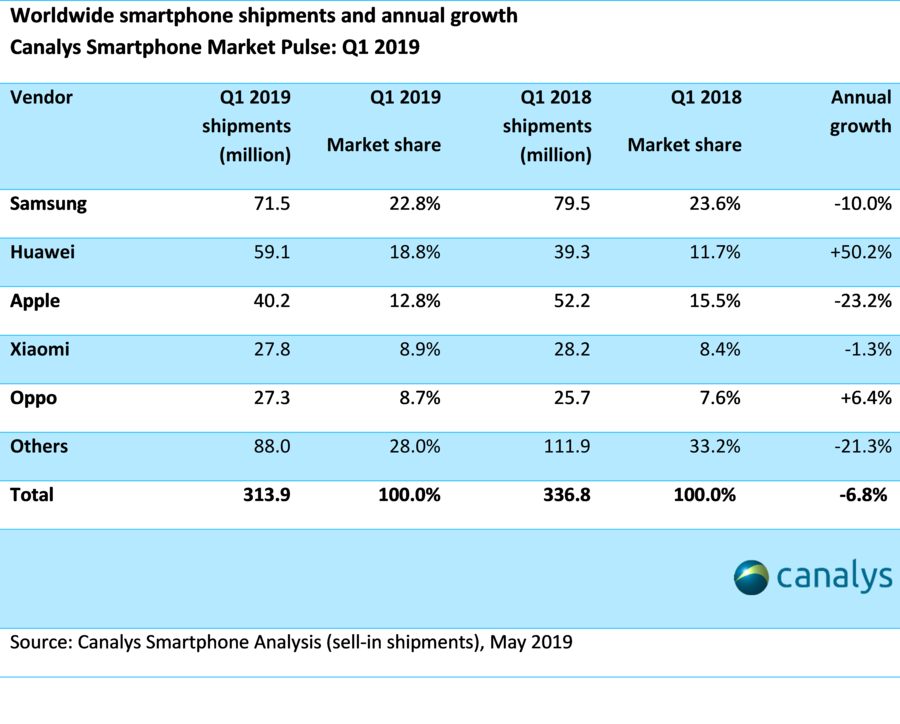
Things are pretty ugly in the Q1 report, as smartphone shipments declined for the sixth quarter in a row. The combined global units hit 313.9 million, marking their lowest point in almost half a decade, according to the firm.

Of the big players, Apple seems to be particularly hard hit, falling 23.2% year on year. Once again, China played a big role here, but as usual, the full story is much more complex.

“This is the largest single-quarter decline in the history of the iPhone,” said analyst Ben Stanton in a release tied to the news. “Apple’s second largest market, China, again proved tough. But this was far from its only problem. Shipments fell in the US as trade-in initiatives failed to offset longer consumer refresh cycles. In markets such as Europe, Apple is increasingly using discounts to prop up demand, but this is causing additional complexity for distributors, and blurring the value proposition of these ‘premium’ devices in the eyes of consumers.”

A lot to unpack there, but what we’re looking at are some larger issues within the industry, including global economic issues and slowed upgrade cycles for users. The XS was also notably much less dramatic of an upgrade than its predecessor. Stanton did add that the iPhone, “show[ed] signs of recovery towards the back-end of the quarter,” which is promising for Q2.

It also remains to be seen what this year will hold in terms of iPhone upgrades, though most signs point to 2020 as the year the company makes the jump to 5G. Tim Cook was noncommittal on the topic during the company’s earnings call last night, instead pointing to positive numbers on the iPad side and, of course, Apple’s continued push into services.

Analysts are somewhat bullish about the potential of innovations like 5G and even foldables in shaking up the stagnant market, but big players like Apple are clearly hedging their bets, should the free-falling headwinds continue.

Huawei, meanwhile, continues to be a bright spot, with a 50.2% year over year growth and an 18.8% global market share, according to the firm. That growth could be hampered, however, by increased competition from Samsung and fellow Chinese handset companies like Xiaomi and Oppo.


from Apple – TechCrunch https://tcrn.ch/2GNkVSl

Google’s Wear OS gets tiles

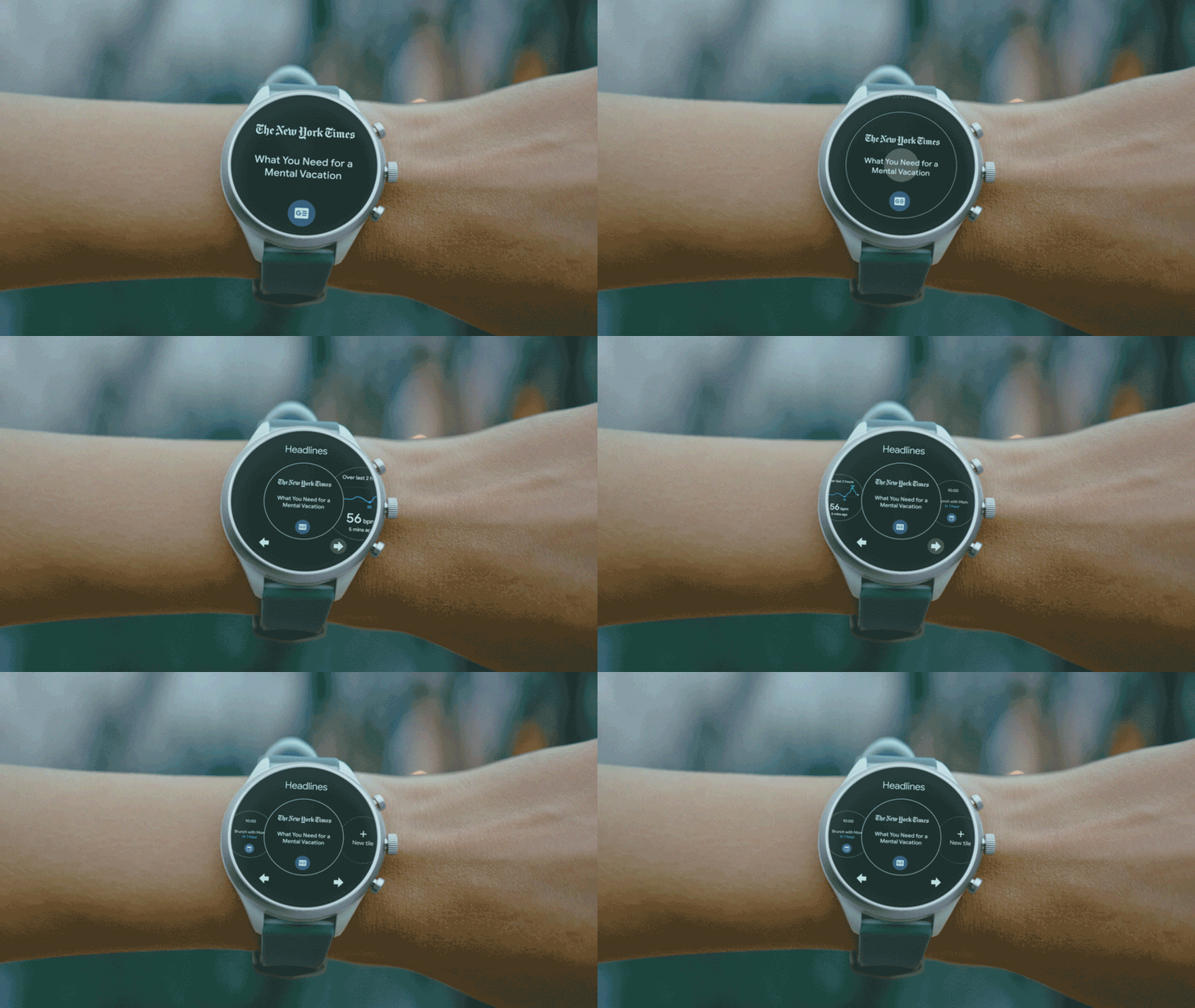
Google announced an interesting new Wear OS feature today that makes a number of highly used features more easily available. Google calls this feature ’tiles’ and it makes both information like the local weather forecast, headlines, your next calendar event, goals and your heart rate, as well as tools like the Wear OS built-in timer available with just a few swipes to the left.

In the most recent version of Wear OS, tiles also existed in some form, but the only available tile was Google Fit, which opened with a single swipe. Now, you’ll be able to swipe further and bring up these new tiles, too.

There is a default order to these tiles, but you’ll be able to customize them, too. All you have to do is touch and hold a given tile and then drag it to the left or right. Over time, Google will also add more tiles to this list.

The new tiles will start rolling out to all Wear OS smartwatches over the course of the next months. Some features may not be available on all devices, though (if your watch doesn’t have a heart rate monitor, you obviously won’t see that tile, for example).

Overall, this looks like a smart update to the Wear OS platform, which now features four clearly delineated quadrants. Swiping down brings up settings, swiping up brings up your notifications, swiping right brings up the Google Assistant and swiping left shows tiles. Using the left swipe only for Google Fit always felt oddly limited, but with this update, that decision makes more sense.


from Android – TechCrunch https://tcrn.ch/2LheTz3
via IFTTT

Tuesday, 30 April 2019

India’s Times Internet isn’t ceding ground to US rivals Facebook and Google

The aggressive push by Silicon Valley companies and Chinese firms to win India, one of the last great growth markets, has decimated many local businesses in recent years. With each passing day, Amazon is closing in on Walmart-owned Flipkart’s lead on the e-commerce space. Uber is fighting with Ola for the tentpole position of the ride-hailing market; and Google and Facebook dominate the ads business, to name a few. But a handful of companies in India have not only survived the growing competition, but they have built businesses that are positively thriving.

Media conglomerate Times Internet, one such company, says that its properties now reach 110 million users each day and 450 million users each month. To put this in context: Facebook and Google have about 300 million monthly active users in India. Facebook, which is mired in controversy over the spread of misinformation on WhatsApp in India (and other regions), has not revealed its growth in the nation in last two years. But in a marketing pitch, the juggernaut says its family of apps (marquee Facebook, WhatsApp, and Instagram) reach 350 million users in the nation each month.

In a rare industry move, Satyan Gajwani, vice chairman of Times Internet, shared an overview of the conglomerate’s business on Tuesday, revealing the ever growing tentacles of its ambitions.

If the numbers are so huge, why self-publish? Gajwani declined to comment but his company is in a unique situation. For all its scale, Times Internet remains one of the least talked about conglomerates of its size in the country. Most news organizations in India compete with its media outlets, which may explain why it is under-reported in the press.

The ever-growing portfolio of Times Internet companies

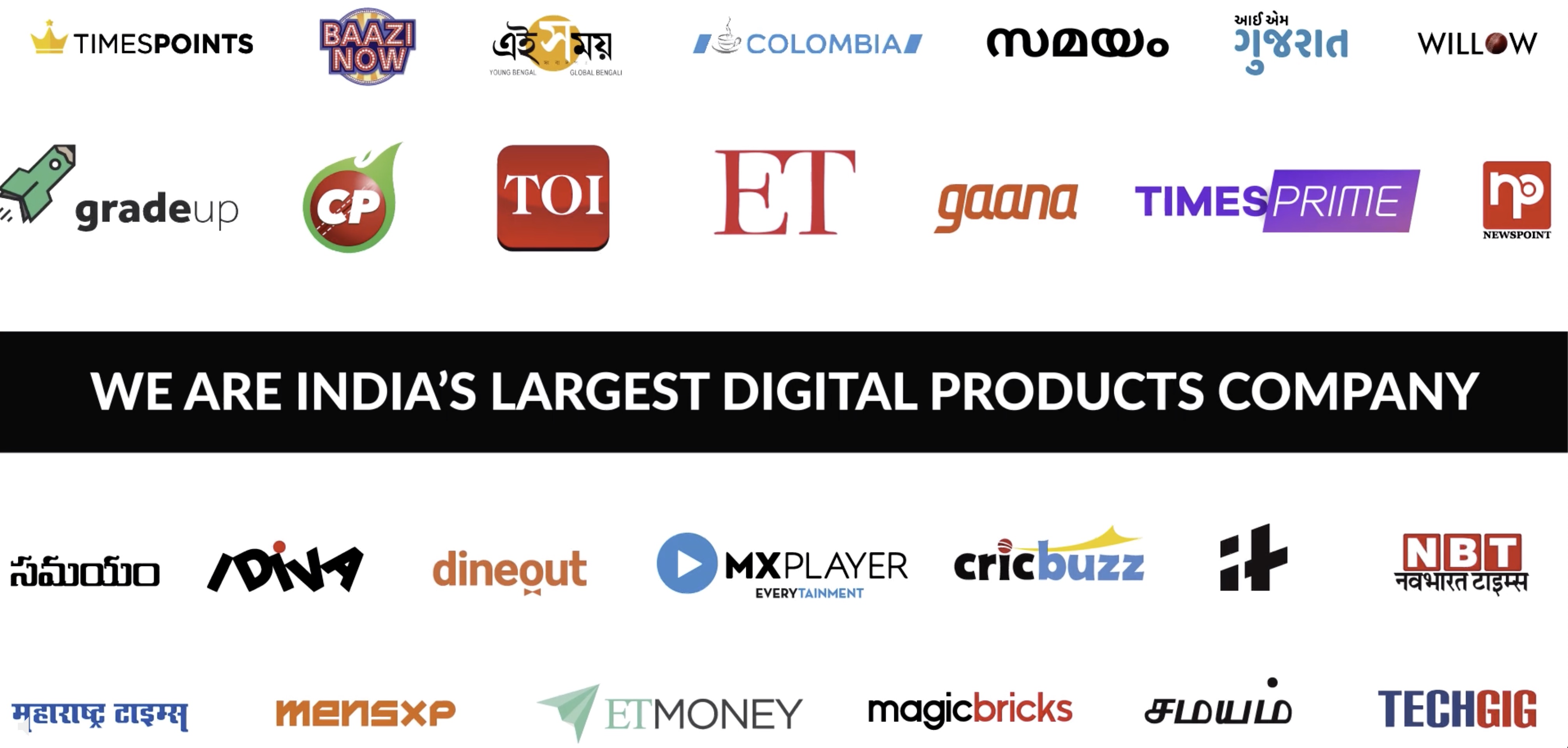
The subsidiary of 181-year-old Bennett Coleman and Company Limited (popularly known as Times Group) operates more than three dozen properties, including newspaper Times of India, online outlet Indiatimes, advertisement business Colombia, venture arm Tventures, and streaming services Gaana and MX Player. And nearly all of these properties are growing, Gajwani said.

For instance, Times Internet’s news outlets have amassed 265 million monthly active users. The Times of India, the country’s most read newspaper and news website, alone has 200 million monthly active users, up by 44% since last year. Times Internet’s regional digital periodicals such as NewsPoint, Navbharat Times, Maharashtra Times, Vijay Karnataka now have 122 monthly active users, he said.

Music streaming service Gaana, which raised $115 million from Tencent and others last year, reached 100 monthly active users in March this year, the service announced last week. MX Player, a video playback app that doubles as a streaming service that Times Internet acquired for some $140 million last year, is one of the most popular Android apps in emerging markets.

During the first month of ongoing IPL cricket tournament, one of the hottest events in India, 118 million users tuned into Times Internet’s Cricbuzz, a news and entertainment service dedicated to sports. As the ecosystem of mobile gaming begins to gain major traction in India, Times Internet says it is building a portfolio of apps in this space, too.

Its lifestyle properties such as MenXP, iDiva, and Whats Hot have 40 million monthly active users and its videos clock more than 200 million views each month. These properties are exploring an additional revenue channel by selling products directly to customers, Gajwani told TechCrunch in an interview.

Times Internet vice chairman Satyan Gajwani

Moving beyond ads

Chasing that avenue illustrates Times Internet’s growing push to grow its business beyond ads. Most of Times Internet’s properties are built on top of ads and don’t cost users anything for access. Its own advertising business, called Colombia, now supplements some advertisement on its network and is used by more than a dozen outside brands including Ola, ABP News, and Hotstar.

But online advertising still can’t compete with those of TV and print in India, Satish Meena, an analyst with research firm Forrester told TechCrunch. So in recent years, Times Internet has announced a number of subscription services across many of its properties.

“Especially for premium publishers, an ads-only business model is not likely to last or sustain in the long run,” Gajwani said. Last year, Times Internet announced Times Prime, a subscription bundle that includes access to premium version of Gaana, an ad-free experience on Times of India, and discounts on a number of third-party services such as food delivery Swiggy, retailer BigBasket, and theatre chain PVR Cinemas. Gajwani said Times Internet has hit a million customers across its subscription services.

Part of Times Internet’s push to expand its revenue channels is its growing focus on Tventures, its VC fund that made early investments in a number of startups including edtech startup Byju’s and logistics startup Delhivery, two unicorns. It has also invested in ride-hailing service Shuttl, and cricket fantasy app MPL among others.

Gajwani said Tventures looks at “use cases that can benefit from its growing network.” And that’s one of the big advantages of Times Internet’s scale. The properties they own enjoy great advertisement benefits across its sprawling network. “There are very few companies — with exception of Google and Facebook — that have our level of scale,” Gajwani said.

Times Internet, which employs over 5,000 people, also operates Times Bridge, an investment firm that ties with international brands to help them launch in India. Some of its strategic partners include Uber, Airbnb, and Coursera. It also partnered with a number of news outlets including Business Insider, TechRadar, Huffington Post (which, like TechCrunch, is owned by Verizon Media Group), AdAge, PCMag, and Gizmodo Media properties Lifehacker and Gizmodo to launch them in India.

But it isn’t all success, there have been less successful ventures particularly in the media segment.

The Indian versions of Lifehacker, Gizmodo, TechRadar, and PCMag failed to attract significant audiences in the nation and have already closed shops. Huffington Post ended its partnership with Times Internet in 2017 and it now wholly controls Huffington Post India.

Gajwani admitted that Times Internet realized working with some niche publishers isn’t so sustainable. “We have some partnerships that we maintain that are doing well such as Business Insider,” he added. Today, Times Internet is no longer primarily looking at publishers for future partnerships, and instead focusing on “platforms and technologies.”

A couple of hiccups aside, the biggest challenge for Times Internet going forward is generating sufficient revenue from ads and convincing enough users to become paying customers. Times Internet generated $202 million in fiscal year 2018 at a loss of $23 million, according to regulatory filings. In an interview last week, Gaana CEO Prashan Agarwal said his music streaming service, which dominates the market but is not profitable, will introduce a number of premium plans across a wide range of price tiers to attract users.

Ganwani said he also hopes to build Colombia into one of the biggest ad networks in India and tap 20 million paying subscribers by 2023. He said some properties within Times Network could raise additional cash from outside investors in the coming future.  These are ambitious goals, but Times Internet is one of the few firms in India that realistically has a shot at co-existing with dominant overseas tech platforms.


from Android – TechCrunch https://tcrn.ch/2ITzU0q
via IFTTT