Tuesday, 30 July 2019

Google’s new version of Android Auto focuses on Assistant

Google is starting to roll out an updated version of its in-car platform Android Auto that aims to make it easier and safer for drivers to use.

The version, which was first revealed during Google I/O 2019, has a dark theme, new fonts and color accents, more opportunities to communicate with Google’s virtual assistant and the ability to fit wider display screens that are becoming more common in vehicles.

Android Auto, which launched in 2015, is not an operating system. It’s a secondary interface — or HMI layer — that sits on top of an operating system and brings the look and feel of a smartphone to the vehicle’s central screen. Rival Apple introduced its own in-car platform, Apple CarPlay, that same year.

Automakers, once hesitant to integrate Android Auto or Apple CarPlay into vehicles have come around. Today, Android Auto is available in more than 500 car models from 50 different brands, according to Android Auto product manager Rod Lopez.

Car owners with Android Auto support will start to see the new design over the next few weeks. However, updates will not be made to the standalone version of Android Auto, a smartphone app that gave users access to the platform even if their car wasn’t compatible to Android Auto. Google says it plans to “evolve” the standalone phone app from Android Auto to the Assistant’s new driving mode in the future.

Meanwhile, the in-car version features some important changes, notably more opportunities for drivers to use their voice — and not their hands — to interact with Android Auto. Users will notice the Google Assistant badge on Android Auto, that when tapped will provide information about their calendar, read the weather report or news.
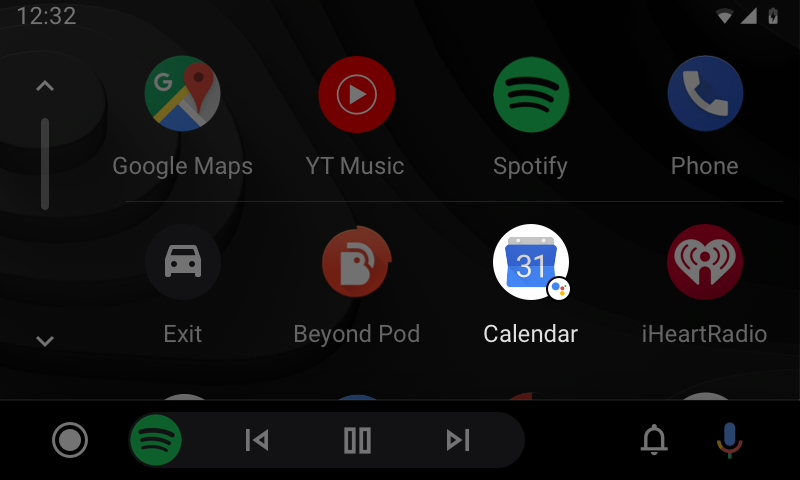
3Android Auto Google Assistant Badge

Other new features include a new app launcher designed to let users access their favorite apps with fewer taps. A button on the bottom left of the screen launches this feature. Once deployed, users will see app icons with the most commonly used ones featured in the top row.

Android Auto has also improved its navigation, which is perhaps the most commonly used feature within the platform. Now, the navigation bar sits at the bottom of the display and allows users to manage multiple apps. This improvement means users won’t miss an exit or street while they’re listening to Spotify.
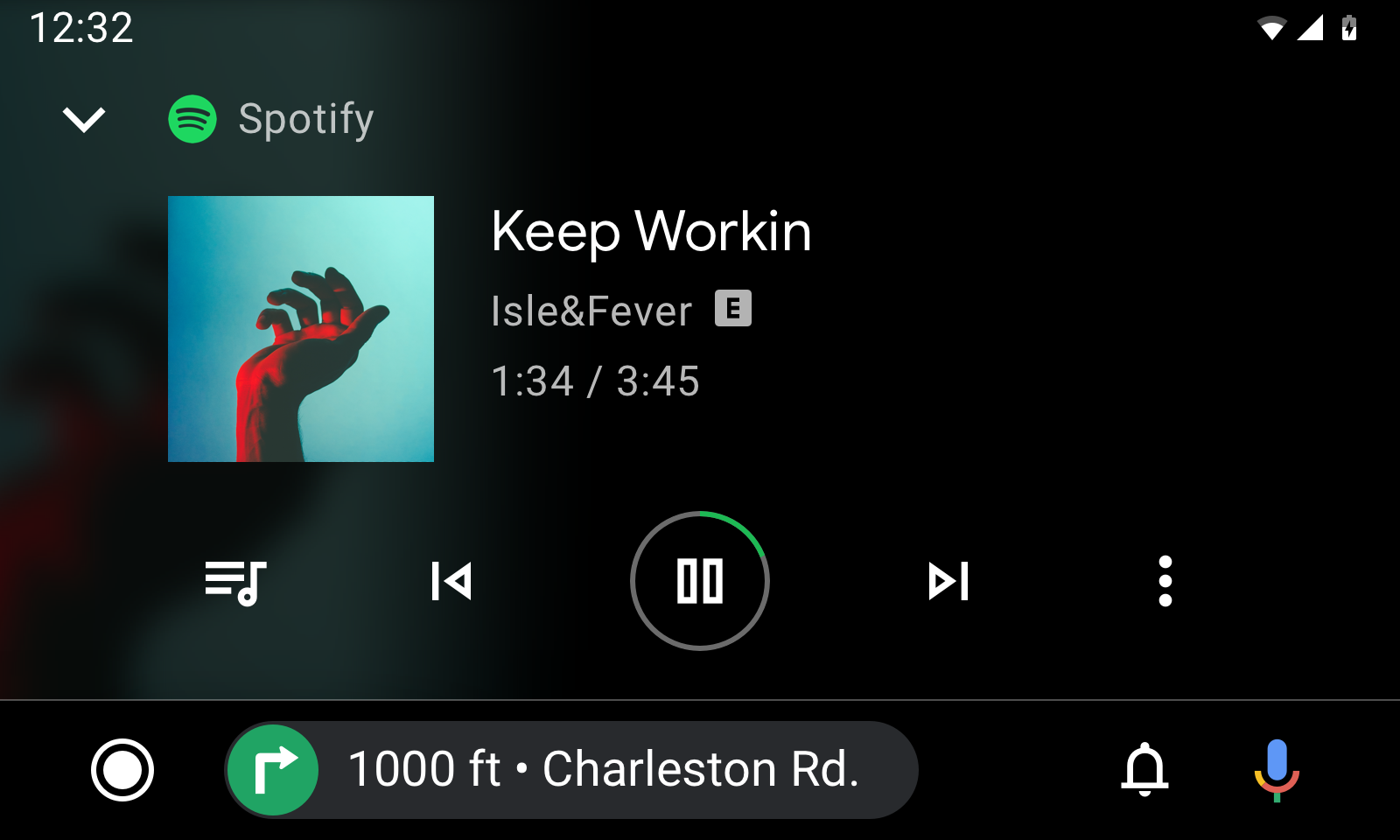
4Android Auto Media

The navigation feature also pops up as soon as the driver connects with Android Auto. If a route is already queued up on a phone, Android Auto will automatically populate the directions.

This latest version also has a new notification button — located on the bottom right corner — houses recent calls, messages and alerts. Drivers can tap the mic button or say ” “Hey Google” to have the Google Assistant help make calls, send messages and read notifications.

Google has also developed an operating system called Android Automotive OS that’s modeled after its open-source mobile operating system that runs on Linux. Instead of running smartphones and tablets, Google modified it so it could be used in cars. Polestar, Volvo’s standalone performance electric car brand, is going to produce a new vehicle, the Polestar  2, that has an infotainment system powered by Android Automotive OS.


from Android – TechCrunch https://ift.tt/3330vPq
via IFTTT

Google’s new version of Android Auto focuses on Assistant

Google is starting to roll out an updated version of its in-car platform Android Auto that aims to make it easier and safer for drivers to use.

The version, which was first revealed during Google I/O 2019, has a dark theme, new fonts and color accents, more opportunities to communicate with Google’s virtual assistant and the ability to fit wider display screens that are becoming more common in vehicles.

Android Auto, which launched in 2015, is not an operating system. It’s a secondary interface — or HMI layer — that sits on top of an operating system and brings the look and feel of a smartphone to the vehicle’s central screen. Rival Apple introduced its own in-car platform, Apple CarPlay, that same year.

Automakers, once hesitant to integrate Android Auto or Apple CarPlay into vehicles have come around. Today, Android Auto is available in more than 500 car models from 50 different brands, according to Android Auto product manager Rod Lopez.

Car owners with Android Auto support will start to see the new design over the next few weeks. However, updates will not be made to the standalone version of Android Auto, a smartphone app that gave users access to the platform even if their car wasn’t compatible to Android Auto. Google says it plans to “evolve” the standalone phone app from Android Auto to the Assistant’s new driving mode in the future.

Meanwhile, the in-car version features some important changes, notably more opportunities for drivers to use their voice — and not their hands — to interact with Android Auto. Users will notice the Google Assistant badge on Android Auto, that when tapped will provide information about their calendar, read the weather report or news.

3Android Auto Google Assistant Badge

Other new features include a new app launcher designed to let users access their favorite apps with fewer taps. A button on the bottom left of the screen launches this feature. Once deployed, users will see app icons with the most commonly used ones featured in the top row.

Android Auto has also improved its navigation, which is perhaps the most commonly used feature within the platform. Now, the navigation bar sits at the bottom of the display and allows users to manage multiple apps. This improvement means users won’t miss an exit or street while they’re listening to Spotify.

4Android Auto Media

The navigation feature also pops up as soon as the driver connects with Android Auto. If a route is already queued up on a phone, Android Auto will automatically populate the directions.

This latest version also has a new notification button — located on the bottom right corner — houses recent calls, messages and alerts. Drivers can tap the mic button or say ” “Hey Google” to have the Google Assistant help make calls, send messages and read notifications.

Google has also developed an operating system called Android Automotive OS that’s modeled after its open-source mobile operating system that runs on Linux. Instead of running smartphones and tablets, Google modified it so it could be used in cars. Polestar, Volvo’s standalone performance electric car brand, is going to produce a new vehicle, the Polestar  2, that has an infotainment system powered by Android Automotive OS.


from Apple – TechCrunch https://ift.tt/3330vPq

Wall St analyst Laura Martin on the fate of Netflix, breaking up Google, EU regulation, and a decade of more money for Hollywood

The rise of streaming video platforms like Netflix and Amazon Prime has upended traditional power balances in Hollywood and is reorganizing the way we consume films and TV series as consumers.

Following her talk at the recent Banff World Media Festival in Canada, I interviewed Laura Martin, the senior analyst covering entertainment and internet stocks at leading investment bank Needham & Company, to sort out how the pieces are moving in this chess game between content creators, streaming services, consumers, and government regulators.

We discuss why Netflix is still at risk of a downfall, the effect of EU content quotas, why Martin thinks regulators should break up Google, and why video streaming and game streaming are likely to merge into the same subscription products.

Here is the transcript of our discussion, edited for length and clarity:


Eric Peckham: There’s an optimistic case that the rise of online video streaming is a win for both consumers and content creators because it creates a vast landscape of content platforms. Onstage in Banff, you argued that the number of content platforms (and thus the number of content buyers) will in fact shrink. Why do you see it going that direction?

Laura Martin: There are 4,000 video apps on the Roku platform today (and similarly on Samsung and on Amazon Fire). What you’ll see is a consolidation in the industry as we get big players like the Walt Disney Company, AT&T, and Apple coming into the DTC business with big, deep pockets. Although we have more buyers of content today, it’s driving prices up.

It is likely that the big players are just battling out between themselves, putting smaller players out of business. Over a 10-year time frame, I expect just three or four winners, and that will bring more discipline back into the financial aspects of the business.

Peckham: What will separate the winners from the losers here?


from Apple – TechCrunch https://ift.tt/2yoUwqo

What Huawei didn’t say in its ‘robust’ half-year results

Monday, 29 July 2019

A guide to Virtual Beings and how they impact our world

Money from big tech companies and top VC firms is flowing into the nascent “virtual beings” space. Mixing the opportunities presented by conversational AI, generative adversarial networks, photorealistic graphics, and creative development of fictional characters, “virtual beings” envisions a near-future where characters (with personalities) that look and/or sound exactly like humans are part of our day-to-day interactions.

Last week in San Francisco, entrepreneurs, researchers, and investors convened for the first Virtual Beings Summit, where organizer and Fable Studio CEO Edward Saatchi announced a grant program. Corporates like Amazon, Apple, Google, and Microsoft are pouring resources into conversational AI technology, chip-maker Nvidia and game engines Unreal and Unity are advancing real-time ray tracing for photorealistic graphics, and in my survey of media VCs one of the most common interests was “virtual influencers”.

The term “virtual beings” gets used as a catch-all categorization of activities that overlap here. There are really three separate fields getting conflated though:

  1. Virtual Companions
  2. Humanoid Character Creation
  3. Virtual Influencers

These can overlap — there are humanoid virtual influencers for example — but they represent separate challenges, separate business opportunities, and separate societal concerns. Here’s a look at these fields, including examples from the Virtual Beings Summit, and how they collectively comprise this concept of virtual beings:

Virtual companions

Virtual companions are conversational AI that build a unique 1-to-1 relationship with us, whether to provide friendship or utility. A virtual companion has personality, gauges the personality of the user, retains memory of prior conversations, and uses all that to converse with humans like a fellow human would. They seem to exist as their own being even if we rationally understand they are not.

Virtual companions can exist across 4 formats:

  1. Physical presence (Robotics)
  2. Interactive visual media (social media, gaming, AR/VR)
  3. Text-based messaging
  4. Interactive voice

While pop culture depictions of this include Her and Ex Machina, nascent real-world examples are virtual friend bots like Hugging Face and Replika as well as voice assistants like Amazon’s Alexa and Apple’s Siri. The products currently on the market aren’t yet sophisticated conversationalists or adept at engaging with us as emotional creatures but they may not be far off from that.


from Apple – TechCrunch https://ift.tt/2K7D1QI

Google’s Pixel 4 smartphone will have motion control and face unlock

Google’s Pixel 4 is coming out later this year, and it’s getting the long-reveal treatment thanks to a decision this year from Google to go ahead and spill some of the beans early, rather than saving everything for one big, final unveiling closer to availability. A new video posted by Google today about the forthcoming Pixel 4 (which likely won’t actually be available until fall) shows off some features new to this generation: Motion control and face unlock.

The new “Motion Sense” feature in the Pixel 4 will detect waves of your hand and translate them into software control, including skipping songs, snoozing alarms and quieting incoming phone call alerts, with more planned features to come, according to Google. It’s based on Soli, a radar-based fine motion detection technology that Google first revealed at its I/O annual developer conference in 2016. Soli can detect very fine movements, including fingers pinched together to mimic a watch-winding motion, and it got approval from the FCC in January, hinting it would finally be arriving in production devices this year.

Pixel 4 is the first shipping device to include Soli, and Google says it’ll be available in “select Pixel countries” at launch (probably due to similar approvals requirements wherever it rolls out to consumers).

Google also teased “Face unlock,” something it has supported in Android previously — but Google is doing it very differently with the Pixel 4 than it has been handled on Android in the past. Once again, Soli is part of its implementation, turning on the face unlock sensors in the device as it detects your hand reaching to pick up the device. Google says this should mean that the phone will be unlocked by the time you’re ready to use it, as it does this all on the fly, and works from pretty much any authentication.

Face unlock will be supported for authorizing payments and logging into Android apps, as well, and all of the facial recognition processing done for face unlock will occur on the device — a privacy-oriented feature that’s similar to how Apple handles its own Face ID. In fact, Google also will be storing all the facial recognition data securely in its own dedicated on-device Titan M security chip, another move similar to Apple’s own approach.

Google made the Pixel 4 official and tweeted photos (or maybe photorealistic renders) of the new smartphone back in June, bucking the trend of keeping things unconfirmed until an official reveal closer to release. Based on this update, it seems likely we can expect to learn more about the new smartphone ahead of its availability, which is probably going to happen sometime around October, based on past behavior.


from Android – TechCrunch https://ift.tt/2GxuYvu
via IFTTT

Google’s Pixel 4 smartphone will have motion control and face unlock

Google’s Pixel 4 is coming out later this year, and it’s getting the long reveal treatment thanks to a decision this year from Google to go ahead and spill some of the beans early, rather than saving everything for one big final unveiling closer to availability. A new video posted by Google today about the forthcoming Pixel 4 (which likely won’t actually be available until fall) shows off some features new to this generation: Motion control and face unlock.

The new “Motion Sense” feature in the Pixel 4 will detect waves of your hand and translate them into software control, including skipping songs, snoozing alarms and quieting incoming phone call alerts, with more planned features to come, according to Google. It’s based on Soli, a radar-based fine motion detection technology that Google first revealed at its I/O annual developer conference in 2016. Soli can detect very fine movements, including fingers pinched together to mimic a watch-winding motion, and it got approval from the FCC in January, hinting it would finally be arriving in production devices this year.

Pixel 4 is the first shipping device to include Soli, and Google says it’ll be available in “select Pixel countries” at launch (probably due to similar approvals requirements wherever it rolls out to consumers).

Google also teased “Face unlock,” something it has supported in Android previously – but Google is doing it very differently than it has been handled on Android in the past with the Pixel 4. Once again, Soli is part of its implementation, turning on the face unlock sensors in the device as it detects your hand reaching to pick up the device. Google says this should mean that the phone will be unlocked by the time you’re ready to use it, since it does this all on the fly, and works from pretty much any authentication.

Face unlock will be supported for authorizing payments and logging into Android apps, as well, and all of the facial recognition processing done for face unlock will occur on the device – a privacy-oriented feature that’s similar to how Apple handles its own Face ID. In fact, Google will also be storing all the facial recognition data securely in its own dedicated on-device Titan M security chip, another move similar to Apple’s own approach.

Google made the Pixel 4 official and tweeted photos (or maybe photorealistic renders) of the new smartphone back in June, bucking the trend of keeping things unconfirmed until an official reveal closer to release. Based on this update, it seems likely we can expect to learn more about the new smartphone ahead of its availability, which is probably going to happen sometime around October based on past behavior.


from Apple – TechCrunch https://ift.tt/2GxuYvu