Tuesday, 21 January 2020

Nigeria’s Paga acquires Apposit, confirms Mexico and Ethiopia expansion

Nigerian digital payments startup Paga has acquired Apposit, a software development company based in Ethiopia, for an undisclosed amount.

That’s just part of Paga’s news. The Lagos based startup will also launch its payment products in Mexico this year and in Ethiopia imminently, CEO Tayo Oviosu told TechCrunch

The moves come a little over a year after Paga raised a $10 million Series B round and Oviosu announced the company’s intent to expand globally, while speaking at Disrupt San Francisco.

Paga will leverage Apposit — which is U.S. incorporated but operates in Addis Ababa — to support that expansion into East Africa and Latin America.

Repat founders

Behind the acquisition is a story threaded with serendipity, return, and collaboration.

Both Paga and Apposit were founded by repatriate entrepreneurs. Oviosu did his MBA at Stanford University and worked at Cisco Systems before returning to Nigeria.

Apposit CEO Adam Abate moved back to Ethiopia 17 years ago for an assignment in the country’s Ministry of Finance, after studying at Brown University and working in fintech in New York.

“I put together a team…to build…public financial management systems for the country. And during the process…brought in my best friend Eric Chijioke…to be a technical engineer,” said Abate.

The two teamed up with Simon Solomon in 2007 to co-found Apposit, with a focus on building large-scale enterprise software for Africa.
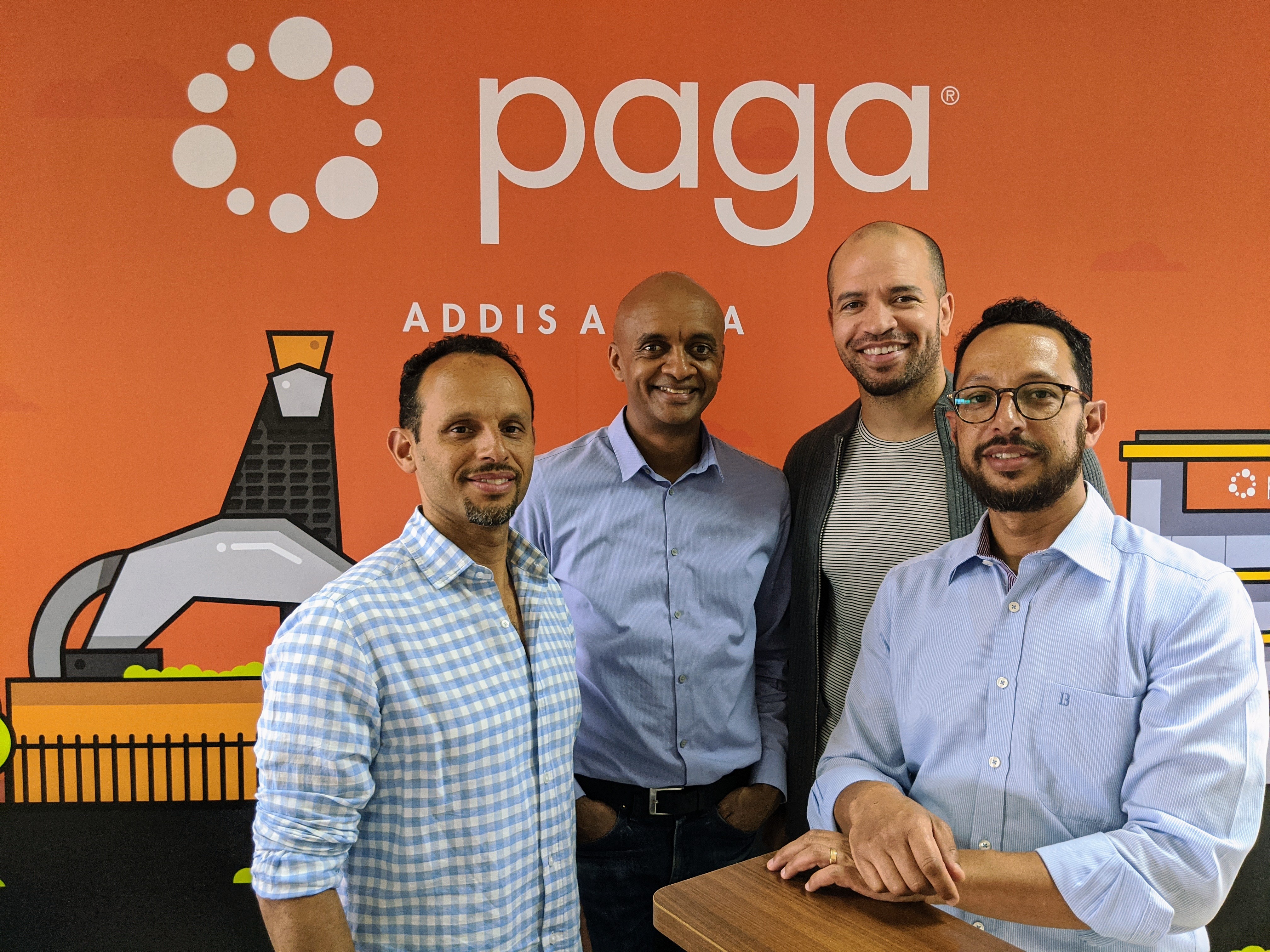
Apposit partners (L-R) Adam Abate, Simon Solomon, Eric Chijioke, Gideon Abate

A year later, Oviosu met Chijioke when he crashed at his house while visiting Ethiopia for a wedding. It just so happened Chijioke’s brother was his roommate at Stanford.

That meeting began an extended conversation between the two on digital-finance innovation in Africa and eventually led to a Paga partnership with Apposit in 2010.

Apposit dedicated an engineering team to build Paga’s payment platform, Eric Chijioke became Paga’s CTO (while maintaining his Apposit role) and Apposit backed Paga.

“We aligned ourselves as African entrepreneurs…which then developed into a close relationship where we became…investors in Paga and strategically aligned,” said Abate.

African roots, global ambitions

Fast forward a decade, and the two companies have come pretty far. Apposit has grown its business into a team of 63 engineers and technicians and has racked up a list of client partnerships. The company helped digitize the Ethiopian Commodities Exchange and has contracted on IT and software solutions with banks non-profits and brick and mortar companies.

For a decade, Apposit has also supported Paga’s payment product development.
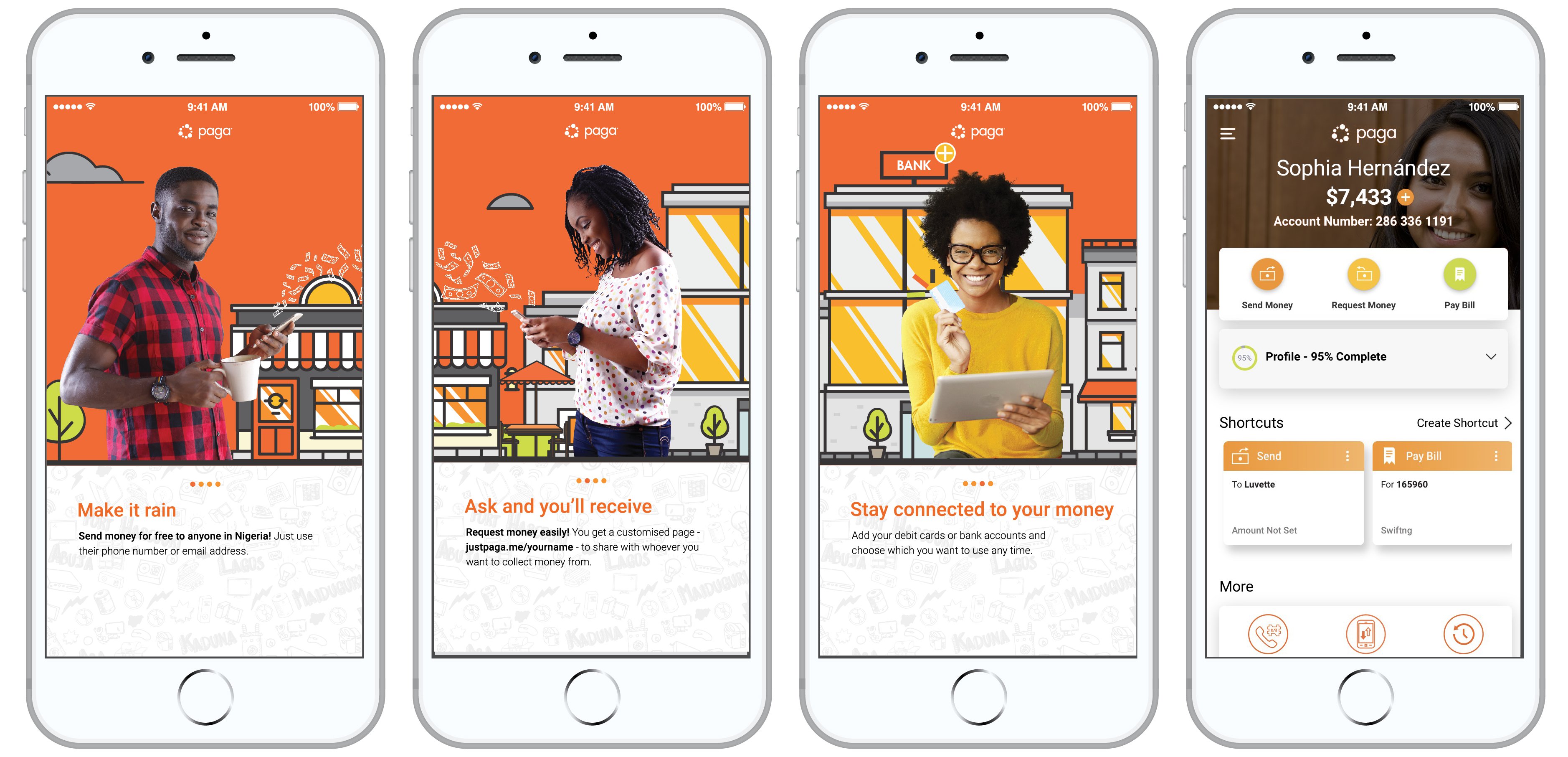
Paga Interfaces

Over that period, Oviosu and team went to work building Paga’s platform and driving digital payment adoption in Nigeria, home to Africa’s largest economy and population of 200 million.

That’s been no small task considering Nigeria’s percentage of unbanked was pegged as high as at 70% in 2011 and still lingers around 60%, according to The Global Findex database.

Paga has created a multi-channel network to transfer money, pay-bills, and buy things digitally. The company has 14 million customers in Nigeria who can transfer funds from one of Paga’s 24,411 agents or through the startup’s mobile apps.

Paga products work on iOS, Android, and basic USSD phones using a star, hashtag option. The company has remittance partnerships with the likes of Western Union and allows for third-party integration of its app.

Since inception, the startup has processed 104 million transactions worth $6.6 billion, according to Oviosu.

With the acquisition, Paga absorbs Apposit’s tech capabilities and team of 63 engineers.  The company will direct its boosted capabilities and total workforce of 530 to support expansion.

Paga plans its Mexico launch in 2020, according to Oviosu.

Adam Abate is now CEO of Paga Ethiopia, where Paga plans to go live as soon as it gains a local banking license. The East African nation of 100 million, with the continent’s seventh largest economy, is bidding to become Africa’s next startup hub, though it still lags the continent’s tech standouts — like Nigeria and Kenya — in startup formation, ISP options and VC.

Ethiopia has also been slow to adopt digital finance, with less than 1% of the population using mobile-money, compared to 73% for Kenya, Africa’s mobile-payments leader.

Paga aims to shift the financial needle in the country. “The goal is straight-forward. We want Ethiopians to use the Paga wallet as their payment account. So it’s about digitizing cash transactions and driving financial services,” said Oviosu.
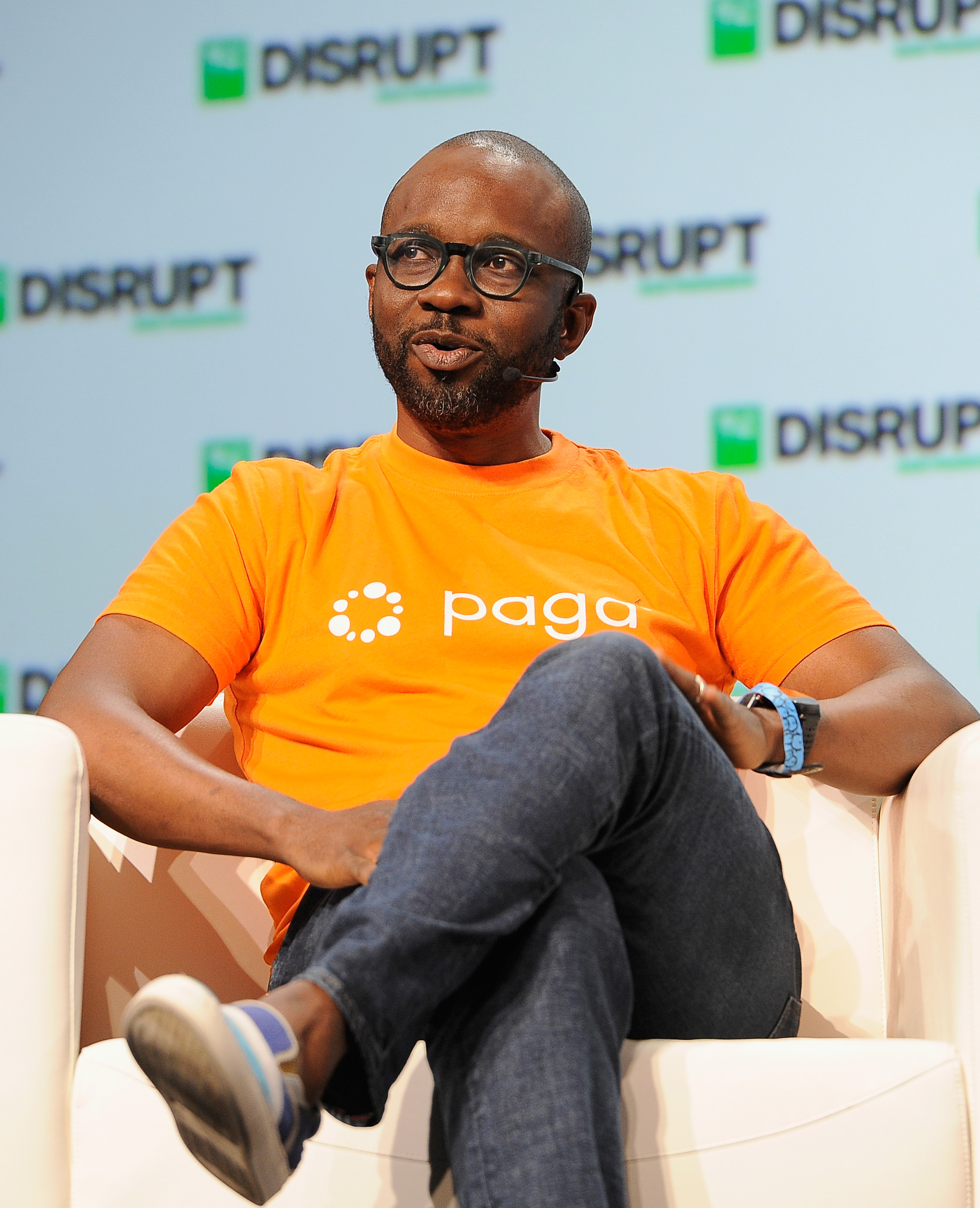
Paga CEO Tayo Oviosu

With the Apposit acquisition and country expansion, he also looks to grow Paga’s model in Africa and beyond, as an emerging markets fintech solution.

“There are several very large countries around the world in Africa, Latin America, Asia where these [financial inclusion] problems still exist. So our strategy is not an African strategy…We want to go where these problems exist in a large way and build a global payments business,” Oviosu said.

Fintech competition in Nigeria

As it grows abroad, Paga faces greater competition in Nigeria. For the last decade, South Africa and Kenya — with the success of Safaricom’s  M-Pesa product — have been Africa’s standouts in digital payments.

But over the last several years, Nigeria has become a magnet for VC and fintech startups. This trend reached a high-point in 2019 when Chinese investors put $220 million into Opera owned OPay and Transsion backed PalmPay — two fledgling startups with plans to scale in Nigeria and broader Africa.

That’s a hefty war chest compared to Paga’s total VC haul of $34 million, according to Crunchbase.

Oviosu names product market fit and benefits from the company’s expansion as factors that will keep it ahead of these well-funded new entrants.

“That’s where the world-class technology comes in,” he said.

“We also take a perspective that we cannot build every use-case,” he said — contrasting Paga’s model to Opera in Africa, which has launched multiple startup verticals around its OPay product, from ride-hailing to food-delivery.

Oviosu compares Paga’s approach to PayPal, which allows third-party developers to shape businesses around PayPal as the payment solution.

With its Apposit acquisition and plans for continued expansion, PayPal may become more than a model for Paga.

Founder Tayo Oviosu sees big fintech players, such as PayPal and Alipay, as future competitors with Paga’s planned expansion into more emerging markets.


from Android – TechCrunch https://ift.tt/2twi3XD
via IFTTT

Apple TV+ scores Julia Louis-Dreyfus and Meryl Streep, announces release dates for new shows

Apple has scored more big names for its newly launched streaming service, Apple TV+, including “Veep” and “Seinfeld” star Julia Louis-Dreyfus, as well as Meryl Streep, the latter who’s attached to an animated short film about Earth Day, set to premiere on April 17. In addition, Apple has now announced several new series for Apple TV+, plus renewals and premiere dates for others.

The upcoming Earth Day film, titled “Here We Are: Notes for Living on Planet Earth” will also star the voice talents of “Room” actor Jacob Tremblay as a 7-year old child who learns about the planet, and Chris O’Dowd and Ruth Negga as his parents. Streep will provide the voiceover narration.

Meanwhile, Louis-Dreyfus hasn’t announced specific details of her projects. Apple says she’s inked an overall deal with Apple TV+ as both an executive producer and star — her first overall deal with a streaming service. Under the multi-year agreement, Louis-Dreyfus will create multiple new projects exclusively for Apple TV+.

Joked the actress: “I am thrilled about this new partnership with my friends at Apple. Also, many thanks and kudos to my representatives for structuring the deal in such a way that I am paid in AirPods,” she said.

Apple has previously signed other overall deals with names like Alfonso Cuaron, Kerry Ehrin, Jon M. Chu, Justin Lin, Jason Katims, Lee Eisenberg, as well as studios A24 and Imagine Documentaries, and Oprah.

In addition to the big-name talent grabs, Apple also on Friday announced a new documentary series, “Dear…,” from Emmy and Peabody winner R.J. Cutler. Due out this spring, the series will profile internationally known leaders including Oprah Winfrey, Gloria Steinem, Spike Lee, Lin-Manuel Miranda, Yara Shahidi, Stevie Wonder, Aly Raisman, Misty Copeland, Big Bird (uh, what?) and others.

This is not Apple TV+’s first documentary. It’s currently airing the Peace Award winner “The Elephant Queen,” about a tribe of African elephants. And while not a documentary, per se, the service is also now featuring real life-inspired tales of immigrants in the U.S. in the Apple TV+ anthology series, “Little America” which have a documentary-like vibe. Other documentary series and films in the works include “Visible: Out on Television” “Home,” “Beastie Boys Story” and “Dads.”

Newly announced “Visible…,” exec-produced by Ryan White, Jessica Hargrave, Wanda Sykes, and Wilson Cruz focuses on the LGBTQ movement and its impact on television. Premiering on Valentine’s Day (Feb. 14), the series will also feature narration from Janet Mock, Margaret Cho, Asia Kate Dillon, Neil Patrick Harris, and Lena Waithe.


Another new show is “Central Park,” an animated musical comedy from Loren Bouchard (“Bob’s Burgers”), executive producer Josh Gad (“Frozen”) and executive producer Nora Smith (“Bob’s Burgers”), will arrive this summer. The show features a family that lives in Central Park, the Tillermans, and includes a voice cast with the talents of Josh Gad, Leslie Odom Jr., Kristen Bell, Kathryn Hahn, Tituss Burgess, Daveed Diggs, and Stanley Tucci. The animation style has the distinct look of “Bob’s Burgers” as well.

Apple’s first original series from the U.K., “Trying,” will premiere on May 1st globally. This series stars Rafe Spall and Esther Smith, hails from BBC Studios, and was written by Andy Wolton. As the name hints, the story is about a couple — Jason and Nikki — who are trying to have a baby. But Apple describes the show’s larger theme as one about “growing up, settling down and finding someone to love.”

A new thriller, “Defending Jacob,” based on the 2012 NYT bestseller of the same name, will premiere April 24.

The limited series stars Chris Evans, Michelle Dockery, Jaeden Martell, Cherry Jones, Pablo Schreiber, Betty Gabriel, and Sakina Jaffrey, and tells of a shocking crime that rocks a small Massachusetts town. The story follows an Assistant District Attorney who is torn between duty to uphold justice and his love for his son. Academy Award winner J.K. Simmons guest stars.

Apple also announced its live-action comedy that follows a team of video game developers, “Mythic Quest: Raven’s Banquet,” has been renewed for a second season ahead of its global premiere date of Feb. 7.

The show was co-created by Rob McElhenney, Charlie Day and Megan Ganz, and also stars McElhenney as the fictional company’s creative director, Ian Grimm.

Other shows awarded a second season include “Little America,” “Dickinson,” “See,” “Servant,” “For All Mankind,” “The Morning Show,” and the soon-to-premiere “Home Before Dark.”

Despite not sharing any sort of viewership data — even with the shows’ stars — the renewals speak to Apple’s confidence in its original programming.

“Home Before Dark” is a dramatic mystery series featuring young investigative journalist, Hilde Lysiak, and is exec-produced by Jon M. Chu. Based on the real-life kid reporter of the same name, the series takes Hilde’s story into fictional territory by telling a tale of a young girl who moves from Brooklyn to a small lakeside town where she ends up unearthing a cold case that everyone in town, including her dad, has tried to bury. The real Lysiak, however, runs an online news operation, Orange Street News, which made headlines when the then 11-year old girl scooped local news outlets by being the first to expose a murder in her hometown of Selinsgrove, PA.

Steven Spielberg’s “Amazing Stories” has also now been given a premiere date of March 6. The rebooted anthology series is run by Eddy Kitsis and Adam Horowitz (“Lost”), and features episode directors Chris Long (“The Americans,” “The Mentalist”), Mark Mylod (“Succession,” “Game of Thrones”), Michael Dinner (“Unbelievable,” “Sneaky Pete”), Susanna Fogel (“Utopia,” “Play By Play”) and Sylvain White (“Stomp The Yard,” “The Rookie”).

Also previously announced, Apple set a premiere date for the new documentary series “Home,” which will air on April 17. The series offers viewers a look inside some of the world’s most innovative homes around the world.

Though only two months old, Apple TV+ has already landed its first Hollywood industry award, as “The Morning Show” star Jennifer Aniston snagged a SAG Award for best female actor in a drama. Co-star Billy Crudup also won a Critics’ Choice Award for best-supporting actor.

“The Morning Show,” meanwhile, had been nominated for three Golden Globes, but didn’t win. However, the Globes largely snubbed streamers this year with Netflix earning only two wins, despite 34 nominations.


from Apple – TechCrunch https://ift.tt/2NNq69n

Canonical’s Anbox Cloud puts Android in the cloud

Canonical, the company behind the popular Ubuntu Linux distribution, today announced the launch of Anbox Cloud, a new platform that allows enterprises to run Android in the cloud.

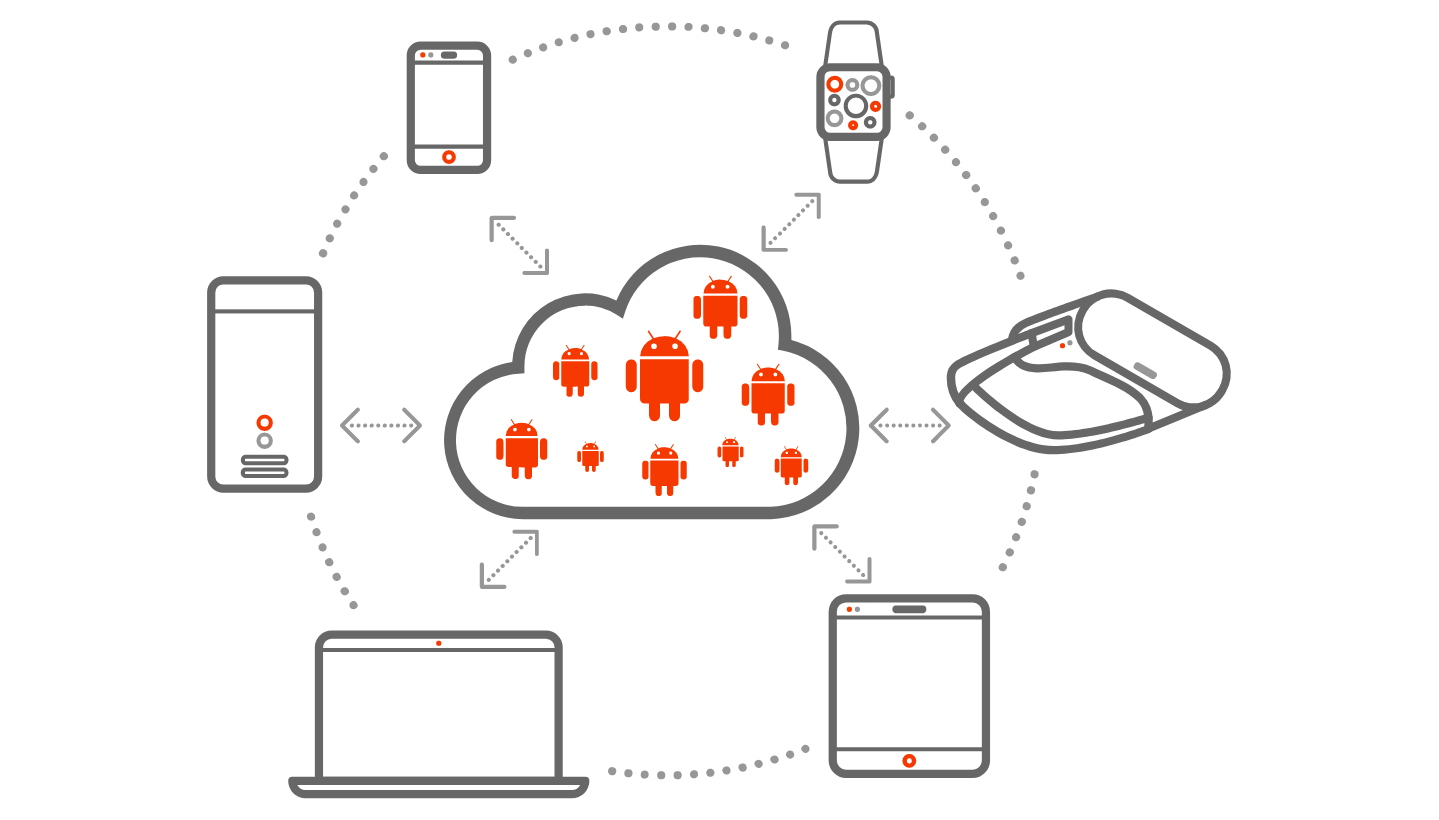
On Anbox Cloud, Android becomes the guest operating system that runs containerized applications. This opens up a range of use cases, ranging from bespoke enterprise app to cloud gaming solutions.

The result is similar to what Google does with Android apps on Chrome OS, though the implementation is quite different and is based on the LXD container manager, as well as a number of Canonical projects like Juju and MAAS for provisioning the containers and automating the deployment. “LXD containers are lightweight, resulting in at least twice the container density compared to Android emulation in virtual machines – depending on streaming quality and/or workload complexity,” the company points out in its announcements.

Anbox itself, it’s worth noting, is an open-source project that came out of Canonical and the wider Ubuntu ecosystem. Launched by Canonical engineer Simon Fels in 2017, Anbox runs the full Android system in a container, which in turn allows you to run Android application on any Linux-based platform.

What’s the point of all of this? Canonical argues that it allows enterprises to offload mobile workloads to the cloud and then stream those applications to their employees’ mobile devices. But Canonical is also betting on 5G to enable more use cases, less because of the available bandwidth but more because of the low latencies it enables.

“Driven by emerging 5G networks and edge computing, millions of users will benefit from access to ultra-rich, on-demand Android applications on a platform of their choice,” said Stephan Fabel, Director of Product at Canonical, in today’s announcement. “Enterprises are now empowered to deliver high performance, high density computing to any device remotely, with reduced power consumption and in an economical manner.”

Outside of the enterprise, one of the use cases that Canonical seems to be focusing on is gaming and game streaming. A server in the cloud is generally more powerful than a smartphone, after all, though that gap is closing.

Canonical also cites app testing as another use case, given that the platform would allow developers to test apps on thousands of Android devices in parallel. Most developers, though, prefer to test their apps in real — not emulated — devices, given the fragmentation of the Android ecosystem.

Anbox Cloud can run in the public cloud, though Canonical is specifically partnering with edge computing specialist Packet to host it on the edge or on-premise. Silicon partners for the project are Ampere and Intel.


from Android – TechCrunch https://ift.tt/2RB2buU
via IFTTT

Apple Card users can now download monthly transactions in a spreadsheet

One of the big questions I got around the time the Apple Card launched was whether you’d be able to download a file of your transactions to either work with manually or import into a piece of expenses management software. The answer, at the time, was no.

Now Apple is announcing that Apple Card users will be able to export monthly transactions to a downloadable spreadsheet that they can use with their personal budgeting apps or sheets.

When I shot out a request for recommendations for a Mint replacement for my financing and budgeting a lot of the responses showed just how spreadsheet oriented many of the tools on the market are. Mint accepts imports, as do others like Clarity Money, YNAB and Lunch Money. As do, of course, personal solutions rolled in Google Sheets or other spreadsheet programs.

The one rec I got the most and which I’m trying out right now, Copilot, does not currently support importing spreadsheets but founder Andres Ugarte told me that it’s on their list to add. Ugarte told me that they’re happy to see the download feature appear because it lets users monitor their finances on their own terms. “Apple Card support has been a top request from our users, so we are very excited to provide a way for them to import their data into Copilot.”

Here’s how to export a spreadsheet of your monthly transactions:

  • Open Wallet
  • Tap ‘Apple Card’
  • Tap ‘Card Balance’
  • Tap on one of the monthly statements
  • Tap on ‘Export Transactions’

If you don’t yet have a monthly statement you won’t see this feature until you do. The last step brings up a standard share sheet letting you email or send the file however you normally would. The current format is CSV but in the near future you’ll get an OFX option as well.

So if you’re using one of the tools (or spreadsheet setups) that would benefit from being able to download a monthly statement of your Apple Card transactions then you’re getting your wish from the Apple Card team today. If you use a tool that requires something more along the lines of API-level access like something using Plaid or another account-linking-centric tool then you’re going to have to wait longer.

No info from Apple on when that will arrive if at all but I know that the team is continuing to launch new features so my guess is that this is coming at some point.


from Apple – TechCrunch https://ift.tt/38w2mhV

Nebia’s co-founder talks about finding product/market fit

Finding the right product/market fit is challenging for any company, but it’s just a little harder for hardware startups.

I recently visited the San Francisco offices of Nebia to chat with co-founder and CEO Philip Winter, whose eco-friendly hardware startup has received funding from Apple CEO Tim Cook, former Google CEO Eric Schmidt and Fitbit CEO James Park. After checking out the company’s latest shower head, we eased into a discussion about the opportunities and challenges facing hardware startups in Silicon Valley today.

TechCrunch: What’s so hard about hardware in 2020?

Philip Winter: The hardware landscape was, at one point, super-hot, at least in Silicon Valley. I would say like three or four years ago. A lot of companies came out with breakout products and a lot of them disappeared over the years since then. A lot of them are our peers — it’s a fairly small community.


from Apple – TechCrunch https://ift.tt/2RGZ04E

Gartner: 2020 device shipments to grow 0.9% to 2.16B thanks to 5G, before 2 further years of decline

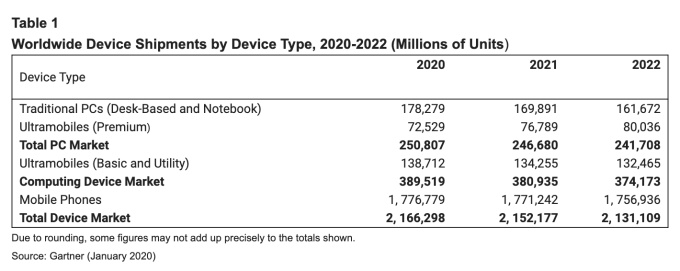
The analysts at Gartner have published their annual global device forecast, and while 2020 looks like it may be partly sunny, get ready for more showers and poor weather ahead. The analysts predict that a bump from new 5G technology will lead to total shipments of 2.16 billion units — devices that include PCs, mobile handsets, watches, and all sizes of computing devices in between — working out to a rise of 0.9% compared to 2019.

That’s a modest reversal after what was a rough year for hardware makers who battled with multiple headwinds that included — for mobile handsets — a general slowdown in renewal cycles and high saturation of device ownership in key markets; and — in PCs — the wider trend of people simply buying fewer of these bigger machines as their smartphones get smarter (and bigger).

As a point of comparison, last year Gartner revised its 2019 numbers at least three times, starting from “flat shipments” and ending at nearly four percent decline. In the end, 2019 saw shipments of 2.15 billion units — the lowest number since 2010. All of it is a bigger story of decline. In 2005, there were between 2.4 billion and 2.5 billion devices shipped globally.

“2020 will witness a slight market recovery,” writes Ranjit Atwal, research senior director at Gartner. “Increased availability of 5G handsets will boost mobile phone replacements, which will lead global device shipments to return to growth in 2020.”

(Shipments, we should note, do not directly equal sales, but they are used as a marker of how many devices are ordered in the channel for future sales. Shipments precede sales figures: overestimating results in oversupply and overall slowdown.)

The idea that 5G will drive more device sales, however, is still up for debate. Some have argued that while carriers are going hell for leather in their promotion of 5G, the idea of special 5G apps and services — versus using it to connect machines in an IoT play — that will spur adoption of those devices is not as apparent, and that’s leading to it being more of an abstract concept, and not one that is leading the charge when it comes to apps and services, especially for the mass consumer market and for (human) business users.

Still, it may be that hardware might march on ahead regardless. Gartner predicts that 5G devices will account for 12% of all mobile phone shipments in 2020 as handset makers make their devices “5G ready,” with the proportion increasing to 43% by 2022. “From 2020, Gartner expects an increase in 5G phone adoption as prices decrease, 5G service coverage increases and users have better experiences with 5G phones,” writes Atwal. “The market will experience a further increase in 2023, when 5G handsets will account for over 50% of the mobile phones shipped.” That may in part be simply because handset makers are making their devices “5G ready”

Drilling down into the numbers, Gartner believes that worldwide, phones will see a bump of 1.7% this year, up to 1.78 billion before declining again in 2021 to 1.77 billion and then further in 2022 to 1.76 billion. Asia and in particular China and emerging markets will lead the charge.

Another analyst firm, Counterpoint, has been tracking marketshare for individual handset makers and notes that Samsung remains the world’s biggest handset maker going into Q4 2019 (final numbers on that quarter should be out in the coming weeks), with 21% of all shipments and slight increases over the year, but with the BBK group (which owns OPPO, Vivo, Realme, and OnePlus) likely to pass it, Huawei and Apple to become the world’s largest, as it’s growing much faster. Numbers overall were dragged down by declines for Apple, the world’s number-three handset maker, which saw a slump last year in its handset sales.

Although the market was generally lower across all devices, PC shipments actually saw some growth in 2019. That is set to turn down again this year, to 251 million units, and declining further to 247 million in 2021 and 242 million in 2022.

Part of that is due to slower migration trends — Windows 10 adoption was the primary driver for people switching up and buying new devices last year, but now that’s more or less finished. That will see slower purchasing among enterprise end users, although later adopters in the SME segment will finally make the change when support for Windows it 7 finally ends this month (it’s been on the cards for years at this point). In any case, the upgrade cycle is changing because of how Windows is evolving.

“The PC market’s future is unpredictable because there will not be a Windows 11. Instead, Windows 10 will be upgraded systematically through regular updates,” writes Atwal “As a result, peaks in PC hardware upgrade cycles driven by an entire Windows OS upgrade will end.”

Two trends that might impact shipments — or at least highlight other currents in the hardware market — should also be noted. The first is the role that Chromebooks might play in the PC market. These were one of the faster-growing categories last year, and this year we will see even more models rolled out, with what hardware makers hope will be even more of a boost in functionality to drive adoption. (Google and Intel’s collaboration is one example of how that will work: the two are working on a set of standards that will fit with chips made by Intel to produce what the companies believe are more efficient and compelling notebooks, with tablet-like touchscreens, better battery life, smaller and lighter form factors, and more.)

The second is whether or not smartwatches will make a significant dent into the overall device market. Q3 of last year saw growth of 42% to 14 million shipments globally. And while there have been a number of smartwatch hopefuls, but one of the biggest successes has been the Apple Watch, whose growth outstripped that of the wider watch market, at 51%. Indeed, looking at the results of the last several quarters, Apple’s product category that includes Watch sales (wearables, home and accessories) even appears to be on track to outstrip another hardware category, Macs. Whether that will continue, and potentially see others joining in, will be an interesting area to “watch.”


from Apple – TechCrunch https://ift.tt/37dCdEn

Sunday, 19 January 2020

China Roundup: Tencent’s new US gaming studio and WeChat’s new paywall

Hello and welcome back to TechCrunch’s China Roundup, a digest of recent events shaping the Chinese tech landscape and what they mean to people in the rest of the world.

The spotlight this week is back on Tencent, which has made some interesting moves in gaming and content publishing. There will be no roundup next week as China observes the Lunar New Year, but the battle only intensifies for the country’s internet giants, particularly short-video rivals Douyin (TikTok’s Chinese version) and Kuaishou, which will be vying for user time over the big annual holiday. We will surely cover that when we return.

‘Honor of Kings’ creator hiring for U.S. studio

Tencent’s storied gaming studio TiMi is looking to accelerate international expansion by tripling its headcount in the U.S. in 2020, the studio told TechCrunch this week, though it refused to reveal the exact size of its North American office. Eleven-year-old TiMi currently has a team working out of Los Angeles on global business and plans to grow it into a full development studio that “helps us understand Western players and gives us a stronger global perspective,” said the studio’s international business director Vincent Gao.

Gao borrowed the Chinese expression “riding the wind and breaking the wave” to characterize TiMi’s global strategy. The wind, he said, “refers to the ever-growing desire for quality by mobile gamers.” Breaking the wave, on the other hand, entails TiMi applying new development tools to building high-budget, high-quality AAA mobile games.

The studio is credited for producing one of the world’s most-played mobile games, Honor of Kings, a mobile multiplayer online battle arena (MOBA) game, and taking it overseas under the title Arena of Valor. Although Arena of Valor didn’t quite take off in Western markets, it has done well in Southeast Asia in part thanks to Tencent’s publishing partnership with the region’s internet giant Garena.

Honor of Kings and a few other Tencent games have leveraged the massive WeChat and QQ messengers to acquire users. That raises the question of whether Tencent can replicate its success in overseas markets where its social apps are largely absent. But TiMi contended that these platforms are not essential to a game’s success. “TiMi didn’t succeed in China because of WeChat and QQ. It’s not hard to find examples of games that didn’t succeed even with [support from] WeChat and QQ.”

Call of Duty: Mobile is developed by Tencent and published by Activision Blizzard (Image: Call of Duty: Mobile via Twitter) 

When it comes to making money, TiMi has from the outset been a strong proponent of game-as-a-service whereby it continues to pump out fresh content after the initial download. Gao believes the model will gain further traction in 2020 as it attracts old-school game developers, which were accustomed to pay-to-play, to follow suit.

All eyes are now on TiMi’s next big move, the mobile version of Activision Blizzard’s Call of Duty. Tencent, given its experience in China’s mobile-first market, appears well-suited to make the mobile transition for the well-loved console shooter. Developed by Tencent and published by Blizzard, in which Tencent owns a minority stake, in September, Call of Duty: Mobile had a spectacular start, recording more worldwide downloads in a single quarter than any mobile game except Pokémon GO, which saw its peak in Q3 2016, according to app analytics company Sensor Tower.

The pedigreed studio has in recent times faced more internal competition from its siblings inside Tencent, particularly the Lightspeed Quantum studio, which is behind the successful mobile version of PlayerUnknown’s Battlegrounds (PUBG). While Tencent actively fosters internal rivalry between departments, Gao stressed that TiMi has received abundant support from Tencent on the likes of publishing, business development and legal matters.

WeChat erects a paywall – with Apple tax

Ever since WeChat rolled out its content publishing function — a Facebook Page equivalent named the Official Account — back in 2012, articles posted through the social networking platform have been free to read. That’s finally changing.

This week, WeChat announced that it began allowing a selected group of authors to put their articles behind a paywall in a trial period. The launch is significant not only because it can inspire creators by helping them eke out additional revenues, but it’s also a reminder of WeChat’s occasionally fraught relationship with Apple.

WeChat launched its long-awaited paywall for articles published on its platform 

Let’s rewind to 2017 when WeChat, in a much-anticipated move, added a “tipping” feature to articles published on Official Account. The function was meant to boost user engagement and incentivize writers off the back of the popularity of online tipping in China. On live streaming platforms, for instance, users consume content for free but many voluntarily send hosts tips and virtual gifts worth from a few yuan to the hundreds.

WeChat said at the time that all transfers from tipping would go toward the authors, but Apple thought otherwise, claiming that such tips amounted to “in-app purchases” and thus entitled it to a 30% cut from every transaction, or what is widely known as the “Apple tax.”

WeChat disabled tipping following the clash over the terms but reintroduced the feature in 2018 after reaching consensus with Apple. The function has been up and running since then and neither WeChat nor Apple charged from the transfers, a spokesperson from WeChat confirmed with TechCrunch.

If the behemoths’ settlement over tipping was a concession on Apple’s end, Tencent has budged on paywalls this time.

Unlike tipping, the new paywall feature entitles Apple to its standard 30% cut of in-app transactions. That means transfers for paid content will go through Apple’s in-app purchase (IAP) system rather than WeChat’s own payments tool, as is the case with tipping. It also appears that only users with a Chinese Apple account are able to pay for WeChat articles. TechCrunch’s attempt to purchase a post using a U.S. Apple account was rejected by WeChat on account of the transaction “incurring risks or not paying with RMB.”

The launch is certainly a boon to creators who enjoy a substantial following, although many of them have already explored third-party platforms for alternative commercial possibilities beyond the advertising and tipping options that WeChat enables. Zhishi Xingqiu, the “Knowledge Planet”, for instance, is widely used by WeChat creators to charge for value-added services such as providing readers with exclusive industry reports. Xiaoe-tong, or “Smart Little Goose”, is a popular tool for content stars to roll out paid lessons.

Not everyone is bullish on the new paywall. One potential drawback is it will drive down traffic and discourage advertisers. Others voice concerns that the paid feature is vulnerable to exploitation by clickbait creators. On that end, WeChat has restricted the application to the function only to accounts that are over three months old, have published at least three original articles and have seen no serious violations of WeChat rules.


from Apple – TechCrunch https://ift.tt/37aWCcS