Thursday, 30 January 2020

EU lawmakers take fresh aim at Apple’s Lightning connector with latest e-waste push

The European parliament has voted overwhelmingly for tougher action to reduce e-waste, calling for the Commission to come up with beefed up rules by July 2020.

Specifically, the parliament wants the Commission to adopt the delegated act foreseen in the 2014 Radio Equipment Directive by that deadline — or else table a legislative measure by the same date, at the latest.

The resolution, which was approved by 582 votes to 40, points out that MEPs have been calling for a single charger for mobile devices for more than a decade now. But the Commission has repeatedly postponed taking steps to force an industry-wide shift. Subtext: We’re tired of the ongoing charging cable nightmare.

The parliament says there is now “an urgent need” for EU regulatory action on the issue — to shrink e-waste, empower consumers to make sustainable choices, and allow EU citizens to “fully participate in an efficient and well-functioning internal market”.

The resolution notes that around 50 million metric tons of e-waste is generated globally per year, with an average of more than 6 kg per person.

While, in Europe in 2016, the figure for total e-waste generated was 12.3 million metric tonnes, equivalent to 16.6 kg on average per inhabitant — with the parliament asserting this represents “an unnecessary environmental footprint that can be reduced”.

To date, the Commission’s approach to the charger e-waste issue has been to lean on industry to take voluntary steps to reduce unnecessary variety. Which has resulted in a reduction of the number of charger types on the market — down from 30+ in 2009 to just three today — but still no universal charger which works across brands and device types (phones, tablets, e-readers etc).

Most notably, Apple continues to use its own Lightning port charger standard — while other device makers have switched to USB-based charging (such as the newest, USB-C standard).

When news emerged earlier this month of the parliament’s intention to vote on tougher measures to standardize mobile chargers Apple attacked the plan — arguing that regulation would ‘stifle innovation’.

But the tech giant has had plenty of years to chew over clever ways to switch from the proprietary charging port only it uses to one of two USB standards used by everyone else. So the ‘innovation’ argument seems a pretty stale one.

Meanwhile Apple has worked around previous EU attempts to push device makers to standardize charging on Micro USB by expanding its revenue-generating dongle collection — and selling Europeans a Lighting to Micro USB adaptor. Thereby necessitating even more e-waste.

Perhaps picking up on Apple’s ‘innovation’ framing sidestep, i.e. to try to duck the e-waste issue, the parliament also writes:

… that the Commission, without hampering innovation, should ensure that the legislative framework for a common charger will be scrutinised regularly in order to take into account technical progress; reiterates the importance of research and innovation in this domain to improve existing technologies and come up with new ones;

It also wants the Commission to grapple with the issue of wireless chargers — and take steps to ensure interoperability there too, so that wireless chargers aren’t locked to only one brand or device type.

Consumers should not be obliged to buy new chargers with each new device, per the resolution, with the parliament calling on the Commission to introduce strategies to decouple the purchase of chargers from a new device alongside a common charger solution — while making sure any decoupling measures do not result in higher prices for consumers.

It also wants the Commission to look at legislative options for increasing the volume of cables and chargers that are collected and recycled in EU member states.

We’ve reached out to the Commission for comment.

Per Reuters, officials in the executive are in agreement that the voluntary approach is not working and have said they plan to introduce legislation for a common charger this year.


from Apple – TechCrunch https://ift.tt/315EyPc

Wednesday, 29 January 2020

Microsoft shares rise after it beats revenue, profit expectations, Azure posts 62% growth

Today Microsoft reported its fiscal 2020 second quarter (calendar Q4 2019) results, including revenue of $36.9 billion (up 14%), net income of $11.6 billion (up 38%), and diluted earnings per share of $1.51.

Investors had expected the company to report profit of $1.32 per share, off revenue of $35.67 billion. The street had anticipated net income of $10.12 billion in net income, as well. The company’s stock is up around 2% in after-hours trading, following the company’s earnings release.

All that’s just fine. But, what about cloud — how did Microsoft do with Azure, Office 365, and the rest of the products that are expected to carry Redmond into the future? Here you go:

  • Office 365 Commercial revenue grew 27%, compared to its year-ago result
  • Azure grew 62%, compared to its year-ago result
  • “Office Consumer products and cloud services” grew by 19%, compared to their year-ago result
  • Dynamics 365 grew 42%, compared to its year-ago result

All the above figures are GAAP results, and are therefore not adjusted for currency fluctuations. On a so-called “constant currency” basis, Azure grew by a slightly faster 64%.

In addition to those results, LinkedIn, a somewhat recent Microsoft property, grew 24% compared to its year-ago results, while Surface grew in single-digit percentage terms, and Xbox’s digital products slipped by 11% on a year-over-year basis. (Microsoft had stressed early on that LinkedIn’s growth rate was a key priority.)

Gisting all of that quickly as we continue to understand the company’s new results, it appears that Microsoft’s cloud transition continued apace, with investors bidding up its equity modest after-hours in light of the results. Bear in mind that Microsoft’s shares have been on a tear lately, with the company’s valuation cresting the $1.28 trillion mark as we finish this post.

Apple, another of the technology giants, also saw its shares advance modestly after reporting earnings yesterday. This is a crowded week for tech results, which, at the top end so far, have gone well.

What about Windows?

Microsoft’s earnings are a stable affair, given its girth that stretches from consumer hardware, software, gaming, and operating systems, to enterprise tech to sales tooling to venture capital and more. But one product that has always deserves a minute is Windows, Microsoft’s well-known operating system.

Notably in the quarter, the Windows business was good, with Windows OEM revenue rising 18%. Even better, “Windows Commercial products and cloud services” rose 25%. It is true that Microsoft’s OEM business (selling the OS to hardware shops that make PCs) likely had a Windows 7 end-of-life tailwind, but all the same the numbers were good.

Or at least better than I’d hazard anyone would have guessed a few years back, living in the post-iPad era as we now are.

All told, a solid quarter from Redmond. That it’s shares are only up a few points is more indicative of how much the results were already priced into its shares, than market enthusiasm for the company’s business. More if the stock price shifts again.


from Apple – TechCrunch https://ift.tt/319oWu3

Daily Crunch: Apple reports better-than-expected revenue

The Daily Crunch is TechCrunch’s roundup of our biggest and most important stories. If you’d like to get this delivered to your inbox every day at around 9am Pacific, you can subscribe here.

1. Apple shares rise after company reports better-than-expected revenue of $91.8B

Apple has worked in recent years to lessen its dependence on the iPhone, in part through services and smaller electronics. This is doubly true as the company posted a year-over-year decline in Mac revenue.

In its latest earnings report, the company highlighted its smaller-device and home category, with CEO Tim Cook saying his company posted “all-time records for Services and Wearables.”

2. SpaceX successfully launches 60 more satellites for its Starlink satellite internet constellation

SpaceX has launched yet another batch of 60 Starlink satellites — its third production batch of the orbital communication spacecraft, and its second batch this year alone. After the last batch went up in early January, SpaceX became the largest private satellite operator in the world, and now it’s just extending its lead.

3. Mobile messaging startup Attentive raises another $70M

It’s been less than six months since Attentive raised a $40 million Series B. CEO Brian Long told me that he wasn’t planning to raise money again so soon, but things were going even better than expected, with a client list that has grown to more than 750 businesses.

4. For alternative meat manufacturer Beyond Meat, fast food chains giveth and taketh away

On the same day that the Tim Horton’s restaurant chain is dropping Beyond Meat products from its menus, Beyond Meat and KFC announced the expansion of a pilot run at new stores in Nashville, Tenn., Charlotte, N.C. and across Kentucky.

5. A conversation with ‘the most ambitious female VC in Europe’

We talk to Ophelia Brown, whose Blossom Capital just raised a new $185 million fund. The interview covers topics like her investment thesis, why Europe is at an “inflection point,” diversity in the investor community and the increasing money coming into Europe from American VCs. (Extra Crunch membership required.)

6. No pan-EU Huawei ban as Commission endorses 5G risk mitigation plan

The move is another blow for the Trump administration’s efforts to demolish trust in Chinese-made technology, with the U.K. government also announcing yesterday that it would not be banning so-called “high risk” providers from supplying 5G networks.

7. Kenshō Healthcare publicly launches its ‘antithesis of Goop’

While Gwyneth Paltrow’s lifestyle brand startup serves up a heady mix of unverified pseudo-scientific claims alongside long-standing holistic practices, the founders of Kenshō Healthcare say they’re focused on the verified and verifiable claims coming out of the medical community.


from Apple – TechCrunch https://ift.tt/2uEpo7F

Tuesday, 28 January 2020

Apple to start online sales in India in Q3 this year

Apple’s much-awaited online store in India will be operational starting Q3 this year, a little longer than previously expected, a source familiar with the matter told TechCrunch.

The iPhone-maker said in August last year that it was “eager to serve [customers of India] online and in-store with the same experience and care that Apple customers around the world enjoy.”

While the company never shared a firm timeline on when the online and brick-and-mortar stores would be set up in India, it was originally aiming to start the online sales in the country in the first quarter of this year, the source said. (The Q1 launch timeline was first signaled by Bloomberg, which reported that the operations would begin “within months.”)

An Apple spokesperson was not immediately available for comment.

The source said the company was still working on the logistics of setting up the store and that the quarter between July and September was the new tentative deadline. Apple CEO Tim Cook would likely plan an India trip for the announcement, the source said.

India, the world’s second largest smartphone market, eased sourcing norms for single-brand retailers last year, paving the way for companies like Apple to open online stores before they set up presence in the brick-and-mortar market.

Currently, Apple sells its products in India through partnered third-party offline retailers and e-commerce platforms such as Amazon India, Flipkart and Paytm Mall. Prior to New Delhi’s policy change, Apple had requested the government numerous times to relax the local foreign direct investment (FDI) rules.

Apple executives have long expressed disappointment at Amazon India, Flipkart and Paytm Mall for offering heavy discounts on the iPhone and MacBook Air to boost their respective GMV metrics, people familiar with the matter have told TechCrunch.

iPhone shipments in India grew 6% in 2019 compared with a 43% decline in 2018, according to research firm Counterpoint, which projected that the growth would continue this year.

Apple on Tuesday posted a record revenue of $91.8 billion for the quarter that ended in December. Cook said in the earnings call that India was among the markets where the company’s revenue grew in “double-digit.”


from Apple – TechCrunch https://ift.tt/2uDyK3m

Apple reports a record $12.7B in services revenue

Apple’s increasing focus on its services business seems to be paying off, with the company reporting a record $12.7 billion in services net sales during the first quarter of its fiscal year — a year-over-year increase of roughly 17%.

Services includes existing offerings like iCloud and Apple Music, as well as a number of new subscriptions that Apple has launched in the past year, such as Apple Arcade and Apple TV+.

The numbers were part of a strong earnings report for Apple, with better-than-expected revenue of $91.8 billion.

The company no longer reports the unit sales of its different product lines, but we can still track general trends by looking at net sales. In addition to the growth in services, the wearables, home and accessories category grew even more rapidly, reaching a record high of $10.0 billion (compared to $7.3 billion a year ago).

Meanwhile, iPhone sales were also up to around $56.0 billion, compared to $52.0 billion during the previous Q1, with CEO Tim Cook crediting “strong demand for our iPhone 11 and iPhone 11 Pro models” in the earnings release.

There was less happy news for in the Mac and iPad categories, where sales fell to $7.2 billion (from $7.4 billion) and $6.0 billion (from $6.7 billion) respectively.


from Apple – TechCrunch https://ift.tt/36FQhW8

Apple shares rise after company reports better-than-expected revenue of $91.8B

Today after the bell, Apple reported the results of the first quarter of its fiscal 2020. The company’s revenue totaled $91.8 billion, far ahead of expectations of $88.43 billion. At the same time, the company’s per-share profit of $4.99 was greater than the market-anticipated figure of $4.54 per share.

In immediate trading following the news, Apple’s stock is up several points. The company’s shares have traded at all-time highs in recent months, matching the northward march of many other technology companies’ equity.

Previously, Apple told investors that it expected revenue of “between $85.5 billion and $89.5 billion” in the quarter, along with “gross margin between 37.5 percent and 38.5 percent.” The company’s Q1 F2020 gross margin result? 38.4%.

Digging into the quarter a bit more, here’s how Apple’s performance shook out during the three-month period:

  • Product revenue: $79.1 billion
  • Services revenue: $12.7 billion
  • Net income: $22.2 billion

As you can see, Apple’s product revenue led its quarter. Digging into that line-item, here are the building blocks of its lucrative hardware business:

  • iPhone: $56.0 billion
  • Mac: $7.2 billion
  • iPad: $6.0 billion
  • “Wearables, Home and Accessories:” $10.0 billion

All that spun out to earnings per share of $5.04 (basic), and $4.99 (diluted).

The company highlighted its smaller-device and home category, with CEO Tim Cook saying his company posted “all-time records for Services and Wearables.” Apple has worked in recent years to lessen its revenue dependence on the iPhone; services and smaller electronics are some of its hopes to do so. This is doubly true as the company posted a year-over-year decline in Mac revenue.

Apple wrapped calendar 2019 with cash, equivalents and various types of marketable securities worth $207 billion, while its debt load appeared to land around $118 billion.

Looking ahead, Apple anticipates Q2 F2020 revenue “between $63.0 billion and $67.0 billion,” and gross margin in the same range as the sequentially preceding quarter. A more regular, non-holiday three-month period in other words.

More from TechCrunch soon digging into the company’s hardware sales and earnings call. Stay tuned.


from Apple – TechCrunch https://ift.tt/2RxLd1u

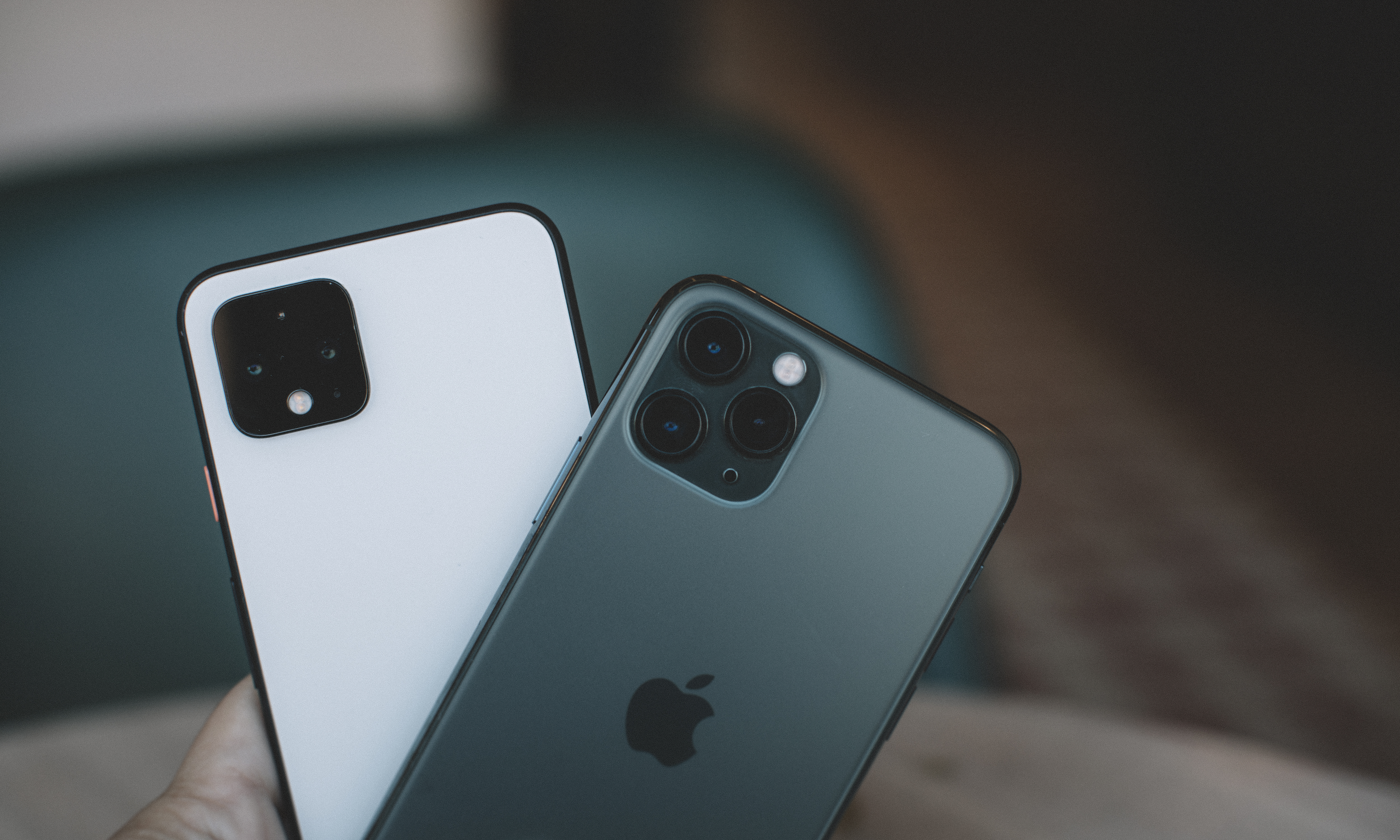
The better everyday camera — Pixel 4 or iPhone 11 Pro?

I need a new phone.


A big chunk of my time on the iPhone was spent taking pictures, so I’m heavily basing the next smartphone on its camera capabilities. After playing around with the Pixel 4 for Brian’s review, I’m considering switching teams.

Price-wise, it would make sense to compare the iPhone 11 with the Pixel 4, as they both start at around $700, but I’m interested in the best Google and Apple have to offer.

Pixel 4 and iPhone 11 Pro

There are a lot of fancy terms between the two — slow sync, true tone flash, phase detection, etc. I really don’t care. I just want to know which one is better as an everyday camera. To that end, here are some pictures in various settings and lighting situations (all images are clickable to view in high-res):

Landscape/cityscape

Brooklyn from Manhattan, right after the rain.

L: Pixel 4, R: iPhone 11 Pro

L: Pixel 4, R: iPhone 11 Pro (.5x)

Portrait

Arman suffused in pinkish-red light, backlit with afternoon window light. Both were shot from the same distance. 

L: Pixel 4, R: iPhone 11 Pro

Food

Hotpot in incandescent lighting.

L: Pixel 4, R: iPhone 11 Pro

Japanese and Mexican in low light.

L: Pixel 4, R: iPhone 11 Pro

Group selfie

One of these guys is an Emmy award winner.

Pixel 4 iPhone 11 Pro comparison group selfie

L: Pixel 4, R: iPhone 11 Pro

Low lighting

I always find venue lighting unnatural, and unflattering. Also, put your phone down and enjoy the show.

L: Pixel 4, R: iPhone 11 Pro

Pixel 4 yields brighter images, but the iPhone 11 Pro kept the bar’s ambiance. Plus shooting super-wide on humans adds a certain quirkiness.

L: Pixel 4, R: iPhone 11 Pro (.5x)

Really low lighting with moving objects. In this case, a dog.

L: Pixel 4, R: iPhone 11 Pro (.5x)

Street photography: Manhattan skies were too cloudy that night to see stars.

L: Pixel 4, R: iPhone 11 Pro

Digital zoom

Both cameras have 10x digital zoom. Digital zoom is garbage and I don’t recommend ever using it, except to creep on your friends.

Hi Brandon.

iPhone 11 Pro (1x)

HI BRANDON.

iPhone 11 Pro (10x)

Conclusion

Pixel 4’s photo editing tools are superior, though its quality is slightly better than the iPhone 11 Pro by just a smidgen. The difference was so subtle that I had to check several times to make sure I labeled the images correctly. It really boils down to aesthetics. I’ve left commentary minimal for the most part so you can scrutinize the images and decide for yourself.

iPhone 11 Pro (.5x)

The two things that ultimately kept me with Apple: the super-wide lens and the immediacy of sharing high-res images via Airdrop. Until Google releases their version, texting a download link to the high-res image is just an extra unnecessary step I don’t care for.


from Apple – TechCrunch https://ift.tt/313Kk3L