Thursday, 19 March 2020

Y Combinator-backed Kosh is a neobank for blue-collar workers in India

Dozens of startups have stepped up in India in recent quarters to improve banking experience for millions of users and businesses in the country. As a result, tens of thousands of people who could not get a loan or a credit card from a bank can now secure both from fintech startups.

But this push to bring financial inclusion to everyone still has many areas to cover. Blue-collar workers, for instance, are still facing challenges in availing some basic banking services.

Kosh, a Y Combinator-backed startup (W20), is beginning to tackle this challenge. It groups three or as many as ten blue-collar workers and gives them a loan.

“When a user logs into our Android app, they are able to apply for a loan. But before they do that, they need to add some of their colleagues and friends who are also looking for a loan,” explained Aayush Goel, co-founder of Kosh, in an interview with TechCrunch.

This way of banding together people allows Kosh to charge a lower rate of interest on the loan, said Goel.

“We have borrowed this from the world of microfinance. Essentially, we have a joint liability model. Let us say there were three people who were looking for a loan. We band them together and instead of giving each of them a separate loan, we give the group one loan” he said.
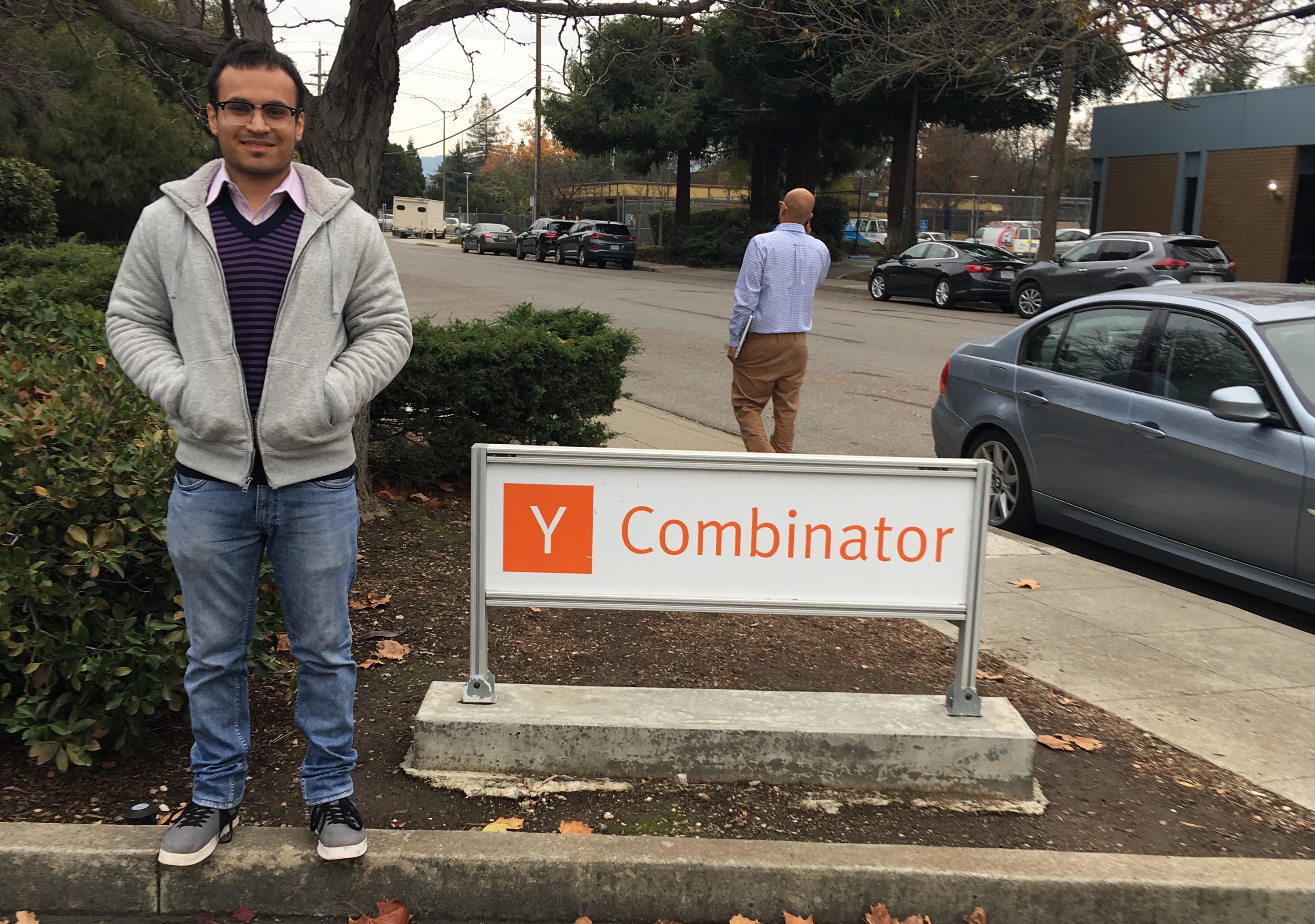
Aayush Goel (pictured above), and Sahil Bansal co-founded Kosh in March last year

In each group, at least one member is credit-worthy in the traditional sense, he explained. The startup also uses alternative data such as information gleaned from text messages to determine a person’s eligibility.

Such an arrangement has traditionally seen fewer people default (or fall behind paying their debt) because of social pressure from their colleagues and friends, as all of them are liable.

Kosh started to disburse loans in December. It currently offers loans up to twice the salary of an individual and over a tenure of up to 10 months, said Goel. The startup has disbursed close to 150 loans worth $35,000. It works with a Noida-based non-banking financial company to fund these loans.

The startup said it plans to broaden its neobanking offering this year by creating bank accounts for its customers. “There is a general lack of discipline in how these people spend their money. Having access to a bank account that works for them could prove very useful,” said Goel.

In recent years, a handful of startups such as Bangalore-based Open and NiYO Solutions have developed neobanks or alternative banks to serve businesses and individuals. In January, two former Google Pay executives announced their own neobank startup that aims to serve millennials.

GIGI Benefits, another Y Combinator-backed startup (W20), offers insurance and savings — perks that only full-time employees typically have — to gig-economy workers and freelancers.

“We help each worker set aside part of a paycheque to cover their costs of insurance, short-term expenses, and plan for their retirement,” said Sowmya Rao, founder and chief executive of GIGI Benefits, in a post.


from Android – TechCrunch https://ift.tt/33sOdkh
via IFTTT

Wednesday, 18 March 2020

Can Apple keep the AR industry alive?

Augmented reality still has Apple’s enthusiasm behind it, but can that keep the whole industry afloat?

On Wednesday, Apple debuted a new iPad Pro, the hallmark feature of which was a lidar time-of-flight sensor baked into the camera, which is designed to make augmented reality experiences more realistic and immersive. For most potential users, the inclusion is something of an oddity. Consumer AR apps are few and far between, and Apple has also been slow to bring AR functionality into its own stock apps.

For the AR industry, the hardware inclusion amounts to an industry gift, signaling once again that Apple is still committed to making an augmented reality future happen.

The company’s ARKit development platform has brought out some interesting use cases, but app developers have scored few resounding victories. The reasons why increasingly seem to have little to do with individual technical features of the development platform or camera hardware. Apple can keep improving both, but without some concerted integrations of AR functionality into the core of iOS or iPadOS, it’s unclear whether these little developer-focused feature bumps will make a dent. Consumers just don’t see anything they want yet.

AR startups have already been struggling and hardware efforts have largely cratered. The software platforms have had some success building what Apple hasn’t or won’t for niche enterprise customers, but as the economic realities shift, all bets are off.


from Apple – TechCrunch https://ift.tt/2QrDe5e

Google hits pause on Chrome and Chrome OS releases

Google today announced that it is pausing upcoming Chrome and Chrome OS releases “due to adjusted work schedules.”

The company confirmed that we will still see security updates, though, which will get merged into version 80, the browser’s current stable release version. “We’ll continue to prioritize any updates related to security, which will be included in Chrome 80,” the team writes in today’s brief announcement.

Don’t expect any new feature updates anytime soon, though. Chrome version 81 is currently in beta testing and will likely remain in this channel for now. Like so much in this current situation, it’s unclear when Google plans to resume regular updates.

Earlier this week, Google also noted that Android app reviews will likely now take longer as the COVID-19 pandemic has reduced in-office staffing levels. The same holds true for YouTube. As YouTube is taking measures to protect its staff, it says it’ll rely more on its AI algorithms to moderate content (which in turn will likely lead to more false positives and YouTube taking down more videos that weren’t actually violating its terms).

With most of Google (and other tech companies) now working from home, we’ll likely see more of these announcements in the future as the impact of this crisis becomes clearer in the coming weeks.


from Android – TechCrunch https://ift.tt/2UmmwFo
via IFTTT

Daily Crunch: Apple unveils new iPad Pro and MacBook Air

Apple has new hardware coming, the U.S. government may use cell phone data to track the spread of COVID-19 and Fox acquires a streaming company. Here’s your Daily Crunch for March 18, 2020.

1. Apple announces new iPad Pro

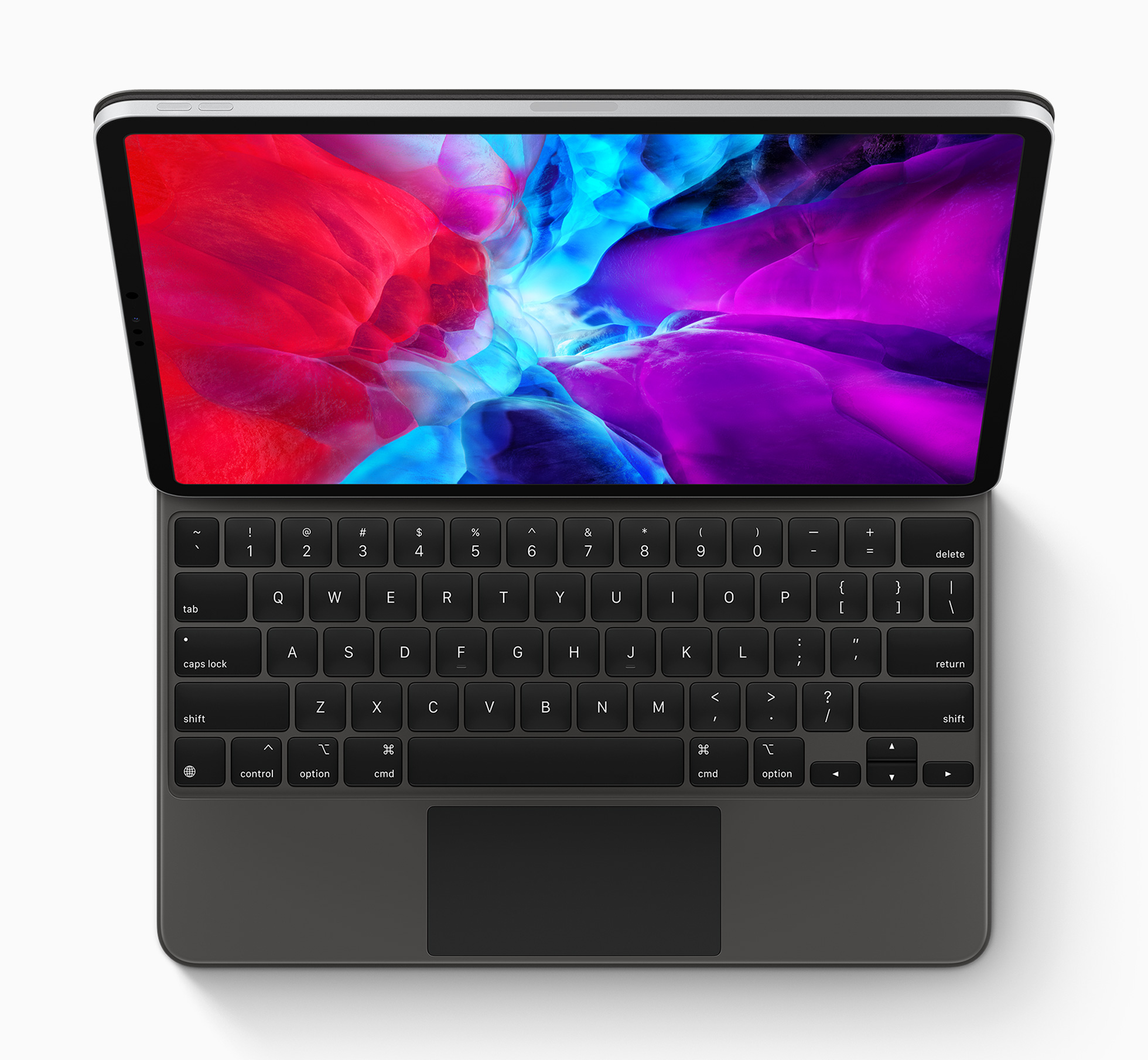
The new iPad Pro looks more-or-less like the existing iPad Pro, but with better specifications, plus a new Magic Keyboard with backlit keys, a trackpad and a hinge that allows you to move the iPad freely.

Apple also announced a new MacBook Air that’s getting that same Magic Keyboard mechanism, which was introduced with the 16-inch MacBook Pro last year. The new scissor mechanisms offer more travel than the earlier, much-maligned MacBook keyboard and should hold up much better.

2. US government reportedly in talks with tech companies on how to use location data in COVID-19 fight

U.S. government officials are currently in discussion with a number of tech companies, including Facebook and Google, around how data from cell phones might provide methods for combating the ongoing coronavirus pandemic, according to a new Washington Post report.

3. Fox gets deeper into streaming with $440M acquisition of Tubi

Tubi, an ad-supported streaming service, will bring a new digitally native consumer offering to Fox. (This Fox is the broadcast news and entertainment company holding what remains of the Murdoch family’s television and cable sports and media assets after the sale of 21st Century Fox to Disney.)

4. Facebook wrongly blocked some links, including coronavirus info

Facebook suffered from a massive bug in its News Feed spam filter, causing URLs for legitimate websites, including Medium, BuzzFeed and USA Today, to be blocked from being shared as posts or comments. As of yesterday evening, the company said it has restored all the posts that were incorrectly removed.

5. With the travel market in tatters, when can Airbnb go public in 2020?

The world’s travel industry has become troubled in light of the spread of COVID-19, the resulting border closures and reduction in personal and business travel. Mix in a broad stock market sell-off, and Airbnb is in a tricky spot. (Extra Crunch membership required.)

6. SpaceX’s latest Starlink launch included an unforeseen engine issue

While successful in its primary mission, the latest SpaceX launch wasn’t without unexpected issues: The secondary mission of recovering the Falcon 9 booster with a controlled landing failed, for the second launch in a row.

7. Facebook announces $100M grant program for small businesses

Applications aren’t open yet, but the company says the program will include both ad credits and cash grants that can be spent on operational costs like paying workers and paying rent.

The Daily Crunch is TechCrunch’s roundup of our biggest and most important stories. If you’d like to get this delivered to your inbox every day at around 9am Pacific, you can subscribe here.


from Apple – TechCrunch https://ift.tt/2IZ2xHz

Google launches the next Android 11 developer preview

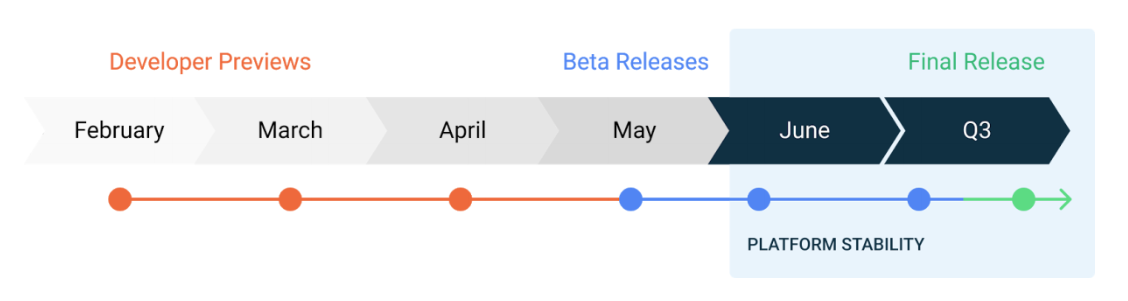
Google today announced the second developer preview of Android 11. Like the first preview, this one, too, is only meant for developers and isn’t available as an over the air update. Instead, developers have to manually download and flash their supported devices, which are currently limited to the Pixel 2, 3, 3a or 4.

Unsurprisingly, this second release doesn’t feature any groundbreaking new features and mostly continues the work done with Preview 1. For the most part, these are new APIs and other developer features. You can expect to hear more about user-facing updates in some of the next releases.

“It’s still an early build, but you can start to see how the OS is enabling new experiences in this release, from seamless 5G connectivity to wrapping your UI around the latest screens, to a smarter keyboard and faster messaging experience,” writes Dave Burke, Google’s VP of Engineering, in today’s announcement.

New features in the second preview include a 5G state API to see if a user is currently on a 5G network, so that developers can then activate experiences that necessitate a 5G network, for example. There is also now better support for foldable devices with a new API that can read data from a hinge angle sensor so that apps can, as the name implies, adapt to the angle of the hinge.  There are also new APIs for screening robocalls and support for variable refresh rates and more. For developers who use neural networks in their apps, Android 11 will include a new “hard swish-op” function that will enable faster and more accurate training for on-device models.

While most of these updates focus on developers, one feature users will likely notice is ‘resume on boot.’ When an Android 11 device reboots after an overnight over-the-air update, it can now immediately access Credential Encrypted storage and start receiving messages right away. In current versions, the phone would mostly lie dormant until you logged in with your credentials.


from Android – TechCrunch https://ift.tt/2Qtdju1
via IFTTT

Google’s Advanced Protection program for high-risk users now includes malware protection

Google is expanding the feature set for its Advanced Protection Program, a security offering that helps safeguard Google Accounts of those at risk for targeted attacks — like politicians, journalists, activists, business leaders, and others. The program already provides an increased level of protection for these accounts by limiting access to data, blocking fraudulent account access, supporting the use of physical security keys, and more. Today, Google is adding new malware protections to the program, as well.

For starters, those enrolled in the Advanced Protection Program will have Google Play Protect automatically enabled. This is Google’s built-in malware protection for Android that’s currently used to scan and verify 100 billion apps per day, Google notes. The system uses machine learning to automatically scan users’ device and apps to check for harmful behavior and potential security issues. Now, this will be enabled for Advanced Protection Program members and will not be able to be shut off.

The program will also now limit users’ ability to install apps from outside the Play Store, where apps are now scanned for malware before approval. Those from outside the store can present a greater risk. Google will now prevent the download of non-Play Store apps on any devices enrolled in the Advanced Protection Program, with a few exceptions. Users will be able to install non-Play Store apps through other third-party app stores that may have shipped on your device from the device manufacturer. Others can be installed through the developer tool Android Debug Bridge. However, Google says non-Play Store apps that have already been installed won’t be removed and can continue to be updated.

Google launched its Advanced Protection Program in fall 2017, as an opt-in option for those who believe they’re at increased risk of online attacks. The program focuses on defending against phishing, locking down malicious apps, and fending off hackers. The trade-off is reduced convenience as there are additional steps to take during authentication and more limitations on what can be done. But the result is a safer, and free, way to increase the security of your account and device.

The new added protections will roll out gradually to accounts enrolled in Advanced Program on Android devices, to be later this year be followed by new malware protections for Chrome, Google says. However, G Suite users won’t get these new protections now — instead, they’re offered through endpoint management which helps secure devices belonging to mobile workforces.


from Android – TechCrunch https://ift.tt/2QqfGgS
via IFTTT

iPads become more laptop-like with the arrival of full mouse and trackpad support

Apple just dumped a bunch of hardware news online via press release. That’s just the world we live in right now. We’ll probably be seeing a whole lot of this in the coming weeks and months, as companies adjust to the new online reality. Along with with a new MacBook Air and update to the Mac Mini, the company’s creative pro-focused iPad Pro got a couple of key new features.

A number of the additions, including the $299/$349 (depending on model) Magic Keyboard are aimed at the company’s longtime desire to push the iPad beyond a tablet, into something more akin to a super portable productivity device.

At the center of the latest push is the forthcoming iPadOS 13.4, which brings with it  laptop-style cursor and mouse support. The update will be available on the new Pro, for use with the trackpad on the keyboard case. Some good news, too, for those not willing to shell out the money for a new models: it’s also coming to most iPads released in the last few years.

But iPadOS, for better and worse, is not MacOS. As such, the company’s taken a different approach to the familiar desktop cursor model. Per the press release,

Rather than copying the experience from macOS, trackpad support has been completely reimagined for iPad. As users move their finger across the trackpad, the pointer elegantly transforms to highlight user interface elements. Multi-Touch gestures on the trackpad make it fast and easy to navigate the entire system without users ever lifting their hand.

Clearly these sorts of updates were a big motivator behind forking iOS and iPadOS, as the iPad increasingly seeks to blaze its own path in the nebulous territory between mobile and desktop. We may not yet have a touchscreen Mac, but for users who are considering turning to the tablet as a primary computing device, Apple’s certainly eases that transition.

The new iPro is available for purchase today, and the Magic Keyboard arrives in May. iPadOS is set to arrive somewhere between the two, on March 24. The update will make the system compatible with the latest version of Apple’s Magic Mouse and Trackpad, along with some third-party bluetooth mice.


from Apple – TechCrunch https://ift.tt/2U0G6s8