Thursday, 14 May 2020

Why did Apple buy NextVR?

After plenty of talk about AR as the next computing platform, Apple may have more interest in virtual reality than they’ve previously forecasted.

Following an April report from 9to5mac, today Apple confirmed the acquisition of VR broadcasting startup NextVR to Bloomberg. A note on NextVR’s website now highlights that the company is “moving in a new direction.”

At face value, this acquisition seems a little strange for Apple. Apple has been pushing full throttle on mobile AR, largely eschewing public activity or interest in the VR world, leaving that domain wholly in Facebook’s hands. Late last year, The Information reported that Apple had informed employees that it may be shipping a device in 2022 that combined AR and VR capabilities in a form factor similar to the Oculus Quest. That teamed with this acquisition suggests that Apple may have deeper plans for VR than they’ve previously indicated.
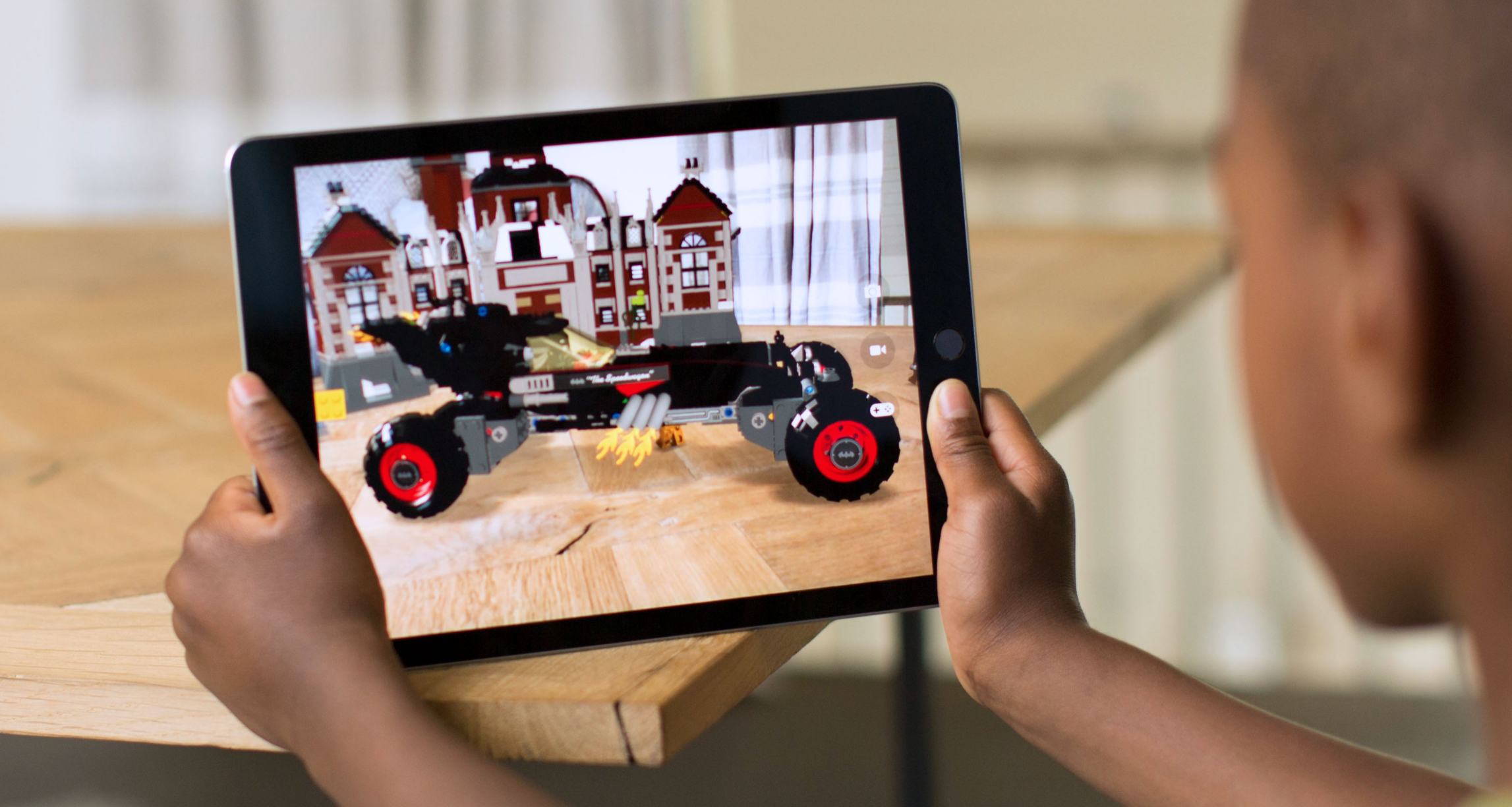
Over a few years of iOS presence, it’s not clear whether Apple has really come to many grand realizations around what good AR content looks like. Therefore, releasing a “mixed reality” headset in a couple years and continuing to push developer innovation on AR content while relying on a broader base of VR content satisfying users makes practical sense for a gen-one AR device.

9to5mac pinned the NextVR deal price around $100 million, a price that’s far from a thrilling end for NextVR’s investors who collectively pumped $115 million into the company, but at the same time would be a surprisingly robust exit for the company given the broader shape of the VR content market at the moment. If that’s truly where the deal ended up, that would be a lot of money for Apple to pay for something that they don’t have meaningful plans for. One of NextVR’s biggest strengths was in the partnerships they had built out over the years with sports leagues, I’m guessing Apple doesn’t care too much about keeping those partnerships active when they don’t sell devices optimized for them, but NextVR’s tech stack for broadcasting VR content broadly could paint a picture of future Apple content maneuvering.

As Apple has built out organizational heft in the content space around efforts like Apple TV+, it’s more feasible that they’d want to use an acquisition like this to get a head start in extending their content network to new devices in their pipeline.

The main problem with all of this is that VR-optimized content doesn’t translate very well to augmented reality. NextVR’s solution leverages the full field-of-view of existing VR headsets, putting users in a wholly 3D environment. There’s no technical reasons that AR headset users couldn’t eventually experience this content in the same way but there aren’t any AR headsets with the field-of-view to leverage this type of content, and advances here have been pretty slow. Existing AR devices might not be optimized for VR and vice versa, but Apple might already be organizing itself with the assumption that won’t be the case for long.

Facebook struggled for years to build out a meaningful network of virtual reality content to power its Oculus hardware. Solving the chicken-and-the-egg problem of not enough content for users but not enough users to court content developers ended up leading to Facebook unilaterally bankrolling VR development for several years. Apple could await a similar fate in AR.

With Magic Leap increasingly out of the picture, when Apple eventually debuts an augmented reality device, they may find themselves arriving onto a dead sector with little non-enterprise development organically in the works. Apple has long thrived on its developer relationships to gather early interest in a new platform, but with ARKit’s consumer interest largely failing to build thus far, it’s fair to expect that plenty of developers might have a wait-and-see approach to any ambitious AR release, leaving a heavy burden on Apple’s ability to scrounge together AR launch content.

Apple’s biggest failure with ARKit thus far has been their own inability to highlight the platform’s potential on mobile devices. Through several iterations of their AR development platform, the company has been more conservative than ever in showcasing first-party use cases. Their most high-profile reveal has been a downloadable 3D measurement app. All the while, few hits have emerged that uniquely leverage the spatial platform.

Virtual reality may be a safer place for Apple to invest in the meantime. Good virtual reality content is generally easier to make, it relies less on interacting with the real world and developers have more end-to-end control of experiences. Leveraging NextVR’s tech could give Apple access to a smooth pipeline towards a wider body of VR content that could be enjoyed on a “mixed reality” device and on more technologically advanced AR glasses down the road. Tim Cook and plenty of others in Apple’s leadership have been outspoken in their excitement for AR’s potential, but as developers continue to struggle in finding that potential, perhaps virtual reality’s appeal is growing more important to that long-term strategy.


from Apple – TechCrunch https://ift.tt/3cyROks

Decrypted: Contact-tracing privacy, Zoom buys Keybase, Microsoft eyes CyberX

As the world looks to reopen after weeks of lockdown, governments are turning to contact tracing to understand the spread of the deadly coronavirus.

Most nations are leaning toward privacy-focused apps that use Bluetooth signals to create an anonymous profile of where a person has been and when. Some, like Israel, are bucking the trend and are using location and cell phone data to track the spread, prompting privacy concerns.

Some of the biggest European economies — Germany, Italy, Switzerland and Ireland — are building apps that work with Apple and Google’s contact-tracing API. But the U.K., one of the worst-hit nations in Europe, is going it alone.

Unsurprisingly, critics have both security and privacy concerns, so much so that the U.K. may end up switching over to Apple and Google’s system anyway. Given that one of Israel’s contact-tracing systems was found on an passwordless server this week, and India denied a privacy issue in its contact-tracing app, there’s not much wiggle-room to get these things wrong.

Turns out that even during a pandemic, people still care about their privacy.

Here’s more from the week.


THE BIG PICTURE

Zoom acquires Keybase, but questions remain

When Zoom announced it acquired online encryption key startup Keybase, for many, the reaction was closer to mild than wild. Even Keybase, a service that lets users store and manage their encryption keys, acknowledged its uncertain future. “Keybase’s future is in Zoom’s hands, and we’ll see where that takes us,” the company wrote in a blog post. Terms of the deal were not disclosed.

Zoom has faced security snafu after snafu. But after dancing around the problems, it promised to call in the cavalry and double down on fixing its encryption. So far, so good. But where does Keybase, largely a consumer product, fit into the fray? It doesn’t sound like even Zoom knows yet, per enterprise reporter Ron Miller. What’s clear is that Zoom needs encryption help, and few have the technical chops to pull that off.

Keybase’s team might — might — just help Zoom make good on its security promises.


from Apple – TechCrunch https://ift.tt/2xVwW7O

Instagram adds new anti-bullying features, including tag controls, comment management tools

As part of its anti-bullying efforts, Instagram today announced a series of new features aimed at helping users better manage negative comments as well as highlight positive ones. It’s also adding new controls to manage who can tag or mention you on Instagram, which can be another source of online bullying.

The first of the new features for managing negative comments is specifically aimed at those who own or help run Instagram accounts with a large following. Being able to manage a surge of negative comments on these accounts can be difficult — especially in the case of a post that’s gone viral or a coordinated attack from online trolls or bots.

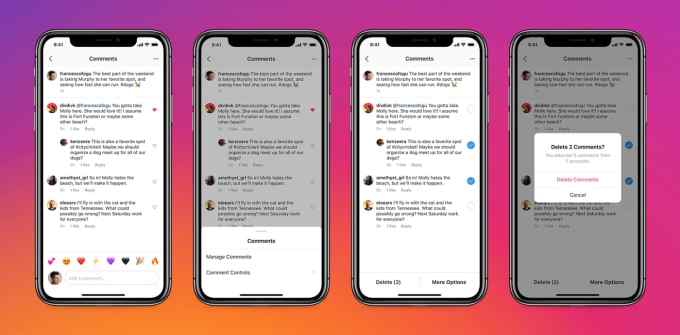
Instagram has been testing a new feature that allows account holders to delete comments in bulk and restrict multiple accounts that post negative comments. This could effectively silence those who regularly stalk high-profile accounts with the main goal of leaving negative or trolling remarks. The company says the early feedback from its tests has been encouraging, so it’s opening up the feature to Instagram users on mobile.

On iOS, you can tap on a comment, then the dotted icon in the top-right corner where you’ll choose “Manage Comments.” This will allow you to choose up to 25 comments to delete at once. If you tap “More Options,” you’ll also find a feature that lets you block or restrict commenters’ accounts in bulk. On Android, you’ll instead press and hold on a comment, then tap the dotted icon, and select Block or Restrict.

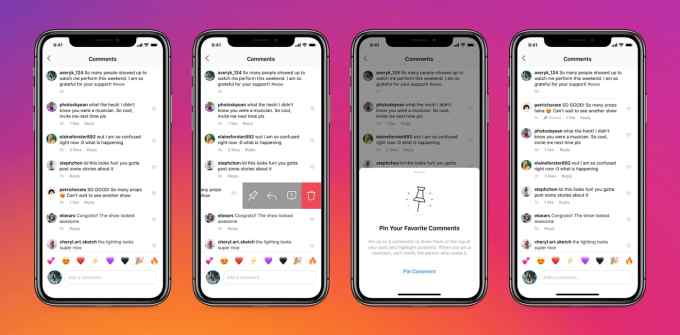
Another new feature, Pinned Comments, will soon launch as a test.

The idea here is to give Instagram users a way to amplify positive comments. This can help set the tone for the community and encourage more positive interactions, as a result. When the feature goes live, users will be able to select and pin a number of comments to the top of their comments thread, where they’re more easily seen.

While these features will put account owners in better control over their community, they may also have the effect of silencing valid criticism or any comments the poster simply doesn’t like. Twitter, by comparison, offers a way for users to hide replies they don’t like — but it doesn’t remove them from its platform. Instead, the replies are hidden behind an extra click, keeping them visible to anyone who knows where to look.

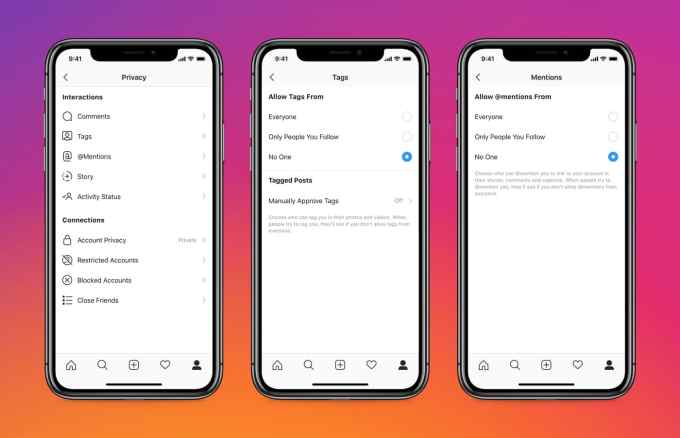
Instagram is also now rolling out a set of expanded controls that allow you to choose who’s allowed to mention or tag you in comments, captions or Stories. You’ll be able to select from “Everyone,” “Only People You Follow” or “No One,” for both tags and mentions. In addition, you’ll be able to toggle on or off an option that gives you the ability to manually approve tags.

The launch of the trio of new features comes alongside Facebook’s fifth edition of its Community Standards Enforcement Report, which details how well the company has been able to enforce its policies across its suite of apps.

For the first time, the report shared enforcement data for bullying on Instagram, noting that it took action on 1.5 million pieces of content in both Q4 2019 and Q1 2020.

The company also made improvements to its text and image matching technology to find more suicide and self-injury content on Instagram, it said. As a result, it increased the action on this content by 40% and increased its proactive detection rate by more than 12 points since its last report. The technology used to find and remove child nudity and sexual exploitative content was improved across both Facebook and Instagram, as well.


from Android – TechCrunch https://ift.tt/2zuAYVa
via IFTTT

Apple Operations SVP details supply chain safety changes due to COVID-19

Today, Apple released its 2020 Supplier Responsibility progress report. In it, Senior Vice President of Operations Sabih Khan published a letter that details an outline of the plan it created to increase safety and protection efforts in its supply chain worldwide.

As far as I can tell this is the first time that Khan has written publicly since he was appointed to this role in 2019. The letter walks through some of the efforts Apple has made to ensure, as Khan states, a “right to a safe and healthy workplace” for Apple employees and supply chain members.

As a pole position company that is the premiere manufacturer of consumer electronics in the world, Apple’s stances and efforts here are obviously under an incredible microscope. The measures that it takes will serve as a playbook for worldwide manufacturers going forward.

After thanking Apple’s suppliers around the word, Khan says that thousands of its employees worked with suppliers to create a plan to continue business in a fashion that took to account health recommendations in each country as well as the universal rules that govern coronavirus spread mitigation.

Apple Senior Vice President,
Operations, Sabih Khan

A few actions it has taken at its supplier facilities:

  • Health screenings
  • limiting density and enforcing strict social distancing
  • Requiring the use of PPE both during work and in common areas
  • Implementing enhanced deep cleaning protocols
  • Deploying masks and sanitizers to employees

Apple has also redesigned and reconfigured factory floorpans at its suppliers where needed. It has also introduced flexible work hours like staggered work shifts to ensure social distancing measures can be maintained.

In addition to executing protections at its own suppliers, Apple is sharing its plans with NGOs and other organizations to help establish standards across the industry.

“We put people first in everything we do— and require everyone we work with to do the same — because we want to uphold the highest standards,” Khan says in the letter. “Our Supplier Code of Conduct prevents discrimination and harassment of any kind, and supplier employees are provided anonymous channels to speak up.  We partner with our suppliers to create educational and training opportunities, including traditional college degree programs, vocational training initiatives, and health and wellness programs so their employees can learn new skills and work toward fulfilling their goals.”

Apple’s supplier report would normally be released in the February-March time frame but it wanted to take some time to plan and execute protection measures first before issuing the report and details of its adjustments due to COVID-19.

“While COVID-19 has been an unprecedented challenge, we’ve also drawn hope and inspiration from humanity’s renewed focus on the health of our colleagues, friends, and neighbors. That consciousness — of our health and the health of others — is something we can always carry with us,” Khan finishes. “Our work to protect people and the planet may never be finished — but we’ve never been more confident that our brightest days are still ahead.”

The supplier report this year is based on interviews of 52,000 workers in its supply chain. It is also auditing suppliers in 49 countries now, up from 30 in 2018 — with a total of 1142 audits in 2019. Apple’s Zero Waste program was introduced in 2015 in an effort reduce carbon emissions and waste from its supply chain. This report says that the program is now integrated into final assembly, testing and packaging across all of its major products. Apple diverted 1.3 million metric tons of waste from landfills last year and re-used 40% of water from its manufacturing process — some 9.4 billion gallons.

The full text of Khan’s letter is below.

Health comes first. Now and always.

As people around the world continue to face many challenges with the COVID-19 pandemic, we are reminded of the importance of protecting the planet and treating everyone with dignity and respect — values that inform every decision we make.

Our Supplier Responsibility Progress Report is a look back at the progress we achieved in bringing those commitments to life last year. But I first want to share some of the actions we’re taking in our global supply chain right now to address COVID-19’s unprecedented challenges, and to ensure people are able to return to work safely — because everyone has the right to a safe and healthy workplace.

This pandemic has left no country untouched, and we want to thank all our suppliers around the world for their commitment, flexibility and care for their teams as we navigate COVID-19’s complex and rapidly evolving impacts. From the outset, we worked with our suppliers to develop and execute a plan that puts the health of people first.  Thousands of Apple employees have worked tirelessly to execute that plan in partnership with our suppliers around the world.

First and foremost, that’s meant working with our suppliers around the world on a range of protections suited to the circumstances in each country, including health screenings, limiting density, and ensuring strict adherence to social distancing in their facilities. We’re requiring the use of personal protective equipment — both during work and in all common areas — and have worked together to implement enhanced deep cleaning protocols and deploy masks and sanitizers.

Our teams have also partnered with suppliers to redesign and reconfigure factory floorplans where needed and to implement flexible working hours — including staggered work shifts — to maximize interpersonal space. We continue to work closely with leading medical and privacy experts to develop advanced health and safety protocols.

As we develop tools and implement best practices across our entire supply chain, we are also sharing what we learn within our industry and beyond.  We haven’t allowed COVID-19 to undermine the values that have long defined who we are — values rooted in the responsibilities we have to one another and to the planet.

This year’s Supplier Responsibility Progress Report describes our work to bring all of those commitments to life in 2019. Whether it’s helping with the transition to 100 percent renewable energy, or training millions of people on their workplace rights, we apply our values in all aspects of our business, and every year, we raise the bar that our suppliers must meet as well.

We put people first in everything we do— and require everyone we work with to do the same — because we want to uphold the highest standards. Our Supplier Code of Conduct prevents discrimination and harassment of any kind, and supplier employees are provided anonymous channels to speak up.  We partner with our suppliers to create educational and training opportunities, including traditional college degree programs, vocational training initiatives, and health and wellness programs so their employees can learn new skills and work toward fulfilling their goals.

We’re committed to transparently reporting the progress we’ve made and have yet to make. This report draws on interviews from more than 50,000 employees in our supply chain and more than one thousand audits of supplier facilities across 49 countries — including surprise audits. The same attention to detail and innovation that goes into our products informs this report, and the work to ensure our worldwide network of suppliers upholds the standards themselves.

The environment we all share is fragile, and we are more dedicated than ever to fighting climate change and reducing emissions. Through strategic partnerships, we’re helping our suppliers shrink their carbon footprint and conserve precious resources, like water and energy. Green manufacturing is smart manufacturing, and, more broadly, we know what is good for the environment is also good for business.   

While COVID-19 has been an unprecedented challenge, we’ve also drawn hope and inspiration from humanity’s renewed focus on the health of our colleagues, friends, and neighbors. That consciousness — of our health and the health of others — is something we can always carry with us.

Our work to protect people and the planet may never be finished — but we’ve never been more confident that our brightest days are still ahead.

Sabih Khan is Apple’s Senior Vice President of Operations.

Sabih leads Apple’s global supply chain, which includes Supplier Responsibility.


from Apple – TechCrunch https://ift.tt/2Z2FKE4

Wednesday, 13 May 2020

Inria releases some source code of French contact-tracing app

French research institute Inria has released a small portion of the source code that is going to power France’s contact-tracing app, StopCovid. It is available on several GitLab repositories under the Mozilla Public License 2.0. While the French government announced that everything would be open source, it’s going to be bit a more complicated than that.

As Inria wrote in the announcement, the project is now divided in three parts. Critical elements of the infrastructure are not going to be available on the GitLab repositories. Instead, Inria will only release documentation on the security implementations, as ANSSI and France’s data protection watchdog CNIL recommended some level of transparency on this front.

A second part is going to be released publicly, but Inria is not looking for external contributions or, as developers would say, pull/merge requests. You can expect front-facing work here and things that don’t interact directly with the contact-tracing protocol.

The third part consists of the contact-tracing protocol and its implementation. This time, Inria and the community of companies and research teams working on StopCovid are looking for external contributions. The idea here is to improve the protocol itself when it comes to privacy and security.

France is moving forward with its centralized contact-tracing protocol called ROBERT. I analyzed the pros and cons of the protocol when Inria and Fraunhofer released the specifications.

It’s very different from Apple and Google’s contact-tracing API, as ROBERT relies on a central server to assign a permanent ID as well as a bunch of ephemeral IDs attached to this permanent ID. Your phone collects the ephemeral IDs of other app users around you. When somebody is diagnosed COVID-19-positive, the server receives all the ephemeral IDs associated with people with whom they’ve interacted. If one or several of your ephemeral IDs get flagged, you receive a notification.

By choosing a pseudonymous system, you have to trust your government that its implementation is rock-solid. For instance, if the app sends too much information when it communicates with the server, it would become possible to put names on permanent IDs.

Inria says that StopCovid could be released in early June, if everything goes well. France’s digital minister, Cédric O, said in a TV interview that the government wanted to release StopCovid on June 2.


from Apple – TechCrunch https://ift.tt/2zE3uDG

Top members of Google’s Pixel team have left the company

Key Pixel team members Marc Levoy and Mario Queiroz are out at Google. The departures, first reported by The Information, have been confirmed on the pages of the former Distinguished Engineer and Pixel General Manager, respectively.

Both members were key players on Google’s smartphone hardware team before exiting earlier this year. Levoy was a key member of the Pixel imaging team, with an expertise in computational photography that helped make the smartphone’s camera among the best in class. Queiroz was the number two on the Pixel team.

The exits come as the software giant has struggled to distinguish itself in a crowded smartphone field. The products have been generally well-received (with the exception of the Pixel 4’s dismal battery life), but the Android-maker has thus far been unable to rob much market share from the likes of Samsung and Huawei.

The Information report sheds some additional light on disquiet among the Pixel leadership. Hardware head Rick Osterloh reportedly voiced some harsh criticism during an all-hands late last year. It certainly seems possible the company saw fit to shake things up a bit, though Google declined TechCrunch’s request for comment.

Breaking into the smartphone market has been a white whale for the company for some time. Google has explored the space through its Nexus partnerships, along with its short-lived Motorola Mobility acquisition (2012-2014). The Pixel is possibly the most successful of these projects, but Google’s struggles have coincided with an overall flattening of the market.

The company did find some success with last year’s budget Pixel 3A. The followup Pixel 4A was rumored for a late May launch, though the device has reportedly been delayed.


from Android – TechCrunch https://ift.tt/3fRPMOz
via IFTTT

Instagram Lite shuts down in advance of a relaunch

Instagram Lite, the two-year-old version of the Instagram app aimed at emerging markets, has quietly disappeared. The previously highly ranked app vanished from the Google Play charts on April 13 in the countries where it was active, including Kenya, Mexico, Peru and the Philippines. Existing Instagram Lite users have been directed to the main Instagram app via a message that claimed “Instagram Lite is No Longer Supported.”

Android Police first reported the news of Instagram Lite’s shutdown. TechCrunch has since confirmed details of the app’s removal with Instagram parent, Facebook.

“We are rolling back the test of the Instagram Lite app, a Facebook spokesperson said. “You can start using the latest version of Instagram instead to connect with the people and things you love,” they noted.

Instagram Lite launched on Google Play in June 2018 without fanfare. Like other “Lite”-branded apps on the market, Instagram Lite’s goal was to offer a smaller download that takes up less space on a mobile device — a feature that specifically caters to users in emerging markets, where storage space is a concern. At launch, the “Lite” version of Instagram was 573 kilobytes, or roughly 1/55th the size of Instagram’s then 32-megabyte application.

Like Instagram, the slimmed-down Instagram Lite app allowed users to filter and post photos to a feed or to Stories, and to browse the Explore page for more content. However, it lacked the option to post videos or direct-message friends upon arrival.

On June 28, 2018, Mexico was the first market to receive Instagram Lite. It also accounted for the majority — 62% — of its total installs. To date, Instagram Lite was downloaded approximately 4.4 million times in Mexico, according to data from Sensor Tower, shared with TechCrunch. The second largest market was the Philippines, with 14% of installs. Kenya and Peru trailed, with 12.5% and 12% of installs, respectively.

Due to demand for “Lite” applications in these regions, Instagram Lite was able to climb to the top of Google Play’s charts. The app was ranked No. 8 in Kenya in the “Social” category on Google Play, as well as No. 12 in Peru, No. 15 in Mexico and No. 22 in the Philippines.

On April 15, it vanished from the charts, indicating a removal in those regions, which the company has now confirmed.

While it’s unusual to pull an app entirely when an update is planned, we understand that’s what Facebook has in store for Instagram Lite.

The company — which has always characterized the app as a “test” — is planning to take what it has learned over these past years to develop a new version of Instagram Lite. It’s unclear how far out that launch may be, but the new version is currently being built.

Instagram Lite was one of a few “Lite” apps that Facebook offers, led by the early launch of Facebook Lite in 2015, followed by Messenger Lite in April 2018. A number of major tech companies also offer apps aimed at emerging markets, often dubbed their “Lite” version, including Uber, Tinder, Spotify, Twitter and others. Google does the same under the “Go” brand.

But unlike many of these efforts, Instagram Lite had not yet reached some of the larger emerging markets these apps tend to target, like India, Indonesia, Brazil and others. That could change in the future, however.

In the meantime, Lite users are being directed to the main Instagram app. Alternately, they can use Instagram via the web from their phone.


from Android – TechCrunch https://ift.tt/35Sx848
via IFTTT