Sunday, 19 January 2020

TechCrunch’s Top 10 investigative reports from 2019

Facebook spying on teens, Twitter accounts hijacked by terrorists, and sexual abuse imagery found on Bing and Giphy were amongst the ugly truths revealed by TechCrunch’s investigating reporting in 2019. The tech industry needs more watchdogs than ever as its size enlargens the impact of safety failures and the abuse of power. Whether through malice, naivety, or greed, there was plenty of wrongdoing to sniff out.

Led by our security expert Zack Whittaker, TechCrunch undertook more long-form investigations this year to tackle these growing issues. Our coverage of fundraises, product launches, and glamorous exits only tell half the story. As perhaps the biggest and longest running news outlet dedicated to startups (and the giants they become), we’re responsible for keeping these companies honest and pushing for a more ethical and transparent approach to technology.

If you have a tip potentially worthy of an investigation, contact TechCrunch at tips@techcrunch.com or by using our anonymous tip line’s form.
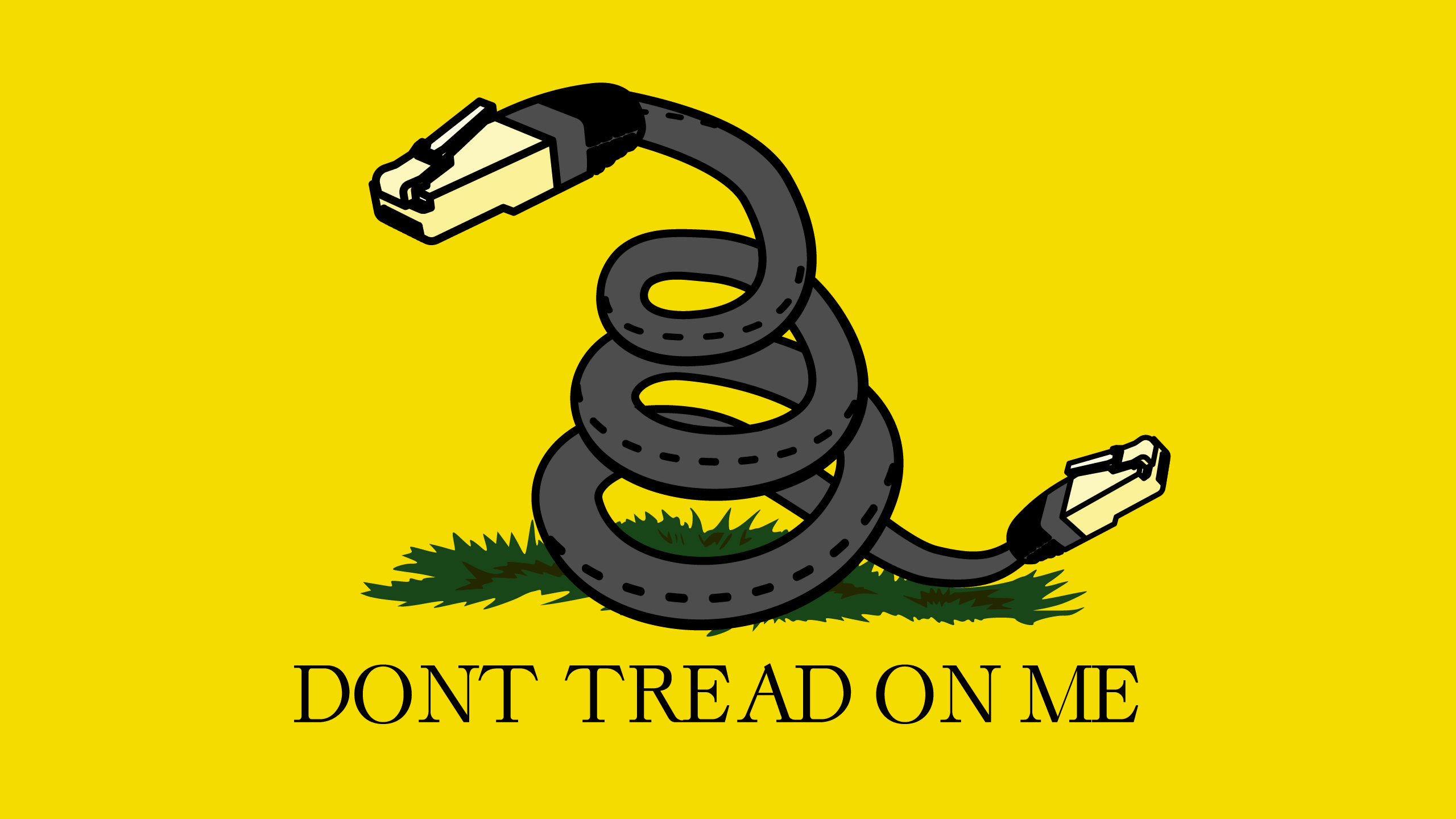
Image: Bryce Durbin/TechCrunch

Here are our top 10 investigations from 2019, and their impact:

Facebook pays teens to spy on their data

Josh Constine’s landmark investigation discovered that Facebook was paying teens and adults $20 in gift cards per month to install a VPN that sent Facebook all their sensitive mobile data for market research purposes. The laundry list of problems with Facebook Research included not informing 187,000 users the data would go to Facebook until they signed up for “Project Atlas”, not receiving proper parental consent for over 4300 minors, and threatening legal action if a user spoke publicly about the program. The program also abused Apple’s enterprise certificate program designed only for distribution of employee-only apps within companies to avoid the App Store review process.

The fallout was enormous. Lawmakers wrote angry letters to Facebook. TechCrunch soon discovered a similar market research program from Google called Screenwise Meter that the company promptly shut down. Apple punished both Google and Facebook by shutting down all their employee-only apps for a day, causing office disruptions since Facebookers couldn’t access their shuttle schedule or lunch menu. Facebook tried to claim the program was above board, but finally succumbed to the backlash and shut down Facebook Research and all paid data collection programs for users under 18. Most importantly, the investigation led Facebook to shut down its Onavo app, which offered a VPN but in reality sucked in tons of mobile usage data to figure out which competitors to copy. Onavo helped Facebook realize it should acquire messaging rival WhatsApp for $19 billion, and it’s now at the center of anti-trust investigations into the company. TechCrunch’s reporting weakened Facebook’s exploitative market surveillance, pitted tech’s giants against each other, and raised the bar for transparency and ethics in data collection.

Protecting The WannaCry Kill Switch

Zack Whittaker’s profile of the heroes who helped save the internet from the fast-spreading WannaCry ransomware reveals the precarious nature of cybersecurity. The gripping tale documenting Marcus Hutchins’ benevolent work establishing the WannaCry kill switch may have contributed to a judge’s decision to sentence him to just one year of supervised release instead of 10 years in prison for an unrelated charge of creating malware as a teenager.

The dangers of Elon Musk’s tunnel

TechCrunch contributor Mark Harris’ investigation discovered inadequate emergency exits and more problems with Elon Musk’s plan for his Boring Company to build a Washington D.C.-to-Baltimore tunnel. Consulting fire safety and tunnel engineering experts, Harris build a strong case for why state and local governments should be suspicious of technology disrupters cutting corners in public infrastructure.

Bing image search is full of child abuse

Josh Constine’s investigation exposed how Bing’s image search results both showed child sexual abuse imagery, but also suggested search terms to innocent users that would surface this illegal material. A tip led Constine to commission a report by anti-abuse startup AntiToxin (now L1ght), forcing Microsoft to commit to UK regulators that it would make significant changes to stop this from happening. However, a follow-up investigation by the New York Times citing TechCrunch’s report revealed Bing had made little progress.

Expelled despite exculpatory data

Zack Whittaker’s investigation surfaced contradictory evidence in a case of alleged grade tampering by Tufts student Tiffany Filler who was questionably expelled. The article casts significant doubt on the accusations, and that could help the student get a fair shot at future academic or professional endeavors.

Burned by an educational laptop

Natasha Lomas’ chronicle of troubles at educational computer hardware startup pi-top, including a device malfunction that injured a U.S. student. An internal email revealed the student had suffered a “a very nasty finger burn” from a pi-top 3 laptop designed to be disassembled. Reliability issues swelled and layoffs ensued. The report highlights how startups operating in the physical world, especially around sensitive populations like students, must make safety a top priority.

Giphy fails to block child abuse imagery

Sarah Perez and Zack Whittaker teamed up with child protection startup L1ght to expose Giphy’s negligence in blocking sexual abuse imagery. The report revealed how criminals used the site to share illegal imagery, which was then accidentally indexed by search engines. TechCrunch’s investigation demonstrated that it’s not just public tech giants who need to be more vigilant about their content.

Airbnb’s weakness on anti-discrimination

Megan Rose Dickey explored a botched case of discrimination policy enforcement by Airbnb when a blind and deaf traveler’s reservation was cancelled because they have a guide dog. Airbnb tried to just “educate” the host who was accused of discrimination instead of levying any real punishment until Dickey’s reporting pushed it to suspend them for a month. The investigation reveals the lengths Airbnb goes to in order to protect its money-generating hosts, and how policy problems could mar its IPO.

Expired emails let terrorists tweet propaganda

Zack Whittaker discovered that Islamic State propaganda was being spread through hijacked Twitter accounts. His investigation revealed that if the email address associated with a Twitter account expired, attackers could re-register it to gain access and then receive password resets sent from Twitter. The article revealed the savvy but not necessarily sophisticated ways terrorist groups are exploiting big tech’s security shortcomings, and identified a dangerous loophole for all sites to close.

Porn & gambling apps slip past Apple

Josh Constine found dozens of pornography and real-money gambling apps had broken Apple’s rules but avoided App Store review by abusing its enterprise certificate program — many based in China. The report revealed the weak and easily defrauded requirements to receive an enterprise certificate. Seven months later, Apple revealed a spike in porn and gambling app takedown requests from China. The investigation could push Apple to tighten its enterprise certificate policies, and proved the company has plenty of its own problems to handle despite CEO Tim Cook’s frequent jabs at the policies of other tech giants.

Bonus: HQ Trivia employees fired for trying to remove CEO

This Game Of Thrones-worthy tale was too intriguing to leave out, even if the impact was more of a warning to all startup executives. Josh Constine’s look inside gaming startup HQ Trivia revealed a saga of employee revolt in response to its CEO’s ineptitude and inaction as the company nose-dived. Employees who organized a petition to the board to remove the CEO were fired, leading to further talent departures and stagnation. The investigation served to remind startup executives that they are responsible to their employees, who can exert power through collective action or their exodus.

If you have a tip for Josh Constine, you can reach him via encrypted Signal or text at (585)750-5674, joshc at TechCrunch dot com, or through Twitter DMs


from Apple – TechCrunch https://ift.tt/30KNeut

Saturday, 18 January 2020

Week in Review: Forget cord cutting, here comes the stream slashing

Hey everyone, welcome back to Week in Review where I dive deep into a bit of news from the week or just share some thoughts and go over some of the more interesting stories of the week.

If you’re reading this on the TechCrunch site, you can get this in your inbox here, and follow my tweets here.


The big story

“Cord cutting” might still be a major trend for those walking away from cable subscriptions in favor of online streaming services, but the world of online subscription TV is nearly saturated and as 2020 prepares to inundate us with more services, it’s likely growing time for consumers to stop adding services and start prioritizing.

NBCUniversal delivered some more details this week on its Peacock network and earlier this month we heard more about the mobile-only streaming network Quibi. These launches will come along in the spring, arriving just months after the high-profile launches on Apple TV+ and Disney+. Adding four high-spend streaming platforms in a short time frame could rattle the cages of consumers that have been bumbling along with only a couple streaming service subscriptions.

NBCUniversal’s Peacock seems to walk the line between both worlds, leveraging Comcast subscribers without seeming to invest heavily in original content for the service. Their strategy is pinned on the attractiveness of their existing content library which they’re promoting heavily on both free and paid plans. There could be something here, it feels like a marked return to the early Hulu playbook, which could very well be played out.

I still don’t know what to think of Quibi. They are dropping plenty of cash but spending your way into building a Gen Z network seems like a tall order. They’ve already nabbed a big partnership with T Mobile which seems promising when considering their broader industry adoption and yet it still seems like Snapchat Discover Prime. I’ll withhold judgment until launch but other mobile-first video networks have had less than stellar receptions.

Side note: At this point in the streaming video product life cycle, I would imagine cracking down on password-sharing is going to start being a more attractive option for streaming service operators.

We’ll see how this all shakes out, but it’s getting crowded.

Trends of the week

Here are a few big news items from big companies, with green links to all the sweet, sweet added context:

  • Visa buys Plaid for $5.2 billion
    The biggest acquisition of the week was the very bold purchase of Plaid by Visa. Visa paid up double the banking API startup’s last private valuation. Read more here.
  • Google acquires Pointy
    Google has announced a couple deals in the past few weeks. This week, we heard that they had acquired the Dublin startup Pointy, which builds hardware and software to help physical retailers track product inventory levels. Read more about it in our coverage.
  • Alphabet is a $1 trillion company
    In the current age of big tech, there’s an elite club for public companies worth more than $1 trillion in market cap. This week, Alphabet joined its ranks. Read more here.

Extra Crunch

Our premium subscription business had another great week of content. My colleague Darrell Etherington talked a bit about the next frontier of early-stage space investments.

Space Angels’ Chad Anderson on entering a new decade in the ‘entrepreneurial space age’

“Space as an investment target is trending upwards in the VC community, but specialist firm Space Angels has been focused on the sector longer than most. The network of angel investors just published its most recent quarterly overview of activity in the space startup industry, revealing that investors put nearly $6 billion in capital into space companies across 2019.…”

Sign up for more newsletters, including my colleague Darrell Etherington’s new space-focused newsletter Max Q, here.


from Apple – TechCrunch https://ift.tt/2G4TUtO

This Week in Apps: App trends from 2019, Pinterest tops Snapchat, Disney+ hits No. 1 in Q4

Welcome back to This Week in Apps, the Extra Crunch series that recaps the latest OS news, the applications they support and the money that flows through it all.

The app industry is as hot as ever with a record 204 billion downloads in 2019 and $120 billion in consumer spending in 2019, according to App Annie’s recently released “State of Mobile” annual report. People are now spending 3 hours and 40 minutes per day using apps, rivaling TV. Apps aren’t just a way to pass idle hours — they’re a big business. In 2019, mobile-first companies had a combined $544 billion valuation, 6.5x higher than those without a mobile focus.

In this Extra Crunch series, we help you to keep up with the latest news from the world of apps, delivered on a weekly basis.

This week, we dig into App Annie’s new “State of Mobile 2019” report and other app trends. We’re also seeing big gains for TikTok in 2019 and Disney+ in Q4. Both Apple and Google announced acquisitions this week that have implications for the mobile industry, as well.


from Android – TechCrunch https://ift.tt/2G3nTSI
via IFTTT

This Week in Apps: App trends from 2019, Pinterest tops Snapchat, Disney+ hits No. 1 in Q4

Welcome back to This Week in Apps, the Extra Crunch series that recaps the latest OS news, the applications they support and the money that flows through it all.

The app industry is as hot as ever with a record 204 billion downloads in 2019 and $120 billion in consumer spending in 2019, according to App Annie’s recently released “State of Mobile” annual report. People are now spending 3 hours and 40 minutes per day using apps, rivaling TV. Apps aren’t just a way to pass idle hours — they’re a big business. In 2019, mobile-first companies had a combined $544 billion valuation, 6.5x higher than those without a mobile focus.

In this Extra Crunch series, we help you to keep up with the latest news from the world of apps, delivered on a weekly basis.

This week, we dig into App Annie’s new “State of Mobile 2019” report and other app trends. We’re also seeing big gains for TikTok in 2019 and Disney+ in Q4. Both Apple and Google announced acquisitions this week that have implications for the mobile industry, as well.


from Apple – TechCrunch https://ift.tt/2G3nTSI

Friday, 17 January 2020

As Alphabet crests the $1T mark, SaaS stocks reach all-time highs of their own

Continuing our irregular surveys of the public markets, two things happened this week that are worth our time. First, a third domestic technology company — Alphabet — passed the $1 trillion market capitalization threshold. And, second, software as a service (SaaS) stocks reached record highs on the public markets after retreating over last summer.

The two milestones, only modestly related events, indicate how temperate the public waters are for technology companies today, a fact that should extend warmth into the private market where startups, and their venture capital backers, work.

The happenings are good news for technology startups for a number of reasons, including that major tech players have never had as much wealth in hand with which to buy smaller companies, and strong SaaS valuations help both smaller startups fundraise, and their larger brethren possibly exit.

Indeed, the stridently good valuations that major tech companies and their smaller siblings enjoy today should be just the sort of market conditions under which unicorns want to debut. We’ll continue to make this point so long as the public markets continue to rise, pricing tech companies that have already floated higher like the cliche’s own tide.

But while Alphabet, Microsoft and Apple are worth $3.68 trillion as a trio, and SaaS stocks are now worth 12.3x times their revenue (using enterprise value instead of market cap, for those keeping score at home), not every private, venture-backed company will necessarily benefit from public investor largesse.

What about tech-ish startups?

How much the current public-market tech valuation expansion will help companies that are increasingly sorted into the tech-enabled bucket isn’t clear; some companies that went public in 2019 were quickly spit up by investors unwilling to support valuations that matched or rose above their final private valuations. SmileDirectClub was one such offering.

The dividing line between what counts as tech — often fuzzy — appears to be slicing along gross margin lines, and the repeatability of business. The higher margin, and more recurring a company is, the more it’s worth. This market reality is why SaaS stocks’ recent return to form is not a surprise.

For Casper and One Medical, the first two venture-backed IPO hopefuls of the year, the more tech-ish they can appear between now and pricing the better. Because technology companies today are valued so highly, perhaps even a faint dusting of tech will save their valuations as they cross the chasm between private and adult.


from Apple – TechCrunch https://ift.tt/3746ntF

Thursday, 16 January 2020

Foxconn and Fiat Chrysler partner to develop EVs and an “internet of vehicles” business

Foxconn Technology Group, the Taiwanese electronics giant best known for its iPhone manufacturing contract, is forming a joint venture with Fiat Chrysler Automobiles to build electric vehicles in China.

The joint venture was disclosed in a regulatory filing. Nikkei was first to report the joint venture.

According to the filing, each party will own 50% of the venture to develop and manufacture electric vehicles and engage in an IOV, what Foxconn parent company Hon Hai calls the “internet of vehicles” business. Hon Hai’s direct shareholding in the subsidiary will not exceed 40%, the filing says.

The venture will initially focus on making electric vehicles for China. But these vehicles could be exported at a later date, according to Foxconn.

The wording in the regulatory filing suggests these will be new vehicles that are designed and built from the ground up and not a project to electrify any of the vehicles in FCA’s current portfolio.

The venture could give FCA a better path to capturing more business in China, the world’s largest market for electric vehicles.

Foxconn has invested in other electric vehicle ventures before, although this appears to be the first tie-up in which the company will develop and build the product. EV startup Byton was originally started as Future Mobility Corporation as a joint venture between Harmony Auto, Tencent and Foxconn. And Foxconn is also an investor in XPeng Motors, the Chinese electric vehicle startup that recently raised a fresh injection of $400 million in capital and has taken on Xiaomi  as a strategic investor.


from Apple – TechCrunch https://ift.tt/2RntgSa

Foxconn and Fiat Chrysler partner to develop EVs and an “internet of vehicles” business

Foxconn Technology Group, the Taiwanese electronics giant best known for its iPhone manufacturing contract, is forming a joint venture with Fiat Chrysler Automobiles to build electric vehicles in China.

The joint venture was disclosed in a regulatory filing. Nikkei was first to report the joint venture.

According to the filing, each party will own 50% of the venture to develop and manufacture electric vehicles and engage in an IOV, what Foxconn parent company Hon Hai calls the “internet of vehicles” business. Hon Hai’s direct shareholding in the subsidiary will not exceed 40%, the filing says.

The venture will initially focus on making electric vehicles for China. But these vehicles could be exported at a later date, according to Foxconn.

The wording in the regulatory filing suggests these will be new vehicles that are designed and built from the ground up and not a project to electrify any of the vehicles in FCA’s current portfolio.

The venture could give FCA a better path to capturing more business in China, the world’s largest market for electric vehicles.

Foxconn has invested in other electric vehicle ventures before, although this appears to be the first tie-up in which the company will develop and build the product. EV startup Byton was originally started as Future Mobility Corporation as a joint venture between Harmony Auto, Tencent and Foxconn. And Foxconn is also an investor in XPeng Motors, the Chinese electric vehicle startup that recently raised a fresh injection of $400 million in capital and has taken on Xiaomi  as a strategic investor.


from iPhone – TechCrunch https://ift.tt/2RntgSa