Wednesday, 26 February 2020

Bird is testing Bird Pay, which lets users purchase items from local businesses using its main app

Another on-demand transport app is making a move into payments to expand the existing relationship with its customers (and subsequent margins that it makes from serving them). Bird today announced the launch of Bird Pay, a service that will let people use its app to purchase items from local participating businesses alongside renting scooters. The service is being tested first in Los Angeles and Santa Monica, the company said.

Bird Pay will work by way of a QR code, which can be read via your app at the point of sale at participating businesses to make cashless purchases. (After scanning the code, you enter the amount you are charging and swipe up to complete the purchase.)

The company said that Bird Pay was created directly in response to requests from businesses themselves — who will be using the app to promote deals near to where Bird users pick up or drop off scooters. The link between local businesses and scooter rides is a strong one: Bird says it found that 58% of all the rides through its app start or end at a local business, and claims that businesses in all of its areas of operation — it’s now live in some 100 cities — say that the presence of Bird scooters outside their establishments have increased footfall.

“An early insight that emerged shortly after introducing Bird in Santa Monica was that it had the potential to not only allow people to avoid the chore of circling a block to find parking resulting in congestion and frustration, but it could also foster a more direct connection between people and local businesses,” said Travis VanderZanden, CEO and founder, Bird, in a statement. “Store owners in the community often tell me, ‘Birds outside bring business inside.’ This phenomenon paired with our commitment to community resulted in Bird Pay which helps drive even more customers to local businesses.”

Adding in payments to on-demand transport apps has become something of a tested and successful formula. In Asia, companies like Grab have built rather extensive payments operations on top of their transportation apps — businesses big enough to be raising hundreds of millions of dollars in their own right to expand. And several months ago, Uber also started to test the waters in this area with the launch of Uber Money.

Of course, services like Grab’s have a slightly bigger greenfield when it comes to winning business: in many of the regions where Grab operates, cash is often still king; therefore, having a relationship with a user, where a mobile app is already being identified with “virtual money” (with money either being preloaded into an app or linked to a payment card), gives the app publisher an easy opening to expanding that relationship, such as payments for local goods and services.

The challenge in the U.S., where Bird is based and operates primarily, is somewhat different: people are already used to plastic cards, and their phones may already have one or more payments apps active already. Both Apple Pay and Google’s Android-based offering have had strong take-up, as have alternatives from Samsung, PayPal and many others. That means a much more crowded playing field for Bird or any other new entrant.

On the other hand, we are creatures of convenience, and if we already have the Bird app open to open or close off a ride, that could just be the lower friction we need to use it to buy something. Time will tell if this particular bird will, indeed, fly.

Bird last October raised some $275 million at a $2.5 billion valuation.


from Android – TechCrunch https://ift.tt/2utBhgN
via IFTTT

Bird is testing Bird Pay, which lets users purchase items from local businesses using its main app

Another on-demand transport app is making a move into payments to expand the existing relationship with its customers (and subsequent margins that it makes from serving them). Bird today announced the launch of Bird Pay, a service that will let people use its app to purchase items from local participating businesses alongside renting scooters. The service is being tested first in Los Angeles and Santa Monica, the company said.

Bird Pay will work by way of a QR code, which can be read via your app at the point of sale at participating businesses to make cashless purchases. (After scanning the code, you enter the amount you are charging and swipe up to complete the purchase.)

The company said that Bird Pay was created directly in response to requests from businesses themselves — who will be using the app to promote deals near to where Bird users pick up or drop off scooters. The link between local businesses and scooter rides is a strong one: Bird says it found that 58% of all the rides through its app start or end at a local business, and claims that businesses in all of its areas of operation — it’s now live in some 100 cities — say that the presence of Bird scooters outside their establishments have increased footfall.

“An early insight that emerged shortly after introducing Bird in Santa Monica was that it had the potential to not only allow people to avoid the chore of circling a block to find parking resulting in congestion and frustration, but it could also foster a more direct connection between people and local businesses,” said Travis VanderZanden, CEO and founder, Bird, in a statement. “Store owners in the community often tell me, ‘Birds outside bring business inside.’ This phenomenon paired with our commitment to community resulted in Bird Pay which helps drive even more customers to local businesses.”

Adding in payments to on-demand transport apps has become something of a tested and successful formula. In Asia, companies like Grab have built rather extensive payments operations on top of their transportation apps — businesses big enough to be raising hundreds of millions of dollars in their own right to expand. And several months ago, Uber also started to test the waters in this area with the launch of Uber Money.

Of course, services like Grab’s have a slightly bigger greenfield when it comes to winning business: in many of the regions where Grab operates, cash is often still king; therefore, having a relationship with a user, where a mobile app is already being identified with “virtual money” (with money either being preloaded into an app or linked to a payment card), gives the app publisher an easy opening to expanding that relationship, such as payments for local goods and services.

The challenge in the U.S., where Bird is based and operates primarily, is somewhat different: people are already used to plastic cards, and their phones may already have one or more payments apps active already. Both Apple Pay and Google’s Android-based offering have had strong take-up, as have alternatives from Samsung, PayPal and many others. That means a much more crowded playing field for Bird or any other new entrant.

On the other hand, we are creatures of convenience, and if we already have the Bird app open to open or close off a ride, that could just be the lower friction we need to use it to buy something. Time will tell if this particular bird will, indeed, fly.

Bird last October raised some $275 million at a $2.5 billion valuation.


from Apple – TechCrunch https://ift.tt/2utBhgN

Chinese firms rush to bring 5G smartphones to India

India is unlikely to have any substantial coverage of 5G until at least the end of next year, with telecom operators in the country yet to participate in spectrum auction. But that hasn’t stopped Chinese vendors Oppo, Vivo, and Xiaomi from bringing 5G-enabled smartphones to the world’s second largest handset market.

Xiaomi, Vivo’s sub-brand iQoo, and Oppo’s sub-brand Realme have all moved in tandem to unveil their 5G smartphones in the last one week. While Xiaomi, which has been the top handset vendor in India for more than two years, only showcased its recently unveiled 5G-enabled MiMix Alpha smartphone at several of its physical stores in the country, the other two companies have moved to launch new phones.

Vivo, India’s second largest phone vendor, launched the iQoo 3, which features a 6.44-inch display with screen resolution of 1080 x 2400 pixels, 4,440mAh battery (with support for 55W fast charging ), and runs Android 10. It is powered by Qualcomm Snapdragon 865, coupled with 8GB of RAM, and 128GB storage. It sports four rear-cameras — 48MP main shooter, 13MP telephoto, 13MP ultra-wide, and 2MP depth-sensor — and a 16MP selfie sensor.

The phone’s prices start at 36,990 Indian rupees ($515), which goes up to 44,990 ($627) Indian rupees for variants with additional storage and memory.

Realme, which is giving the top phone makers a run for their money in India, launched the X50 Pro 5G that features a 6.44-inch display of screen resolution 1080 x 2400 pixels with support for 90Hz refresh rate. It is powered by Qualcomm Snapdragon 865 SoC, coupled with 12GB of RAM, and 4,200mAh battery with 65W Super Dart charging support.

On the photography front, it houses a 65MP primary shooter, 8MP ultra-wide sensor, 12MP telephoto shooter, and a 2MP portrait sensor. On the front is a setup of duo-selfie sensors of 32MP and 8MP.

The Realme X50 Pro 5G is priced at 37,999 Indian rupees ($530), which goes as high as 44,999 Indian rupees ($627) for variants with additional storage and memory.

Executives at the companies said that the rationale behind launching a 5G phone so ahead of time was to offer future-proof devices. Additionally, Qualcomm also requires phone vendors to use X55 5G modem if they want to use its flagship Snapdragon 865 SoC.

An executive with Poco, which recently spun out of Xiaomi, also chimed in:


from Android – TechCrunch https://ift.tt/3a97gCm
via IFTTT

Sunday, 23 February 2020

Sensors are the next big thing in space, not starships

Understanding the opportunities available in the space industry — especially for early-stage companies and new founders — isn’t easy.

The pool of people who have deep aerospace technical expertise isn’t huge, and like any community that requires a high degree of specialist knowledge, it’s a tightly-knit field that relies on social connections. But space is increasingly opening up, and we’ve already reached a point where the most valuable new entrants might come from industries that aren’t specifically aerospace or aerospace-adjacent.

In fact, we could be reaching a stage where the parts of the space industry requiring actual rocket scientists are more or less saturated, while the real boon is set to come from crossover talent that develops new ways to leverage innovations in other areas on space-based operating platforms.

“We have enough low-Earth launch vehicles, we have enough rockets,” Bessemer VP Tess Hatch told me in an interview at the FAA’s Commercial Space Transportation Conference last month. “In 2020, we have even more coming online and a lot of the ‘fantasy’ ones [an industry term used to describe spacecraft that have been conceived and designed but not yet flown] are planning to launch, and I think maybe one of them will come to fruition.”

Hatch says she still sees much of the demand side of the industry cluster around existing and proven suppliers, even if new entrants, including Astra and Firefly, actually begin flying their rockets this year, as both have been planning. Companies like Rocket Lab (in which her company has a stake) will increase their volume and cadence and benefit from having a proven track record, taking up a lot of the growth in launch vehicle demand. “I don’t think there’s room for any more rockets in the industry,” she said.

Instead, Hatch is looking to payload variety and innovation as the next big thing in space tech. Satellites are becoming increasingly commoditized, and companies like Rocket Lab are looking to take this further by providing a satellite platform (Proton) as part of its launch offering. There’s still immaturity in the small-satellite supply chain, which is what led small-satellite operator Kepler to build its own, but the bigger opportunity isn’t in building satellites — it’s in equipping them with new, improved and radically redesigned sensors to gather new kinds of data and provide new kinds of services.


from iPhone – TechCrunch https://ift.tt/2SPmpTg

Saturday, 22 February 2020

This Week in Apps: HQ Trivia’s dramatic death, Android 11, Apple mulls a more open iOS

Welcome back to This Week in Apps, the Extra Crunch series that recaps the latest OS news, the applications they support and the money that flows through it all.

The app industry is as hot as ever, with a record 204 billion downloads in 2019 and $120 billion in consumer spending in 2019, according to App Annie’s recently released “State of Mobile” annual report. People are now spending 3 hours and 40 minutes per day using apps, rivaling TV. Apps aren’t just a way to pass idle hours — they’re a big business. In 2019, mobile-first companies had a combined $544 billion valuation, 6.5x higher than those without a mobile focus.

In this Extra Crunch series, we help you keep up with the latest news from the world of apps, delivered on a weekly basis.

This week we look at the sad, strange death of HQ Trivia, spying app ToTok getting booted from Google Play (again!), Android 11, an enticing Apple rumor about opening up iOS further to third-party apps, Google Stadia updates, the App Store book Apple wants banned, apps abusing subscriptions and much more.

Headlines

HQ Trivia burns to the ground

hq trivia app 1

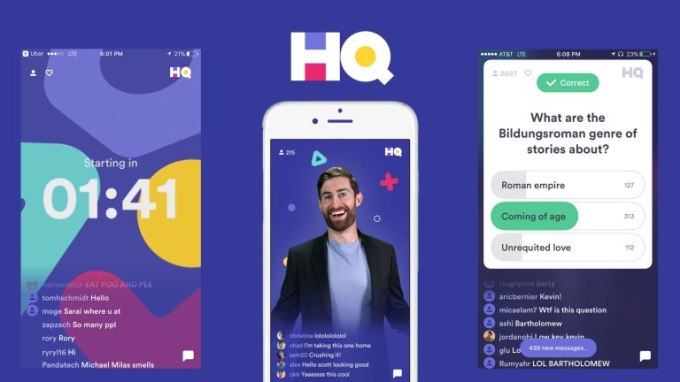
Once-hot HQ Trivia believed it had invented a new kind of online gaming — live trivia played through your phone. Investors threw $15 million into the company hoping that was true. But the novelty wore off, cheaters came in, prize money dwindled and copycats emerged. Then co-founder Colin Kroll passed away and things at HQ Trivia got worse, including a failed internal mutiny, firings and layoffs. This week, HQ Trivia announced its demise. It then hosted one last, insane night of gaming featuring drunken and cursing hosts who sprayed champagne, called out trolls and begged for new jobs. (Sure, because they exited this one so professionally.)


from Apple – TechCrunch https://ift.tt/2HOUsoy

Do phones need to fold?

As Samsung (re)unveiled its clamshell folding phone last week, I kept seeing the same question pop up amongst my social circles: why?

I was wondering the same thing myself, to be honest. I’m not sure even Samsung knows; they’d win me over by the end, but only somewhat. The halfway-folded, laptop-style “Flex Mode” allows you to place the phone on a table for hands-free video calling. That’s pretty neat, I guess. But… is that it?

The best answer to “why?” I’ve come up with so far isn’t a very satisfying one: Because they can (maybe). And because they sort of need to do something.

Let’s time-travel back to the early 2000s. Phones were weird, varied and no manufacturers really knew what was going to work. We had basic flip phones and Nokia’s indestructible bricks, but we also had phones that swiveled, slid and included chunky physical keyboards that seemed absolutely crucial. The Sidekick! LG Chocolate! BlackBerry Pearl! Most were pretty bad by today’s standards, but it was at least easy to tell one model from the next.

(Photo by Kim Kulish/Corbis via Getty Images)

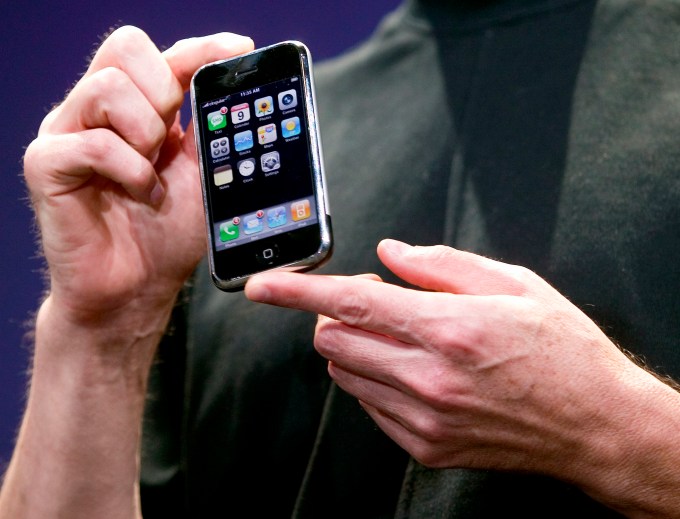
Then came the iPhone in 2007; a rectangular glass slab defined less by physical buttons and switches and more by the software that powered it. The device itself, a silhouette. There was hesitation to this formula, initially; the first Android phones shipped with swiveling keyboards, trackballs and various sliding pads. As iPhone sales grew, everyone else’s buttons, sliders and keyboards were boiled away as designers emulated the iPhone’s form factor. The best answer, it seemed, was a simple one.

Twelve years later, everything has become the same. Phones have become… boring. When everyone is trying to build a better rectangle, the battle becomes one of hardware specs. Which one has the fastest CPU? The best camera?


from Android – TechCrunch https://ift.tt/2vYYW9u
via IFTTT

Do phones need to fold?

As Samsung (re)unveiled its clamshell folding phone last week, I kept seeing the same question pop up amongst my social circles: why?

I was wondering the same thing myself, to be honest. I’m not sure even Samsung knows; they’d win me over by the end, but only somewhat. The halfway-folded, laptop-style “Flex Mode” allows you to place the phone on a table for hands-free video calling. That’s pretty neat, I guess. But… is that it?

The best answer to “why?” I’ve come up with so far isn’t a very satisfying one: Because they can (maybe). And because they sort of need to do something.

Let’s time-travel back to the early 2000s. Phones were weird, varied and no manufacturers really knew what was going to work. We had basic flip phones and Nokia’s indestructible bricks, but we also had phones that swiveled, slid and included chunky physical keyboards that seemed absolutely crucial. The Sidekick! LG Chocolate! BlackBerry Pearl! Most were pretty bad by today’s standards, but it was at least easy to tell one model from the next.

(Photo by Kim Kulish/Corbis via Getty Images)

Then came the iPhone in 2007; a rectangular glass slab defined less by physical buttons and switches and more by the software that powered it. The device itself, a silhouette. There was hesitation to this formula, initially; the first Android phones shipped with swiveling keyboards, trackballs and various sliding pads. As iPhone sales grew, everyone else’s buttons, sliders and keyboards were boiled away as designers emulated the iPhone’s form factor. The best answer, it seemed, was a simple one.

Twelve years later, everything has become the same. Phones have become… boring. When everyone is trying to build a better rectangle, the battle becomes one of hardware specs. Which one has the fastest CPU? The best camera?


from iPhone – TechCrunch https://ift.tt/2vYYW9u