Monday, 13 April 2020

Q&A: Apple and Google discuss their coronavirus tracing efforts

Last week, Apple and Google announced a partnership that will soon let users opt-in to a decentralized tracing tool, designed to help determine if a person has come into contact with someone who tested positive for COVID-19.

The opt-in system uses Bluetooth to transmit a randomized and anonymous identifier to nearby devices. A user can then choose to upload their anonymized data, which is then broadcast to other devices. If a match is found based on time spent and distance between nearby devices, a user will be told that they may have been exposed to a person — whose identity is not shared — with the virus.

It’s a similar system to one conceived by MIT researchers, which also uses Bluetooth to anonymously inform others of potential infection. The system, like Apple and Google’s new effort, also sidesteps the use of location data.

Contact tracing has proven somewhat effective in some parts of the world, helping authorities understand hotspots of infections. But privacy groups and security experts are concerned that privacy would take a backseat over people’s individual rights in an effort to contain the spread of the virus. Apple and Google said the service is privacy-focused. The system doesn’t use location data, the user’s randomized identifiers change every 15 minutes to prevent tracking, and any data collected is processed on the device and doesn’t leave a user’s phone unless they choose to share it.

But security and privacy experts were quick to point out the possible flaws in the system. Former FTC chief technologist Ashkan Soltani warned of false positives but also false negatives. Moxie Marlinspike, founder of the Signal encrypted messaging app, also expressed concerns that the system could be abused.

TechCrunch joined a media call with Apple and Google representatives, allowing reporters to ask questions about their coronavirus tracing efforts.

Here’s what was discussed on the call.

Which versions of iOS and Android will get the feature update?

Apple said it’ll roll out the update to the broadest number of iOS devices as possible. More than three-quarters of iPhones and iPads are on the latest version of iOS 13 and will receive the update. Google said it will update Google Play Services, a core part of Android, with the feature so that the contact tracing system can run on the entire fleet of Android devices (running Android 4.1 or newer) and not just the most recently updated devices.

When will this tracing system be available?

Apple and Google said they will roll out software updates in mid-May to begin support for contact tracing. Public health authorities will incorporate the contact tracing API into their apps, which can then be downloaded from the Apple and Google app stores. The companies said they will bake the contact tracing feature into iOS and Android in the coming months, so that users won’t even have to install an app. The companies said this would help get more people using the system.

Even when the contact tracing feature is baked into the OS at the system level, any detection of a positive match would still prompt the user to download the relevant public health app for their region to receive more information about what the COVID-19 contact tracing process is, and next steps.

Can anyone else use the API?

The companies said only public health authorities will be allowed access to the contact tracing API.

This limited API use will be restricted in the same spirit that you restrict individual healthcare to licensed medical professionals like physicians. In the same way, use of the API will be restricted only to authorized public health organizations as identified by whatever government is responsible for designating such entities for a given country or region. There could be conflict about what constitutes a legitimate public health agency in some cases, and even disagreements between national and state authorities, conceivably, so this sounds like it could be a place where friction might occur, with Apple and Google on tricky footing as platform operators.

Will any of the data be stored in a central database?

Apple says the data is processed on a user’s device and that data is “relayed” through servers run by the health organizations across the world, and will not be centralized. The tech giants said that because the data is decentralized, it’s far more difficult for governments to conduct surveillance.

Does that mean Apple, Google or the public health authorities can access the data?

Apple and Google admitted that no system is completely secure — it’s a widely known concept in cybersecurity that nothing is “unhackable.” Servers can get breached and data can get lost. But in decentralizing the data, it makes it far more difficult for anyone with malicious intentions to access the data, they said.

How are you preventing people from producing false reports?

The companies said they’re working with different public health organizations to confirm diagnoses, like public health authorities, to do the validation. Apple and Google said they want users to trust the system, and that includes users knowing that the system is reliable.

How is a confirmed COVID-19 case identified?

Apple and Google point out that while a positive test result is likely the best means of identifying a case, it isn’t necessarily the only way. It’s true that a diagnosis by a medical professional doesn’t actually require a confirmed positive test result specifically identifying the presence of the virus — theoretically, a public health agency could set a lower bar, requiring just a diagnosis based on symptom presentation, for instance.

Both tech giants concede that for contact tracing to be effective, there needs to be a high degree of case identification within a population, but left the door open to the possibility that a high degree of case identification doesn’t necessarily translate one-to-one to widespread testing, should other means of identifying cases be deemed reliable enough by local health authorities in any given area.

Should you trust this system?

There’s no easy answer. It seems like Apple and Google have made a system that’s better than nothing, but it’s a system that requires considerable user trust. You have to trust that Apple and Google have built a system that can withstand abuses — either from themselves or governments. But no system is foolproof or immune to abuse. If you don’t trust the system, you do not have to use it.



from Apple – TechCrunch https://ift.tt/2V5pzUd

Daily Crunch: Apple and Google announce contact tracing initiative

Apple and Google reveal a joint effort to track the spread of COVID-19, a new study shows how fringe coronavirus theories are making their way to the mainstream and — in happier news — we get some hints on Apple’s hardware plans for the fall. Here’s your Daily Crunch for April 13, 2020.

1. Apple and Google are launching a joint COVID-19 tracing tool for iOS and Android

Apple and Google’s engineering teams have banded together to create a decentralized contact tracing tool that will help individuals determine whether they have been exposed to someone with COVID-19.

The first phase of the project is an API that public health agencies can integrate into their own apps. The next phase is a system-level contact tracing system that will work across iOS and Android devices on an opt-in basis.

2. Coronavirus conspiracies like that bogus 5G claim are racing across the internet

According to Yonder, an AI company that monitors online conversations including disinformation, conspiracies that would normally remain in fringe groups are traveling to the mainstream faster during the epidemic. The company estimates that it would normally take six to eight months for a “fringe narrative” to make its way from the edges of the internet into the mainstream, while that interval looks like three to 14 days in the midst of COVID-19.

3. Apple said to be planning fall iPhone refresh with iPad Pro-like design

Apple is readying a new iPhone for fall to replace the iPhone 11 Pro this fall, Bloomberg reports, as well as follow-ups to the iPhone 11, a smaller HomePod and a locator tag accessory.

4. Amazon to hire 75,000 more to address increased demand due to coronavirus crisis

The company said its hiring efforts can help mitigate some of the job loss and furloughing that has resulted from the economic crisis that is also occurring as part of the COVID-19 pandemic. In fact, Amazon positioned its openings as an option for anyone looking to seek work “until things return to normal and their past employer is able to bring them back.”

5. Checking on Utah’s startup scene as the economy slips

TechCrunch is taking a closer look at a few startup markets as the world changes. Following our dive into Boston late last week, we’re widening our scope and taking a peek at the state of Utah. (Extra Crunch membership required.)

6. Tesla resurrects long-range RWD Model 3 for the Chinese market

Tesla is now producing and selling the long-range, rear-wheel-drive version of its Model 3 electric vehicle at its Shanghai factory. The move is notable because Tesla discontinued production of the long-range RWD Model 3 in the U.S. This also marks a shift from Tesla’s initial plan to sell a more basic version of the Model 3 in China.

7. This week’s TechCrunch podcasts

The latest full-length episode of Equity rounds up a bunch of different fintech stories (including SoFi’s $1.2 billion purchase of Galileo), while the Monday news roundup looks at some of SoftBank’s latest financial numbers. And over on Original Content, we had some pretty strong feelings about the initial content lineup at Quibi.

The Daily Crunch is TechCrunch’s roundup of our biggest and most important stories. If you’d like to get this delivered to your inbox every day at around 9am Pacific, you can subscribe here.


from Apple – TechCrunch https://ift.tt/3eku8Bp

Equity Monday: Two early-stage rounds, grocery delivery and SoftBank’s bill

Good morning friends, and welcome back to TechCrunch’s Equity Monday, a short-form audio hit to kickstart your week.

Before we jump into today’s show, don’t forget that the long-form Equity that started in the unicorn era and continue in today’s changed world still drops on Friday. We had a blast last week, so make sure to catch up.

That said, there was a lot to go over this morning, so let’s get into what we had to discuss:

  • Global spend patterns are changing, helping some startups and slowing others. But notable in the mix is how well grocery delivery is doing; if the change will be enough to turn uncertain bets like Instacart into sure things, however, is not yet clear.
  • Earnings are finally nearly here. We’ll see the big names start to disclose results next week. In the next three weeks or so we’ll hear from Apple, Microsoft, Facebook, Netflix and Spotify. The results will help us understand how the market is doing; and, by proxy, how startups are performing.
  • Quoting from our script this morning: “Would it be great to know how startups are doing without resorting to our chronic use of public proxies? Yes. Any startup who wants to kick off that trend can send in reports of how their Q1 went and what they expect in Q2 and the other two quarters of 2020 to EquityPod@TechCrunch.com. That’s probably the easiest way to get your company on the show, so, please do write in with specifics.”
  • We took a look at the latest rounds from Kargo and Pangea.app.
  • Finally, SoftBank’s huge Vision Fund bill is coming due. I almost can’t believe these numbers. What a mess.

And that’s the show for today. Stay safe, and we’ll be back Friday morning to cap off whatever this week winds up becoming.

Equity drops every Monday at 7:00 AM PT and Friday at 6:00 am PT, so subscribe to us on Apple PodcastsOvercastSpotify and all the casts.


from Apple – TechCrunch https://ift.tt/2RwDTTo

Apple said to be planning fall iPhone refresh with iPad Pro-like design

Apple is readying a new iPhone for fall to replace the iPhone 11 Pro this fall, Bloomberg reports, as well as follow-ups to the iPhone 11, a new smaller HomePod, and a locator tag accessory. The top-end iPhone 11 Pro successors at least will have a new industrial design that more closely resembles the iPad Pro, with flat screens and sides instead of the current rounded edge design, and they’ll also include the 3D LIDAR sensing system that Apple introduced with the most recent iPad Pro refresh in March.

The new highs-end iPhone design will look more like the iPhone 5, Bloomberg says, with “flat stainless steel edges,” and the screen on the lager version will be slightly bigger than the 6.5-inch display found on the current iPhone 11 Pro Max. It could also feature a smaller version of the current ‘notch’ camera cutout in at the top end of the display, the report claims.

Meanwhile, the LIDAR tracking system added to the rear camera array will be combined with processor speed and performance improvements, which should add up to significant improvements in augmented reality (AR) performance. The processor improvements are also designed to help boost on-device AI performance, the report notes.

These phones are still planned for a fall launch and release, though some of them could be available “multiple weeks later than normal,” Bloomberg claims, owing to disruptions caused by the ongoing coronavirus pandemic.

Other updates to the company’s product line on the horizon include a new smaller HomePod that’s around 50 percent smaller than the current version, with a planned launch sometime later this year. It’ll offer a price advantage versus the current model, and the report claims it’ll also come alongside Siri improvements and expansion of music streaming service support beyond Apple’s own. There’s also Apple Tags, which Apple itself has accidentally tipped as coming – a Tile-like Bluetooth location tracking accessory. Bloomberg says that could come out this year.

Finally, the report says there are updates to the MacBook Pro, Apple TV, lower-end iPads and iMac on the way, which is not surprising given Apple’s usual hardware update cadence. There’s no timeline for release on any of those, and it remains to be seen how the COVID-19 situation impacts these plans.


from iPhone – TechCrunch https://ift.tt/3b3IjZG

Apple said to be planning fall iPhone refresh with iPad Pro-like design

Apple is readying a new iPhone for fall to replace the iPhone 11 Pro this fall, Bloomberg reports, as well as follow-ups to the iPhone 11, a new smaller HomePod, and a locator tag accessory. The top-end iPhone 11 Pro successors at least will have a new industrial design that more closely resembles the iPad Pro, with flat screens and sides instead of the current rounded edge design, and they’ll also include the 3D LIDAR sensing system that Apple introduced with the most recent iPad Pro refresh in March.

The new highs-end iPhone design will look more like the iPhone 5, Bloomberg says, with “flat stainless steel edges,” and the screen on the lager version will be slightly bigger than the 6.5-inch display found on the current iPhone 11 Pro Max. It could also feature a smaller version of the current ‘notch’ camera cutout in at the top end of the display, the report claims.

Meanwhile, the LIDAR tracking system added to the rear camera array will be combined with processor speed and performance improvements, which should add up to significant improvements in augmented reality (AR) performance. The processor improvements are also designed to help boost on-device AI performance, the report notes.

These phones are still planned for a fall launch and release, though some of them could be available “multiple weeks later than normal,” Bloomberg claims, owing to disruptions caused by the ongoing coronavirus pandemic.

Other updates to the company’s product line on the horizon include a new smaller HomePod that’s around 50 percent smaller than the current version, with a planned launch sometime later this year. It’ll offer a price advantage versus the current model, and the report claims it’ll also come alongside Siri improvements and expansion of music streaming service support beyond Apple’s own. There’s also Apple Tags, which Apple itself has accidentally tipped as coming – a Tile-like Bluetooth location tracking accessory. Bloomberg says that could come out this year.

Finally, the report says there are updates to the MacBook Pro, Apple TV, lower-end iPads and iMac on the way, which is not surprising given Apple’s usual hardware update cadence. There’s no timeline for release on any of those, and it remains to be seen how the COVID-19 situation impacts these plans.


from Apple – TechCrunch https://ift.tt/3b3IjZG

Saturday, 11 April 2020

Canalys finds PC demand surged in Q1, but shipments lagged due to supply issues

As workers moved from office to home and students moved to being educated online, demand for new PCs surged in Q1, but Canalys found that shipments actually dropped 8% in spite of this, due to COVID-19 related supply chain problems.

The 8% drop was the worst since 2016 when shipments dropped 12%, according to the firm. Companies were looking to get new machines into the hands of employees who normally worked on desktop machines in the office, while parents were buying machines for children suddenly going to school online.

Rushabh Doshi, research director at Canalys says that products were flying off the shelves in Q1, but the PC makers couldn’t keep up with demand as supplies were limited due to a number of factors.

“…PC makers started 2020 with a constrained supply of Intel processors, caused by a botched transition to 10nm nodes. This was exacerbated when factories in China were unable to reopen after the Lunar New Year holidays.

“The slowdown in supply met with accelerated demand, as businesses were suddenly forced to equip a newly remote workforce, placing urgent orders for tens of thousands of PCs. Children, too, needed their own PCs, as schools closed and lessons went online,” Doshi explained in a statement.

Lenovo and HP owned the lion’s share of the PC market in Q1 with 23.9% and 21.8% share respectively. Dell was in third with 19.6%. Apple was well behind in fourth place with just 6% of worldwide market share.

Only Dell projected positive growth with a modest 1.1% annual rate. All others were projected to be negative with Apple projecting the sharpest drop at -21%.

The good news is that from a revenue perspective, at least for the short term, these companies could command higher prices due to high demand and low supply, but overall the year looks bleak for PC makers, as Canalys predicts the rest of the year will see a further drop in sales as companies cut back on purchases, and consumers also likely limit purchases with so much economic uncertainty and demand satisfied for the short term.


from Apple – TechCrunch https://ift.tt/34tAjyB

Friday, 10 April 2020

Pedaling-in-place with the Cubii Pro

So it has come to this. I haven’t set foot outside my apartment for a week and a half. YouTube yoga has been a kind of lifesaver, and I happened to have a largely untouched 30-pound kettlebell lying around. My Apple Watch has been mostly untouched, however. The stark realities of woefully underperforming exercise minutes and step counts are just too much on top of everything else.

Honestly, I scoffed a bit when a friend initially recommended an under-desk elliptical. But those were better days, when I was still able to take the bicycle out for a socially distant spin. Due to doctor’s orders, however, I now find myself unable to travel beyond the mailbox in my building lobby — and even that feels like tempting fate some days.

Now here I am, peddling away, writing a review of the Cubii Pro. It’s not a new product, exactly. But it’s certainly having its moment. In normal times, the device seems a silly bit of office “fitness” paraphernalia, designed to counteract the dangers of prolonged sitting we’ve frequently been warned against.

But if sitting was the new smoking in 2019, it’s simply the new reality in this era of self-quarantine. We’ll take our exercise wherever we can sneak it in — even if that means little more than walking between the desk and the kitchen most days. The Cubii line of products are by no means a replacement for more full-bodied exercise, but they’re a valiant attempt to help falling victim to complete atrophy.

As the name implies, the Pro is a step up from the standard Cubii that was launched via a Kickstarter campaign back in 2016. At $349, it’s an investment, with the biggest upgrades coming in the form of Bluetooth connectivity. There’s an app for iOS and Android that connects to third-party tracking software like Apple Health. That’s a pretty solid add-on, frankly, for those who’ve put a lot of stock in closing their Apple Watch rings.

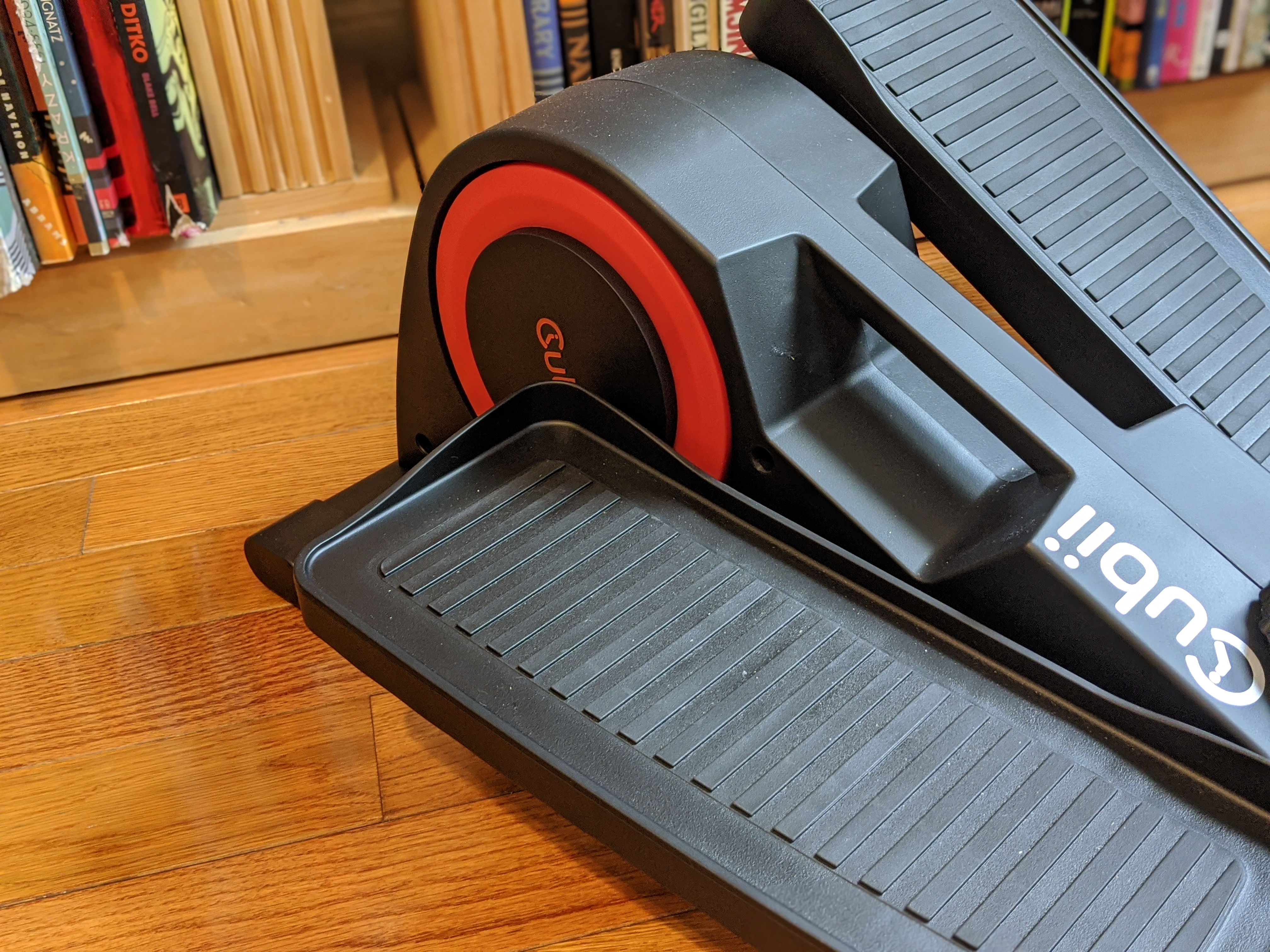
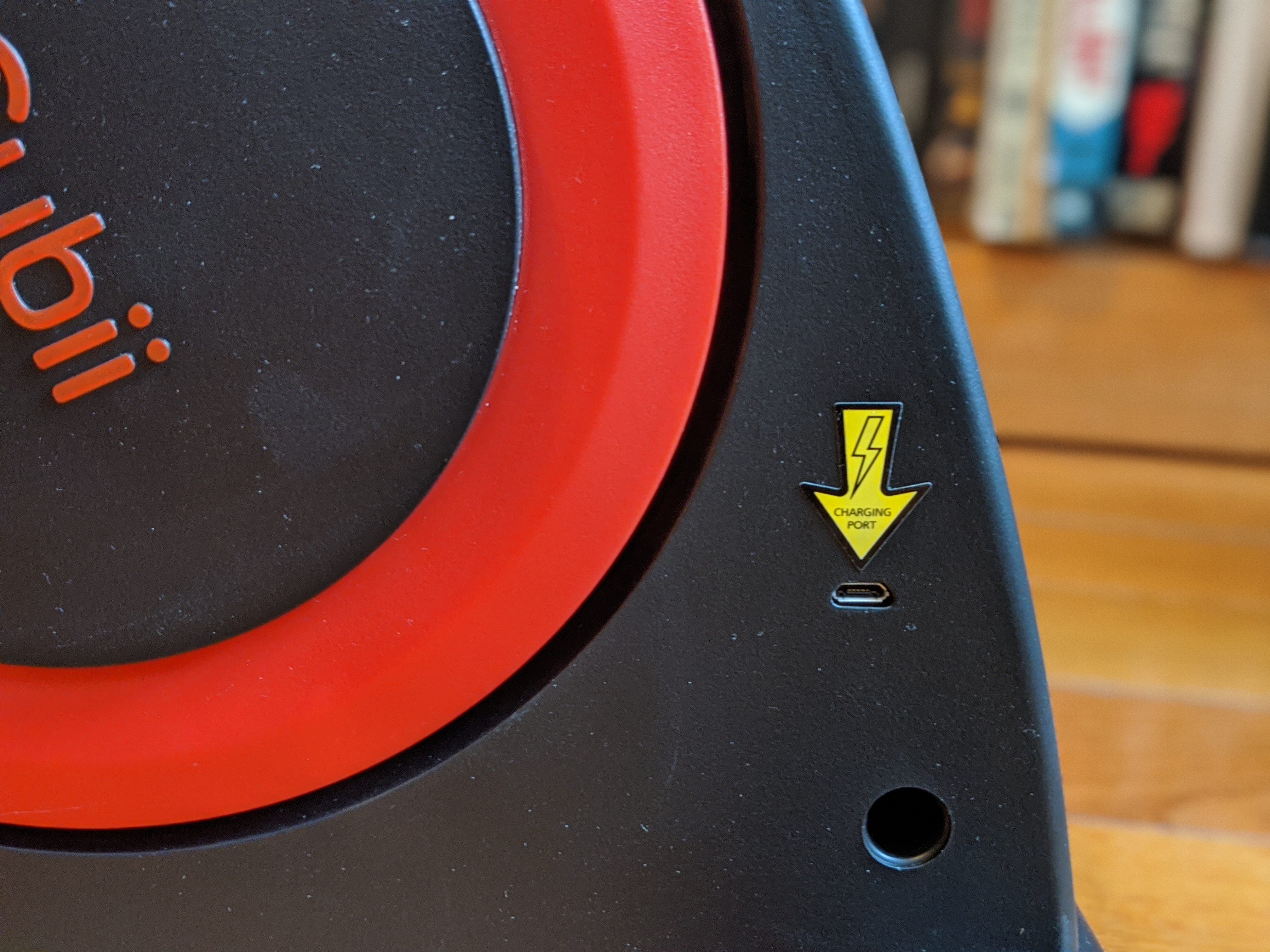
The device ships mostly assembled. You’ll need to take it the last mile by attaching the pedals. And hey, free screwdriver. That’s simple enough. Honestly, the biggest headache about set up is charging the thing. The Pro is significantly larger and heavier than I’d initially anticipated, and it charges via microUSB. That means unless you’ve got a long cable, you’re going to have to find a spot to stick it near an outlet for an extended period. I don’t have floor outlets in my small apartment, so I had to get creative.

Charging takes a while, too. It’s best done overnight, if you can manage. The good news on that front, however, is it will stay charged for a while. I don’t anticipate having to charge it more often than every few weeks.

The size is also a constraint from the standpoint of use. The device’s length meant I had to pull my desk out from the wall a bit to use it. I also find myself having to sit back a bit, so as to avoid banging my knees on the bottom of the desk. Honestly, it’s probably best used while seated on a couch, watching TV (a laptop is too much to ask without a desk). If your office chair rolls as mine does, you’ll once again find yourself getting creative. The aforementioned kettlebell is getting even more use these days, as it currently sits between chair legs, hampering me from rolling backward with every peddle.

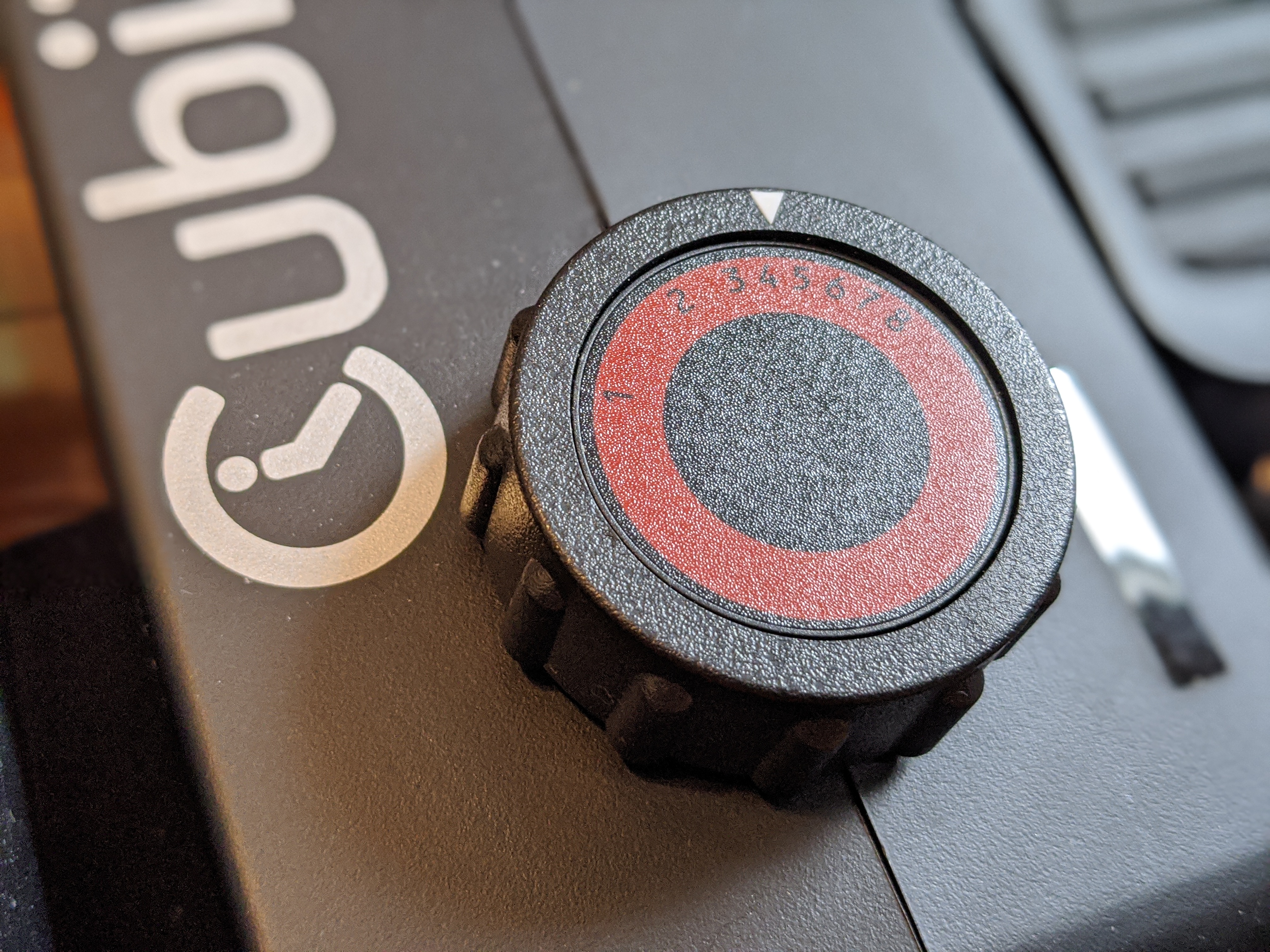
Those quibbles aside, I’ve mostly been enjoying my time with the product. The movement is smooth, the Bluetooth connection works well (though you may have to open the app to get it started) and there are eight resistance settings to keep things fresh. In other circumstances, I couldn’t imagine spending that much on this sort of product, but these are unique times. For those who still have trouble leaving the home even after things go mostly back to normal, it’s a nice, portable alternative to far pricier home exercise devices, with a solid little app to boot.


from Android – TechCrunch https://ift.tt/39Z6ZkH
via IFTTT