Wednesday, 15 April 2020

Digital mapping of coronavirus contacts will have key role in lifting Europe’s lockdown, says Commission

The European Commission has set out a plan for co-ordinating the lifting of regional coronavirus restrictions that includes a role for digital tools — in what the EU executive couches as “a robust system of reporting and contact tracing”. However it has reiterated that such tools must “fully respect data privacy”.

Last week the Commission made a similar call for a common approach to data and apps for fighting the coronavirus, emphasizing the need for technical measures to be taken to ensure that citizens’ rights and freedoms aren’t torched in the scramble for a tech fix.

Today’s toolbox of measures and principles is the next step in its push to coordinate a pan-EU response.

Responsible planning on the ground, wisely balancing the interests of protection of public health with those of the functioning of our societies, needs a solid foundation. That’s why the Commission has drawn up a catalogue of guidelines, criteria and measures that provide a basis for thoughtful action,” said EC president Ursula von der Leyen, commenting on the full roadmap in a statement.

“The strength of Europe lies in its social and economic balance. Together we learn from each other and help our European Union out of this crisis,” she added.

Harmonized data gathering and sharing by public health authorities — “on the spread of the virus, the characteristics of infected and recovered persons and their potential direct contacts” — is another key plank of the plan for lifting coronavirus restrictions on citizens within the 27 Member State bloc.

While ‘anonymized and aggregated’ data from commercial sources — such as telcos and social media platforms — is seen as a potential aid to pandemic modelling and forecasting efforts, per the plan.

“Social media and mobile network operators can offer a wealth of data on mobility, social interactions, as well as voluntary reports of mild disease cases (e.g. via participatory surveillance) and/or indirect early signals of disease spread (e.g. searches/posts on unusual symptoms),” it writes. “Such data, if pooled and used in anonymised, aggregated format in compliance with EU data protection and privacy rules, could contribute to improve the quality of modelling and forecasting for the pandemic at EU level.”

The Commission has been leaning on telcos to hand over fuzzy metadata for coronavirus modelling which it wants done by the EU’s Joint Research Centre. It wrote to 19 mobile operators last week to formalize its request, per Euractiv, which reported yesterday that its aim is to have the data exchange system operational ‘as soon as possible’ — with the hope being it will cover all the EU’s member states.

Other measures included in the wider roadmap are the need for states to expand their coronavirus testing capacity and harmonize tesing methodologies — with the Commission today issuing guidelines to support the development of “safe and reliable testing”.

Steps to support the reopening of internal and external EU borders is another area of focus, with the executive generally urging a gradual and phased lifting of coronavirus restrictions.

On contacts tracing apps specifically, the Commission writes:

“Mobile applications that warn citizens of an increased risk due to contact with a person tested positive for COVID-19 are particularly relevant in the phase of lifting containment measures, when the infection risk grows as more and more people get in contact with each other. As experienced by other countries dealing with the COVID-19 pandemic, these applications can help interrupt infection chains and reduce the risk of further virus transmission. They should thus be an important element in the strategies put in place by Member States, complementing other measures like increased testing capacities.

“The use of such mobile applications should be voluntary for individuals, based on users’ consent and fully respecting European privacy and personal data protection rules. When using tracing apps, users should remain in control of their data. National health authorities should be involved in the design of the system. Tracing close proximity between mobile devices should be allowed only on an anonymous and aggregated basis, without any tracking of citizens, and names of possibly infected persons should not be disclosed to other users. Mobile tracing and warning applications should be subject to demanding transparency requirements, be deactivated as soon as the COVID-19 crisis is over and any remaining data erased.”

“Confidence in these applications and their respect of privacy and data protection are paramount to their success and effectiveness,” it adds.

Earlier this week Apple and Google announced a collaboration around coronavirus contracts tracing — throwing their weight behind a privacy-sensitive decentralized approach to proximity tracking that would see ephemeral IDs processed locally on devices, rather than being continually uploaded and held on a central server.

A similar decentralized infrastructure for Bluetooth-based COVID-19 contacts tracing had already been suggested by a European coalition of privacy and security experts, as we reported last week.

While a separate coalition of European technologists and researchers has been pushing a standardization effort for COVID-19 contacts tracing that they’ve said will support either centralized or decentralized approaches — in the hopes of garnering the broadest possible international backing.

For its part the Commission has urged the use of technologies such as decentralization for COVID-19 contacts tracing to ensure tools align with core EU principles for handling personal data and safeguarding individual privacy, such as data minimization.

However governments in the region are working on a variety of apps and approaches for coronavirus contacts tracing that don’t all look as if they will check a ‘rights respecting’ box…

In a video address last week, Europe’s lead privacy regulator, the EDPS, intervened to call for a “panEuropean model ‘COVID-19 mobile application’, coordinated at EU level” — in light of varied tech efforts by Member States which involve the processing of personal data for a claimed public health purpose.

“The use of temporary broadcast identifiers and bluetooth technology for contact tracing seems to be a useful path to achieve privacy and personal data protection effectively,” said Wojciech Wiewiórowski on Monday week. “Given these divergences, the European Data Protection Supervisor calls for a panEuropean model “COVID-19 mobile application”, coordinated at EU level. Ideally, coordination with the World Health Organisation should also take place, to ensure data protection by design globally from the start.”

The Commission has not gone so far in today’s plan — calling instead for Member States to ensure their own efforts align with the EU’s existing data protection framework.

Though its roadmap is also heavy on talk of the need for “coordination between Member Statesto avoid negative effects” — dubbing it “a matter of common European interest”. But, for now, the Commission has issued a list of recommendations; it’s up to Member States to choose to fall in behind them or not.

With the caveat that EU regulators are watching very carefully how states’ handle citizens’ data.

“Legality, transparency and proportionality are essential for me,” warned Wiewiórowski, ending last week’s intervention on the EU digital response to the coronavirus with a call for “digital solidarity, which should make data working for all people in Europe and especially for the most vulnerable” — and a cry against “the now tarnished and discredited business models of constant surveillance and targeting that have so damaged trust in the digital society”.



from Apple – TechCrunch https://ift.tt/2yVq0aS

Tuesday, 14 April 2020

Apple opens access to mobility data, offering insight into how COVID-19 is changing cities

Apple is providing a dataset derived from aggregated, anonymized information taken from users of its Maps navigational app, the company announced today. The data is collected as a set of “Mobility Trends Reports,” which are updated daily and which provide a look at the change in the number of routing requests made within the Maps app, which is the default routing app on iPhones, for three modes of transportation including driving, walking and transit.

Apple is quick to note that this information isn’t tied to any individuals, since Maps does not associate any mobility data with a user’s Apple ID, nor does it maintain any history of where people have been. In fact, Apple notes that all data collected by maps, including search terms and specific routing, is only ever tied to random rotating identifying numbers that are reset on a rolling basis. This anonymized, aggregated data is collected only to provide a city, country or region-level view, representing the change over time in the number of pedestrians, drivers and transit-takers in an area based on the number of times they open the app and ask for directions.

As far as signals go for measuring the decrease in outdoor activity in a given city, this is a pretty good one considering Apple’s install base and the fact that most users probably don’t bother installing or using a third-party app like Google Maps for their daily commuting or transportation needs.

The data is available to all directly from Apple’s website, and can be downloaded in a broadly compatible CSV format. You can also use the web-based version to search a particular location and see the overall trend for that area.

For an individual, this is more or less a curiosity, but the release f this info could be very useful for municipal, state and federal policy makers looking to study the impact of COVID-19, as well as the effect of strategies put in place to mitigate its spread, including social distancing, shelter-in-place and quarantining measures.

Apple has also announced that it’s working with Google on a new system-level, anonymized contact tracing system that both companies will first release as APIs for use by developers, before making them native built-in features that are supplemented by public health agency applications and guidance. Apple seems particularly eager to do what it can to assist with the ongoing COVID-19 crisis, while still striving to ensure that these measures respect the privacy of their individual users. That’s a hard balance to strike in terms of taking effective action at a population level, but Apple’s reach is a powerful potential advantage to any tools it provides.


from iPhone – TechCrunch https://ift.tt/2VnQOs0

Apple opens access to mobility data, offering insight into how COVID-19 is changing cities

Apple is providing a dataset derived from aggregated, anonymized information taken from users of its Maps navigational app, the company announced today. The data is collected as a set of “Mobility Trends Reports,” which are updated daily and which provide a look at the change in the number of routing requests made within the Maps app, which is the default routing app on iPhones, for three modes of transportation including driving, walking and transit.

Apple is quick to note that this information isn’t tied to any individuals, since Maps does not associate any mobility data with a user’s Apple ID, nor does it maintain any history of where people have been. In fact, Apple notes that all data collected by maps, including search terms and specific routing, is only ever tied to random rotating identifying numbers that are reset on a rolling basis. This anonymized, aggregated data is collected only to provide a city, country or region-level view, representing the change over time in the number of pedestrians, drivers and transit-takers in an area based on the number of times they open the app and ask for directions.

As far as signals go for measuring the decrease in outdoor activity in a given city, this is a pretty good one considering Apple’s install base and the fact that most users probably don’t bother installing or using a third-party app like Google Maps for their daily commuting or transportation needs.

The data is available to all directly from Apple’s website, and can be downloaded in a broadly compatible CSV format. You can also use the web-based version to search a particular location and see the overall trend for that area.

For an individual, this is more or less a curiosity, but the release f this info could be very useful for municipal, state and federal policy makers looking to study the impact of COVID-19, as well as the effect of strategies put in place to mitigate its spread, including social distancing, shelter-in-place and quarantining measures.

Apple has also announced that it’s working with Google on a new system-level, anonymized contact tracing system that both companies will first release as APIs for use by developers, before making them native built-in features that are supplemented by public health agency applications and guidance. Apple seems particularly eager to do what it can to assist with the ongoing COVID-19 crisis, while still striving to ensure that these measures respect the privacy of their individual users. That’s a hard balance to strike in terms of taking effective action at a population level, but Apple’s reach is a powerful potential advantage to any tools it provides.


from Apple – TechCrunch https://ift.tt/2VnQOs0

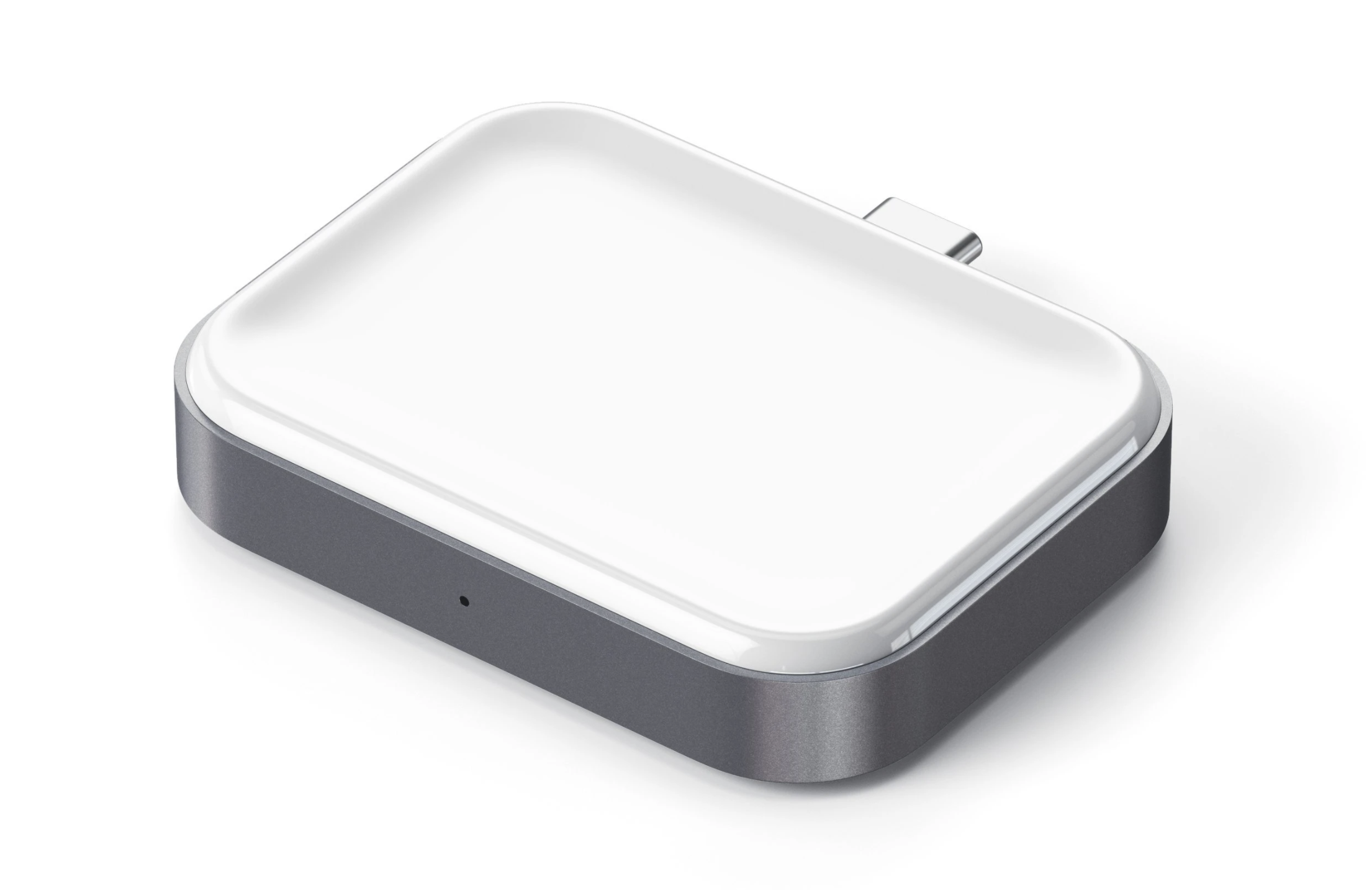
Avoid cables entirely with Satechi’s new AirPods dock

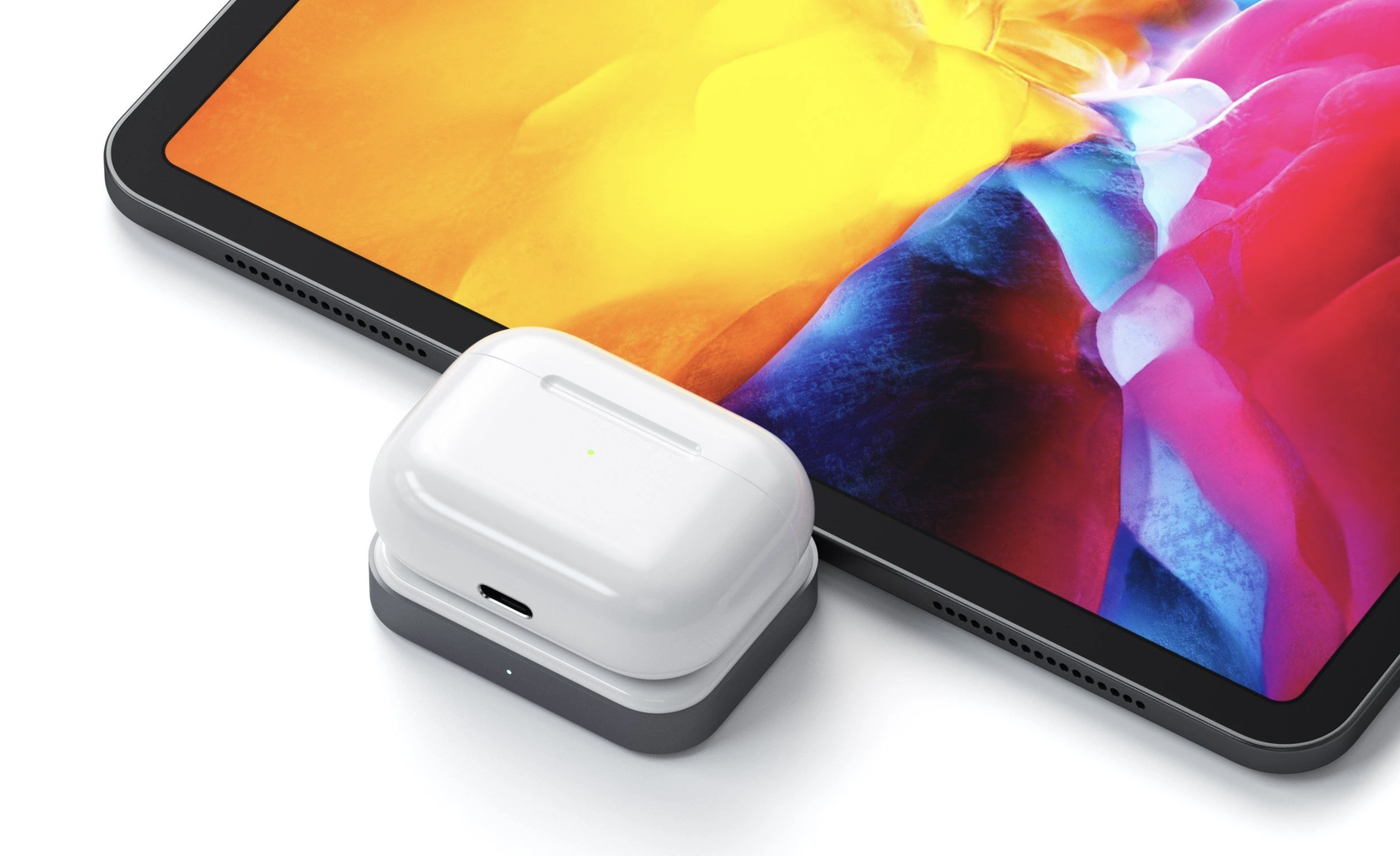
At their best, Satechi’s products sit somewhere between the silly and the sublime (practicality is nice, too, if you can manage). In spite of a profoundly uninspiring name, the USB-C Wireless Charging Dock for Apple AirPods fit the bill pretty nicely. There’s nothing about the product that specifically fits the company’s opportunistic pitch of “easy and convenient charging while working from home,” but for a select cross section of Apple enthusiasts, the strange little dock likely hits a perfect sweet spot.

The accessory follows in the footsteps of a similarly designed Apple Watch charging dock, essentially letting you plug a pair of AirPods directly into a USB-C port — be it a MacBook, iPad Pro or what have you. It’s a fun solution if you’re aesthetically skeeved out by wires, or are just constantly let down by Lightning cables, as many of us are.

The dock serves as a wireless charger and cradle, probably best used when your laptop is sitting on a desk rather than your actual lap. The product’s width also looks as though it will monopolize both ports on one side of your MacBook.

It’s compatible with both standard and Pro AirPods (assuming you’ve got a wireless charging case) and sports a matching little charging light to indicate that it’s working. The dock is available as a pre-order now. It’s set to start shipping in May, priced at $30 (or $25 during a limited time pre-order discount).


from Apple – TechCrunch https://ift.tt/2wHAo5u

Google said to be preparing its own chips for use in Pixel phones and Chromebooks

Google is reportedly on the verge of stepping up their hardware game in a way that follows the example set by Apple, with custom-designed silicon powering future smartphones. Axios reports that Google is readying its own in-house processors for use in future Pixel devices, including both phones and eventually Chromebooks, too.

Google’s efforts around its own first-party hardware have been somewhat of a mixed success, with some generations of Pixel smartphone earning high praise, including for its work around camera software and photo processing. But it has used standard Qualcomm processors to date, whereas Apple has long designed its own custom processor (the A-series) for its iPhone, providing the Mac-maker an edge when it comes to performance tailor-made for its OS and applications.

The Axios report says that Google’s in-house chip is code-named ‘Whitechapel,’ and that it was made in collaboration with Samsung and uses that company’s 5-nanometer process. It includes an 8-core ARM-based processor, as well as dedicated on-chip resources for machine learning and Google Assistant.

Google has already taken delivery of the first working prototypes of this processor, but it’s said to be at least a year before they’ll be used in actual shipping Pixel phones, which means we likely have at least one more generation of Pixel that will include a third-party processor. The report says that this will eventually make its way to Chromebooks, too, if all goes to plan, but that that will take longer.

Rumors have circulated for years now that Apple would eventually move its own Mac line to in-house, ARM-based processors, especially as the power and performance capabilities of its A-series chips has scaled and surpassed those of its Intel equivalents. ARM-based Chromebooks already exist, so that could make for an easier transition on the Google side – provided the Google chips can live up to expectations.


from Apple – TechCrunch https://ift.tt/2K1wjvN

Google said to be preparing its own chips for use in Pixel phones and Chromebooks

Google is reportedly on the verge of stepping up their hardware game in a way that follows the example set by Apple, with custom-designed silicon powering future smartphones. Axios reports that Google is readying its own in-house processors for use in future Pixel devices, including both phones and eventually Chromebooks, too.

Google’s efforts around its own first-party hardware have been somewhat of a mixed success, with some generations of Pixel smartphone earning high praise, including for its work around camera software and photo processing. But it has used standard Qualcomm processors to date, whereas Apple has long designed its own custom processor (the A-series) for its iPhone, providing the Mac-maker an edge when it comes to performance tailor-made for its OS and applications.

The Axios report says that Google’s in-house chip is code-named ‘Whitechapel,’ and that it was made in collaboration with Samsung and uses that company’s 5-nanometer process. It includes an 8-core ARM-based processor, as well as dedicated on-chip resources for machine learning and Google Assistant.

Google has already taken delivery of the first working prototypes of this processor, but it’s said to be at least a year before they’ll be used in actual shipping Pixel phones, which means we likely have at least one more generation of Pixel that will include a third-party processor. The report says that this will eventually make its way to Chromebooks, too, if all goes to plan, but that that will take longer.

Rumors have circulated for years now that Apple would eventually move its own Mac line to in-house, ARM-based processors, especially as the power and performance capabilities of its A-series chips has scaled and surpassed those of its Intel equivalents. ARM-based Chromebooks already exist, so that could make for an easier transition on the Google side – provided the Google chips can live up to expectations.


from iPhone – TechCrunch https://ift.tt/2K1wjvN

Monday, 13 April 2020

Layoffs are disproportionately impacting startup satellite offices

Layoffs have struck the startup world swiftly, hurting hospitality and travel startups, as well as recruitment and scooter companies. New data shows that some of those layoffs, brought on by COVID-19, might be disproportionately impacting satellite campuses.

By nature, satellite offices are secondary to a startup’s headquarters. Opening smaller offices is a strategic move when a company gets a fresh round of funding or wants to expand to a new market. We’ve seen satellite offices pop up in cities like Portland, Phoenix or Austin, which has satellite offices for Apple, Facebook and Oracle, for example.

While most layoffs are coming from companies whose headquarters are located in the main entrepreneurial hubs of the Bay area and New York, the actual staff members are located in the satellite cities, according to data from Layoffs.fyi, a tracker created by former Y Combinator grad Roger Lee.

EasyPost in San Francisco laid off 75 employees, nearly all in Salt Lake City and Louisville. U.K.-based Challenger bank Monzo laid off 165 customer support employees recently in Las Vegas.

Toast, based in Boston, laid off 1,300 employees, or 50% of its entire staff. Per Layoffs.fyi data, 12% of those layoffs were in Omaha, and another 10% were in Chicago.

KeepTruckin, based in San Francisco and last valued at $1.25 billion, laid off around 350 employees, and 33% of those employees were located in Nashville or Chicago.

These numbers are only a fraction of the total layoffs across the country, as Layoffs.fyi’s data set only includes publicly disclosed actions and tips. But even if the data is just serving as an anecdotal snapshot, it’s an important one to note.

What the data means

Once the economy does recover to a new normal, it’s unclear whether HQ cities or satellite cities will be in a better position to bounce back. We caught up with some investors in Boston, a top startup hub that has recently faced its own flurry of layoffs, to hear their thoughts.

According to Lily Lyman, a partner at Boston-based venture capital firm Underscore, satellite offices are often where a company might locate the sales, customer success and business development staff. Logistically, those roles are the most vulnerable as consumer activity slows. For a lot of businesses, there are no sales and deals to be done right now.

“[These roles are getting] disproportionately affected in [reduction of forces] as companies expect a slowdown on the commercial side,” Lyman said. “While a logical decision to extend the cash runway, it does come with the risk that this withdrawal can damage relationships with customers that may be hard to recover.”

Not everyone sees cuts hitting satellite offices the hardest. Michael Skok, another partner at Underscore, said that “in some cases, we’ve seen that satellite offices are established in emerging markets which come with cost savings, so these offices may actually be more protected in these times.” In other words, if you’re cutting costs, San Francisco employee expenses might be higher than Denver employee expenses by sheer nature of the former having exorbitantly high living costs. Revolution Ventures, which invests in startups in emerging tech scenes, said it has not heard about satellite office layoffs from its portfolio as of recently.

And finally, to put it crassly, layoffs in a non-HQ city might quell some of the negative signaling that founders and venture capitalists are trying so hard to avoid (well, most of them at least). Slimming down operations is becoming a proactive response, not a reactive strategy as the pandemic continues to evolve.

Today’s data reminds us that layoffs are rarely an isolated occurrence, and staff cuts appear to be landing harder on less robust tech ecosystems.


from Apple – TechCrunch https://ift.tt/2K5TdCc