Friday, 8 May 2020

Xiaomi, Samsung and others begin to resume smartphone production in India

Xiaomi, Vivo, Samsung, Oppo and other smartphone companies have received approval from some state governments in India to partially resume manufacturing and assembling of devices amid the ongoing lockdown in the world’s second largest handset market that completely shut operations at these plants in late March.

The companies said that they have secured permission to kick start their manufacturing operations in the country, though several restrictions such as operating with limited workforce are still in place. (The federal government allowed the resumption of smartphone production earlier this month, but state governments have the final say on whether the local conditions are safe enough to enforce the relaxation.)

New Delhi’s decision comes days after it extended the lockdown by two weeks earlier this month but eased some restrictions to revive economic activity that’s been stalled since the stringent stay-at-home orders were imposed across the nation in late March.

Earlier this week, the government permitted e-commerce firms and ride-hailing services to resume services in green and orange zones, districts that have seen less severe outbreak of the coronavirus, across the country. Green and orange zones account for 82% of India’s 733 districts.

Xiaomi, which launched a range of gadgets in India today including its Snapdragon 865-powered Mi 10 smartphone, said earlier this month that it only had inventory to meet demand for up to three weeks.

Manu Kumar Jain, a VP at Xiaomi who oversees the Chinese firm’s business in India, said today that the company, which has been the top smartphone vendor in the country for more than two years, would restart operations in its contract partner Foxconn’s facility in the state of Andhra Pradesh.

A person familiar with the matter told TechCrunch that Wistron, a contract partner of Apple, has started limited operations for the iPhone-maker in Bangalore.

Vivo, the second largest smartphone vendor in India, said the company will resume production at 30% of their capacity. “We shall begin production with around 3000 employees,” a Vivo spokesperson said.

Like Vivo, Oppo will also resume production at its Greater Noida facility with around 3,000 employees who would work in rotation, it said.

The coronavirus outbreak has severely disrupted several businesses. India did not see any handset sale last month, according to research firm Counterpoint. Every top smartphone maker in India has either established its own manufacturing plant or partnered with contract vendors to produce units locally in recent years to avail the tax benefits that New Delhi offers.


from Apple – TechCrunch https://ift.tt/2WGgBML

Thursday, 7 May 2020

New studio Modern Games acquires Beasts of Balance

Modern Games is a new studio working to create games that combine physical and digital play.

The company was founded by husband-and-wife team Justin and Amanda Kifer — serial entrepreneurs who previously launched companies including Citizen Local (acquired by MyLife in 2011) and Fidgetly, a fidget spinner company that also created a motion controller for iOS and Android games.

It sounds like the Kifers have a number of new titles in development, but the company is announcing today that it has acquired and is relaunching an existing game, Beasts of Balance.

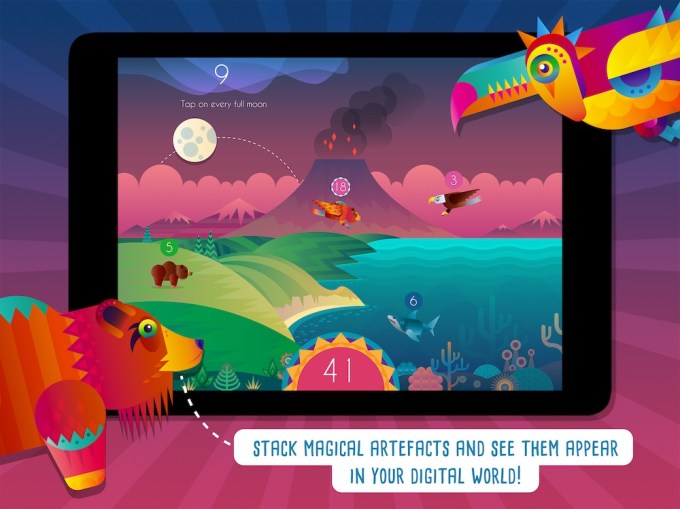
The game was first released by Sensible Object in 2016. As demonstrated for me by Justin Kifer (the startup’s CEO), Beasts of Balance involves stacking physical animal pieces, while also scanning them into a companion app that keeps score and brings their fantastical skills to life. The basic game costs $99 (currently on sale for $79), and players can purchase expansion packs to get additional accessories, beasts and other “artefacts.”

The other Modern Games titles released this year will be purely physical board and card games, released under its Modern Games [Analog] brand. Kifer told me that the company’s big “flagship” launch is planned for 2021, with a mobile game that involves augmented reality and connected objects, and that takes place in a rich science fiction/fantasy world. In fact, Kifer’s even writing a series of young adult novels to flesh out the setting.

“I want people to think of Modern Games as a studio that is working hard every day push the boundaries what it is to play a game,” he said.

Beasts of Balance

Image Credits: Modern Games

Kifer suggested that by combining physical and digital gameplay, Modern Games’ titles will have the real-world social component of a traditional tabletop game while taking advantage of gameplay that’s also possible digitally.

Kifer also said that by always starting with a core physical product that players need to buy, the company can avoid having to go the free-to-play route adopted by most mobile games. At the same time, he also emphasized that the company will keep the games relatively affordable, with a sub-$40 price for core products. (There were will be additional monetization through physical and digital add-ons.)

On the other hand, our remote demo made it clear that there’s a downside to relying on a physical products — since we weren’t in the same room (and, given COVID-19, are unlikely to be anytime soon), Kifer and I couldn’t actually play the game together.

“The games that we’re working on right now are also multi-player,” Kifer said when I pointed this out. “They’re games that could be played in proximity to other others, but they don’t have to be. For us, it’s all about bringing people together in ways that are inherently social, but it doesn’t necessarily mean physically co-located.”


from Android – TechCrunch https://ift.tt/2W6eBOC
via IFTTT

Google launches ‘Read Along,’ a free app that helps young children practice reading

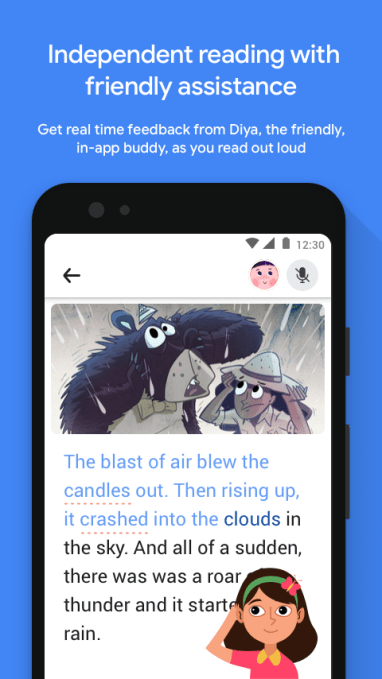
Google today is launching a new app, Read Along, that aims to help elementary school students practice their reading skills and stay educationally engaged amid school closures due to coronavirus. The new Android app is based on Google’s existing application, Bolo, which launched in India last year with a catalog of read-along stories in both English and Hindi. The updated and rebranded version is now globally available with support for 9 languages. 

Like Bolo, Read Along also leverages Google’s speech recognition and text-to-speech to help kids learn to read.

The app includes a built-in reading assistant named Diya. As kids read aloud, Diya detects if the child is struggling with a passage and can jump in with positive reinforcement or help. At any time, the child can ask Diya to help them read a sentence or pronounce a word they don’t know.

As children progress in the app, they’re presented with mini word games and earn in-app prizes as they improve their skills.

Google says the app was built with children’t privacy in mind and is able to work without either Wi-Fi or data. The voice data is analyzed in real-time on the device, and is not synced, stored or analyzed on Google’s servers. The company also stresses that it’s not using a voice sample from the kids to make the product better.

The app doesn’t include advertising or in-app purchases, either. Parents can opt to connect to the internet if they want to download additional stories, but there isn’t a charge.

At launch, Read Along offers around 500 stories and the catalog is continually expanded with new books.

Since its debut as Bolo in March 2019, Google says feedback from parents was encouraging, prompting it to bring the app to new markets. While in India, “Bolo” is broadly understood to mean “speak,” Google rebranded the app to Read Along to resonate with parents and children around the world. The app has also been updated with an enhanced library, new games and other user interface improvements since launch.

The new Read Along app is now globally available, except in the Philippines, Colombia and Denmark and offers stories in English, Spanish, Portuguese, Hindi, Marathi, Bengali, Tamil, Telugu and Urdu.

The app is a free download on Google Play for children ages 5 and up.


from Android – TechCrunch https://ift.tt/2LaV8Ge
via IFTTT

Apple MacBook Pro 13-inch review

With the new MacBook, Apple closes one of the more unfortunate product chapters in its history. The upgraded 13-inch mercifully marks the end of the failed five-year experiment that was the butterfly switch.

I won’t go into too much detail here. If you’ve purchased a MacBook in the past several years, you almost certainly know what I’m talking about — the keys that stuck, the others that seemed to fire at random. I had at least one compressed air emergency myself, while setting up to liveblog at a competitor’s press event.

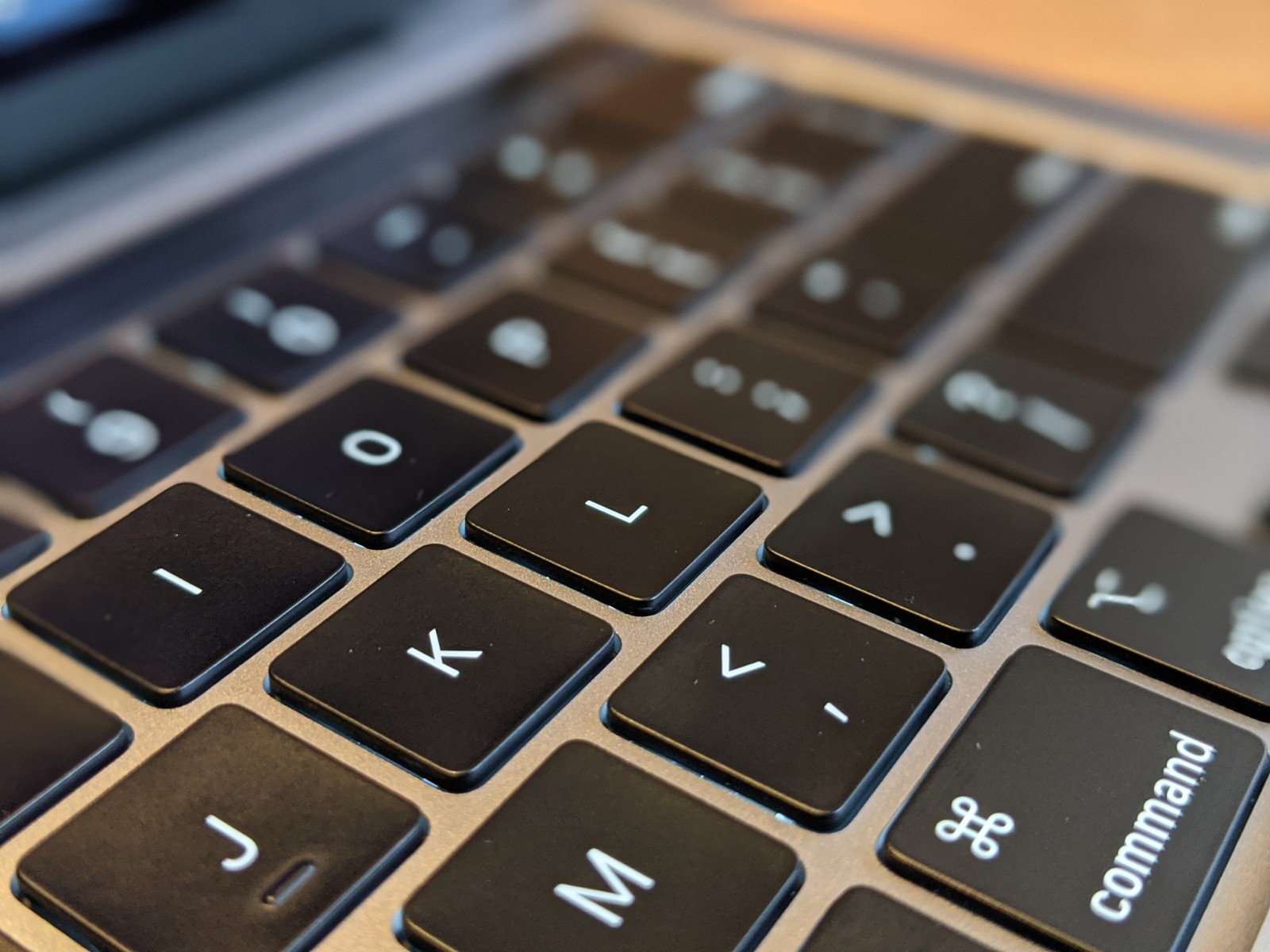
After a few attempts to salvage the technology, Apple finally scrapped it, going back to basics and returning to the trusty old scissor switch. I’m typing on it now, and it’s seriously making me reconsider upgrading my four-year-old machine. Honestly, the laptop is in perfect shape otherwise, but man, those keys. It always felt too much like typing on a flat surface.

With this week’s news, the 13-inch becomes the third and final member of the MacBook family to get the new keyboard. It’s not “Magic” as the name implies (Apple really does love the M-word), but improvements are immediate and vast. The experience is considerably softer to the touch and quieter than previous versions, and the one millimeter of key travel is much easier on the hands.

There are other nice touches, here, including the addition of a dedicated Escape key. It’s a small but welcome consolation that the Touch Bar can’t do everything.

I realize I’ve just spent the first several paragraphs focusing on the keyboard. Silly, I know, but why bury the lede? After all, without it, the new MacBook would be a fairly standard MacBook upgrade (nothing wrong with that, but that’s just how these things work). With it, it’s a far more compelling invite for those who have been on the fence about an upgrade.

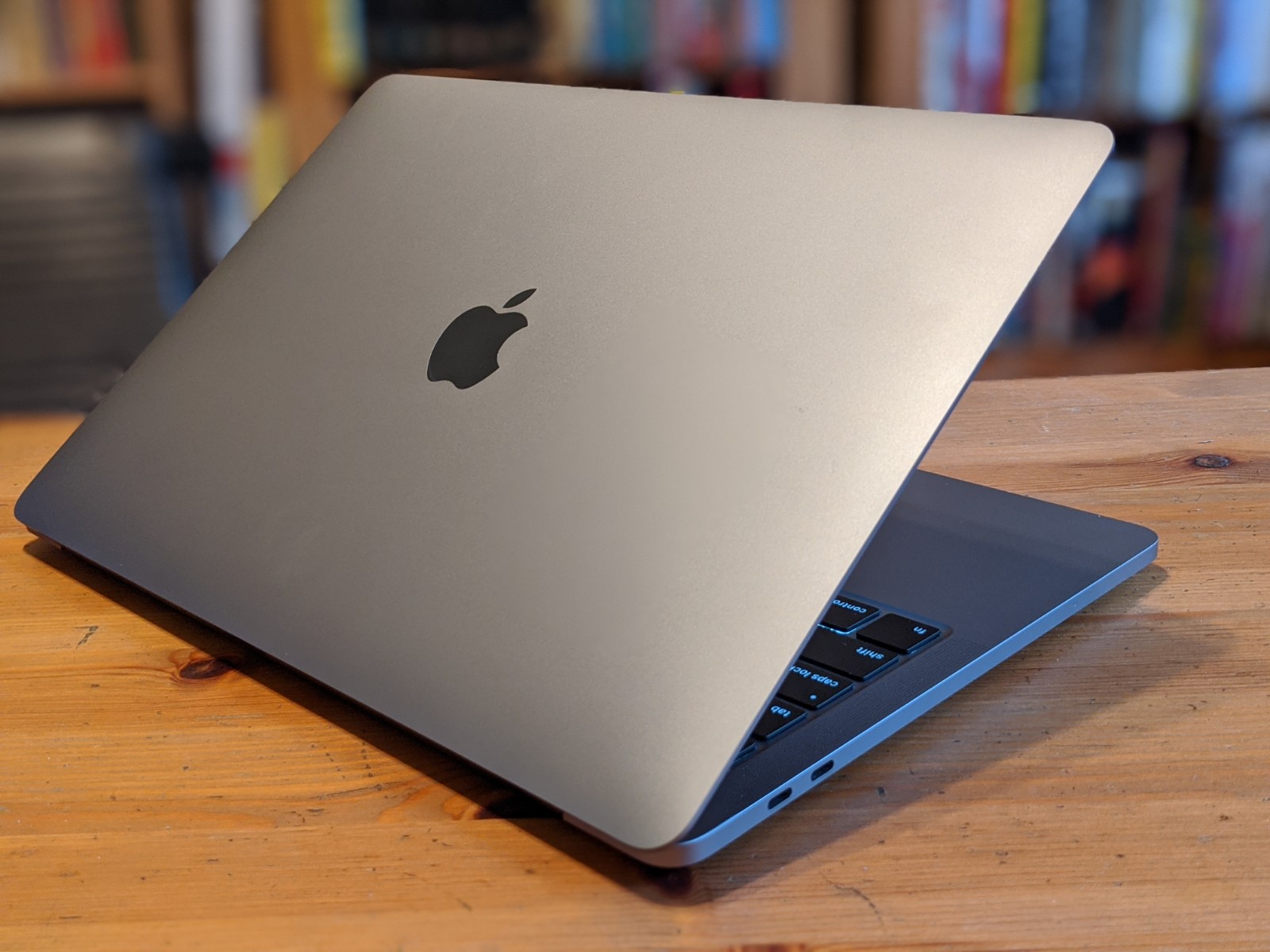
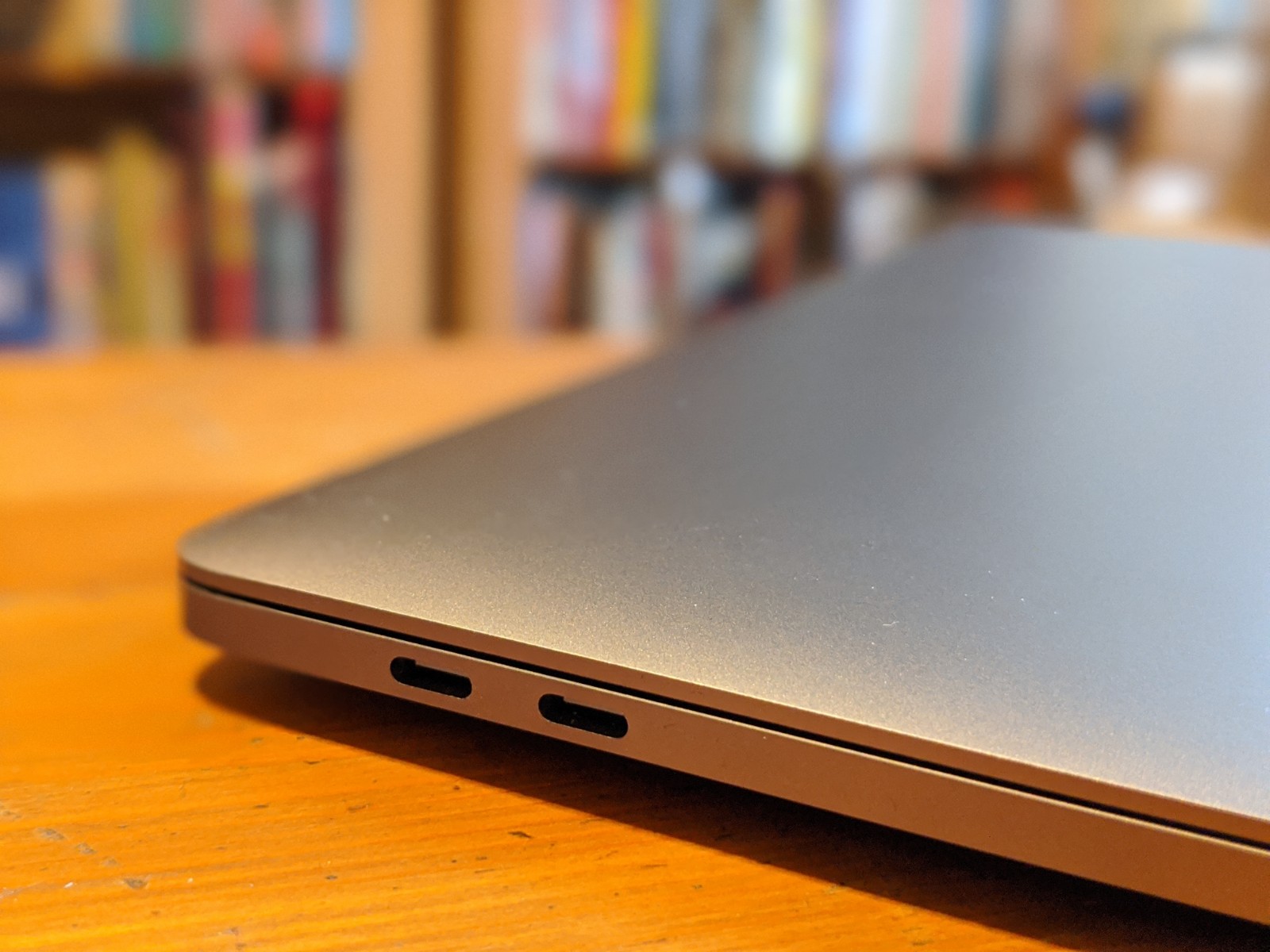
The system is visually identical to earlier models. Same familiar unibody metal design in silver or space gray. Same 13.3-inch, 2560 x 1600 Retina display. It’s also, for that matter, same as you’ll find on the Air, though the 13-inch’s is 500 nits vs. the Air’s 400. It’s brighter and easier on the eyes, if a bit tougher on battery life. Rumors had the company upgrading the device to a 14-inch, inline with the larger 16-inch model and further distinguishing it from the Air, but that was not to be this generation.

Same ports (4x Thunderbolt 3/USB and headphone jack). It’s a solid laptop that’s become a daily driver for so many of us. Really, the only complaint I would level against it is that the company hasn’t done a lot to distinguish the outside of the machine from the $300 cheaper Air (the Air starts at $999, the Pro at $1,299), beyond port count.

Of course, it’s what’s inside that counts. That’s what my mom tells me, at least. Curiously, the Air ships with a 10th-gen Core i7, which the entry-level pro has an 8th gen, upgradable to 10th gen. Of course, the Pro’s processor is quad-core by default (versus the Air’s dual) and 1.7GHz (to the Air’s 1.2). Our system as configured sported the 2 GHz 10th-gen quad-core i5. 

That’s $500 more than the entry-level model, at $1,799. For another $200, you can bump that up to 2.3GHz. Our  system clocked 5520 and 18228 on GeekBench 4’s single and double-core tests. That’s a nice bump over the Air’s 5244 and 14672. 

The system also sports 16GB of RAM and 500GB of storage. The lines are a bit more blurred between the Air and the 13-inch Pro on this front, with both systems starting at 8GB and 256GB. The Pro, however, goes all the way up to 32GB and 4TB, while the Air stalls out at 16GB and 2TB.

In a lot of ways, the systems start from a similar place, but the the Pro can be specced out for better performance more befitting the Pro moniker. If you’re opting for the Pro over the Air, it’s likely you need more processing power for things like video editing or perhaps some gaming, so you’ll want to upgrade over the base-level to make sure you’re covered. The Pro’s battery life is rated at up to 10 hours, to the Air’s 11. Out of the box, I got several hours of life, doing work and listening to music, but like the Air’s claims, 10 hours is definitely a stretch here with everyday usage.

Again, the biggest drawback of the 13-inch Pro is that the improved Air blurs the product lines in a number of ways. But that device is thinner, lighter and $300 cheaper. The case for choosing the pricier device isn’t as clear as, say, the decision between the 13-inch and 16-inch models.

For most users, the Air should be plenty for most tasks. For those who need more power without breaking their backs or banks, however, the 13-inch model is still a strong and safe bet that’s now much easier on the fingers.


from Apple – TechCrunch https://ift.tt/2WBgZMw

Apple awards $10 million to rapidly scale COVID-19 sample collection kit production

Apple has awarded $10 million from its Advanced Manufacturing Fund to COPAN Diagnostics, a company focused on producing sample collection kits for testing COVID-19 to hospitals in the U.S. The money comes from the fund that Apple established to support the development and growth of U.S.-based manufacturing, but is particularly notable because to date, the fund has been used to support companies tied more directly to its own supply chain.

The $10 million award also includes Apple employing its sourcing resources to find equipment and materials for COPAN Diagnostics, including new advanced equipment the iPhone-maker is helping design itself. Funds will also be used by COPAN to expand to a larger production facility in Southern California that can output more supply, growing its run rate from around several thousand currently, to over one million kits weekly by July, according to Apple. Apple notes that it will also result in the creation of around 50 new U.S. jobs.

COPAN is a pioneer in the diagnostics world, having previously invented flocked swabs in 2003, and it currently offers the world’s leading transport medium for virus-containing clinical specimens. The investment here from Apple is focused primarily on scale, taking the existing expertise of COPAN and making it into something that can operate somewhere closer to the amazing production volumes that Apple can accomplish, in order to help address the urgent need for more testing supplies to prevent that being the bottleneck to widespread COVID-19 diagnostics in the U.S.

Apple has redirected many of its resources, including monetary donations, protective equipment sourcing, and software development resources for both symptom-checking apps and the forthcoming partnership with Google on exposure notification software, to combatting the global coronavirus crisis. This deployment of the Advanced Manufacturing Fund is yet another example of how the company can address the pandemic in a variety of ways that are unique to its global position, expertise and relationships.


from Apple – TechCrunch https://ift.tt/3fp5UXz

Apple awards $10 million to rapidly scale COVID-19 sample collection kit production

Apple has awarded $10 million from its Advanced Manufacturing Fund to COPAN Diagnostics, a company focused on producing sample collection kits for testing COVID-19 to hospitals in the U.S. The money comes from the fund that Apple established to support the development and growth of U.S.-based manufacturing, but is particularly notable because to date, the fund has been used to support companies tied more directly to its own supply chain.

The $10 million award also includes Apple employing its sourcing resources to find equipment and materials for COPAN Diagnostics, including new advanced equipment the iPhone-maker is helping design itself. Funds will also be used by COPAN to expand to a larger production facility in Southern California that can output more supply, growing its run rate from around several thousand currently, to over one million kits weekly by July, according to Apple. Apple notes that it will also result in the creation of around 50 new U.S. jobs.

COPAN is a pioneer in the diagnostics world, having previously invented flocked swabs in 2003, and it currently offers the world’s leading transport medium for virus-containing clinical specimens. The investment here from Apple is focused primarily on scale, taking the existing expertise of COPAN and making it into something that can operate somewhere closer to the amazing production volumes that Apple can accomplish, in order to help address the urgent need for more testing supplies to prevent that being the bottleneck to widespread COVID-19 diagnostics in the U.S.

Apple has redirected many of its resources, including monetary donations, protective equipment sourcing, and software development resources for both symptom-checking apps and the forthcoming partnership with Google on exposure notification software, to combatting the global coronavirus crisis. This deployment of the Advanced Manufacturing Fund is yet another example of how the company can address the pandemic in a variety of ways that are unique to its global position, expertise and relationships.


from iPhone – TechCrunch https://ift.tt/3fp5UXz

UK eyeing switch to Apple-Google API for coronavirus contacts tracing — report

The UK may be rethinking its decision to shun Apple and Google’s API for its national coronavirus contacts tracing app, according to the Financial Times, which reported yesterday that the government is paying an IT supplier to investigate whether it can integrate the tech giants’ approach after all.

As we’ve reported before coronavirus contacts tracing apps are a new technology which aims to repurpose smartphones’ Bluetooth signals and device proximity to try to estimate individuals’ infection risk.

The UK’s forthcoming app, called NHS COVID-19, has faced controversy because it’s being designed to use a centralized app architecture. This means developers are having to come up with workarounds for platform limitations on background access to Bluetooth as the Apple-Google cross-platform API only works with decentralized systems.

The choice of a centralized app architecture has also raised concerns about the impact of such an unprecedented state data grab on citizens’ privacy and human rights, and the risk of state ‘mission creep‘.

The UK also looks increasingly isolated in its choice in Europe after the German government opted to switch to a decentralized model, joining several other European countries that have said they will opt for a p2p approach, including Estonia, Ireland and Switzerland.

In the region, France remains the other major backer of a centralized system for its forthcoming coronavirus contacts tracing app, StopCovid.

Apple and Google, meanwhile, are collaborating on a so-called “exposure notification” API for national coronavirus contacts tracing apps. The API is slated to launch this month and is designed to remove restrictions that could interfere with how contact events are logged. However it’s only available for apps that don’t hold users’ personal data on central servers and prohibits location tracking, with the pair emphasizing that their system is designed to put privacy at the core.

Yesterday the FT reported that NHSX, the digital transformation branch of UK’s National Health Service, has awarded a £3.8M contract to the London office of Zuhlke Engineering, a Switzerland-based IT development firm which was involved in developing the initial version of the NHS COVID-19 app.

The contract includes a requirement to “investigate the complexity, performance and feasibility of implementing native Apple and Google contact tracing APIs within the existing proximity mobile application and platform”, per the newspaper’s report.

The work is also described as a “two week timeboxed technical spike”, which the FT suggests means it’s still at a preliminary phase — thought it also notes the contract includes a deadline of mid-May.

The contracted work was due to begin yesterday, per the report.

We’ve reached out to Zuhlke for comment. Its website describes the company as “a strong solutions partner” that’s focused on projects related to digital product delivery; cloud migration; scaling digital platforms; and the Internet of Things.

We also put questions arising from the FT report to NHSX.

At the time of writing the unit had not responded but yesterday a spokesperson told the newspaper: “We’ve been working with Apple and Google throughout the app’s development and it’s quite right and normal to continue to refine the app.”

The specific technical issue that appears to be causing concern relates to a workaround the developers have devised to try to circumvent platform limitations on Bluetooth that’s intended to wake up phones when the app itself is not being actively used in order that the proximity handshakes can still be carried out (and contacts events properly logged).

Thing is, if any of the devices fail to wake up and emit their identifiers so other nearby devices can log their presence there will be gaps in the data. Which, in plainer language, means the app might miss some close encounters between users — and therefore fail to notify some people of potential infection risk.

Recent reports have suggested the NHSX workaround has a particular problem with iPhones not being able to wake up other iPhones. And while Google’s Android OS is the more dominant platform in the UK (running on circa ~60% of smartphones, per Kantar) there will still be plenty of instances of two or more iPhone users passing near each other. So if their apps fail to wake up they won’t exchange data and those encounters won’t be logged.

On this, the FT quotes one person familiar with the NHS testing process who told it the app was able to work in the background in most cases, except when two iPhones were locked and left unused for around 30 minutes, and without any Android devices coming within 60m of the devices. The source also told it that bringing an Android device running the app close to the iPhone would “wake up” its Bluetooth connection.

Clearly, the government having to tell everyone in the UK to use an Android smartphone not an iPhone wouldn’t be a particularly palatable political message.

One source with information about the NHSX testing process told us the unit has this week been asking IT suppliers for facilities or input on testing environments with “50-100 Bluetooth devices of mixed origin”, to help with challenges in testing the Bluetooth exchanges — which raises questions about how extensively this core functionality has been tested up to now. (Again, we’ve put questions to the NHSX about testing and will update this report with any response.)

Work on planning and developing the NHS COVID-19 app began March 7, according to evidence given to a UK parliamentary committee by the NHSX CEO’s, Matthew Gould, last month.

Gould has also previously suggested that the app could be “technically” ready to launch in as little as two or three weeks time from now. While a limited geographical trial of the app kicked off this week in the Isle of Wight. Prior to that, an alpha version of the app was tested at an RAF base involving staff carrying out simulations of people going shopping, per a BBC report last month.

Gould faced questions over the choice of centralized vs decentralized app architecture from the human rights committee earlier this week. He suggested then that the government is not “locked” to the choice — telling the committee: “We are constantly reassessing which approach is the right one — and if it becomes clear that the balance of advantage lies in a different approach then we will take that different approach. We’re not irredeemably wedded to one approach; if we need to shift then we will… It’s a very pragmatic decision about what approach is likely to get the results that we need to get.”

However it’s unclear how quickly such a major change to app architecture could be implemented, given centralized vs decentralized systems work in very different ways.

Additionally, such a big shift — more than two months into the NHSX’s project — seems, at such a late stage, as if it would be more closely characterized as a rebuild, rather than a little finessing (as suggested by the NHSX spokesperson’s remark to the FT vis-a-vis ‘refining’ the app).

In related news today, Reuters reports that Colombia has pulled its own coronavirus contacts tracing app after experiencing glitches and inaccuracies. The app had used alternative technology to power contacts logging via Bluetooth and wi-fi. A government official told the news agency it aims to rebuild the system and may now use the Apple-Google API.

Australia has also reported Bluetooth related problems with its national coronavirus app. And has also been reported to be moving towards adopting the Apple-Google API.

While, Singapore, the first country to launch a Bluetooth app for coronavirus contacts tracing, was also the first to run into technical hitches related to platform limits on background access — likely contributing to low download rates for the app (reportedly below 20%).



from iPhone – TechCrunch https://ift.tt/3cbMZ05