Tuesday, 12 May 2020

Despite the economy, LA’s Maple Media is hunting for app acquisitions

Over the past three years the Los Angeles-based startup Maple Media has amassed a portfolio of roughly thirty companies and one hundred apps in its quest to become the IAC of app store businesses. And now, even with the economy continuing to collapse, the company is on the prowl for new acquisitions and expects to spend tens of millions of dollars on new deals.

“We look at three pillars of our types of apps… casual games, mobile games, and personal tools,” said Maple Media chief executive, Michael Ritter. 

The company recently acquired PlayerFM, a podcast discovery service, for an undisclosed amount to expand its footprint in the podcast space. Other apps in the company’s portfolio include Pic Stitch, the photo collage editor and the calendar app, WeCal. 

The PlayerFM deal stands out as an example of what the company looks for in an acquisition target, said Ritter. “It’s an app that’s been in the market for eight years — and it’s feature complete, which is what you would expect in the podcast category.”

What Maple Media provides, said Ritter, is an ability to use its marketing muscle and internal development shop to update products more regularly, add new features, and make sure that those features are marketed effectively to potential new users.

“We actually push a lot of product… we’re working on five to six different apps at a time pushing updates weekly to our apps… we work on very short two-week sprints and doing a lot of different development,” said Ritter.

Typically production cycles are driven by the rhythms of Google Play and Apple’s app stores. If an app store reaches out to feature one of the company’s portfolio of apps then that app gets an upgrade. As new features come online or stores switch out APIs those thirty apps will all get the attention they need to remain up to speed, says Ritter.

One of the benefits of having such a broad stable is that the company can update a single codebase in its library and push that update to several different apps. “We have one codebase that we manage things from,” Ritter said.

Maple Media raised its original capital from Shamrock Capital, the investment firm managing money for the Disney family.

“We see ourselves as a media company,” said Ritter. “Our strategy is to build as large a user base over mobile and distribute advertising across that platform.”

Going forward, Maple Media could spend as much as $50 million this year alone, according to Ritter. The key for the company is to make acquisitions in areas that have lasting resonance with a certain audience, whether that’s a broadly useful service like a calendar, or a digital document scanner — or a game like Sudoku or Mah Jongg.

“What we’re looking for,” says Ritter, “are classic and evergreen games and apps.”


from Apple – TechCrunch https://ift.tt/3fIN25S

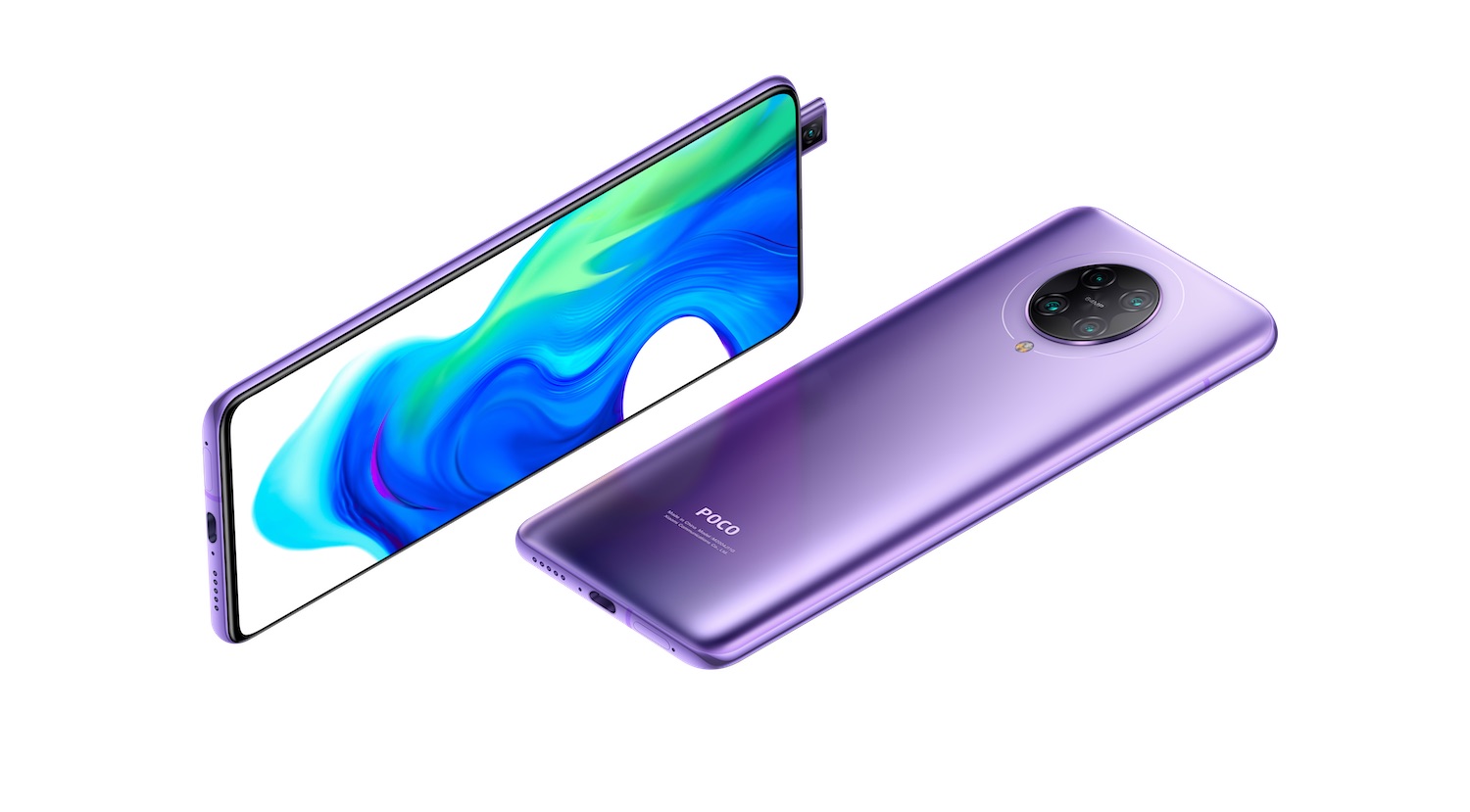
Xiaomi spinoff POCO’s F2 Pro undercuts Android rivals with low price and flagship features

POCO, a brand that spun out of Chinese electronics giant Xiaomi earlier this year, today launched the POCO F2 Pro smartphone as it kickstarts its new journey as an independent firm.

The POCO F2 Pro, like its two-year-old sleeper hit predecessor Pocophone F1 smartphone, punches above its price class. It features an all-screen 6.67-inch FHD+ AMOLED display (with 2400×1080 pixels), in-screen fingerprint scanner, support for 5G, quad-core rear camera setup, and a pop-up front camera that quietly tucks away when not in use. It also features a 3.5mm headphone jack.

The smartphone comes in two variants: one with 6GB of RAM and 128GB internal storage that is priced at €499 (roughly $540), and the other that features 8GB of RAM and 256GB internal storage that costs €599 (roughly $650).

Both the variants run Android 10 and are going on sale globally starting Tuesday through Gearbest and Aliexpress e-commerce sites. POCO said it will begin selling the POCO F2 Pro on Amazon, Lazada, and Shopee among other e-commerce sites including its official website in the coming weeks.

The dual-SIM card supported smartphone, a popular feature in several Asian markets, is powered by Qualcomm’s flagship octa-core Snapdragon 865 processor, coupled with Adreno 650GPU. POCO F2 Pro also sports what the company claims to be the largest vapor chamber in any smartphone to support LiquidCool, a technology that keeps the device cool even when a user is playing high-end games such as Fortnite or Pubg.

On the camera front, the POCO F2 Pro features a 64MP Sony IMX686 sensor, which serves as the primary camera, with a 13MP ultra wide-angle lens, a 5MP macro and one 2MP depth sensor. The pop-up camera, that serves as the selfie sensor, is a 20MP lens. The rear camera setup is capable of recording videos in 8K resolution at 24fps, and 4K in 60fps.

The POCO F2 Pro, which comes in Neon Blue, Electric Purple, Cyber Grey, Phantom White colors, houses a 4,700mAh battery with support for fast charging and ships with a 33W charger in the box.

POCO listed a number of additional features that other flagship Android smartphones offer such as support for HDR10+ video, display brightness of 500 nits, Corning Gorilla Glass 5 that protects the screen, and an IR blaster. But its display lacks support for 120Hz refresh rate — as seen on OnePlus 8T Pro that makes viewing experience extra smooth.

More to follow…


from Android – TechCrunch https://ift.tt/3blj44l
via IFTTT

Ex-Tesla product exec raises $10 million for his mission to upgrade the lowly fuse box

Arch Rao closed the $10.1 million financing round for Span, his company pitching homeowners on an upgrade to the fuse box, in the middle of February.

The company had already seen what was happening in China and had a sense of how tough things could be, but was undeterred by the bad news and its potential implications for fundraising or its business.

“I don’t think that the COVID situation was particularly negative,” for the Span business, said Rao. Indeed, Rao said things are already beginning to recover. “With the shelter in place being partially lifted [and] with solar and storage installation having been deemed essential… the large installers like SunRun saw their online sales had increased,” Rao said. “The limitation of this pandemic has been a shift of about a quarter for our upward slope to take effect.”

The forced downtime actually helped the company, said Rao, which worked on new product development and readied itself for what could be a busy season of sales. The pressures that are pushing customers to adopt solar and energy storage technologies — especially in states like California — haven’t gone away.

The state looks prepped for another bad season of wildfires and the stress of power outages and rolling blackouts could again drive owners to invest in off-grid power generation and storage, he said.

But Rao sees Span as far more than just a smart fuse box. Sitting at the intersection of the utility energy grid and the home electrical network gives Span’s device a unique vantage point from which to monitor and manage devices in the home and energy coming to or from it.

And he’s gotten some unique, expert validation of his vision in the form of an investment from Matt Rogers, one of the founders of Nest, which was the first billion dollar company to try and tackle home energy use and efficiency.

Through his investment firm, Incite Ventures, Rogers participated in the latest round for Span. 

 “We founded Nest to reinvent the largest energy user at home, the thermostat. We replaced an ugly household device with something that invited interaction and saved energy,” Rogers said in a statement. “Span has the potential to solve that for every load in the home. That’s why I’ve come on board as an investor to Span and an advisor to Arch.”

Image courtesy of Span

 Rao’s vision for Span is just as expansive as the original idea that brought Nest to the world. 

“Think of our software stack being very similar to an android device,” said Rao. “We have first party apps that Span is deploying and will offer an up our [sotware development kit] that third party vendors will use.”

A user can download the app and select the circuits or loads that they would want to allow an outside vendor to control in exchange for some kind of economic benefit, according to Rao.

“We’re trying to bring what the mobile industry has done for the last decade is an analogous model to what we want to bring in to the digital energy space,” Rao said. Given that the panel sits in a home for roughly thirty years, there’s an opportunity to lock customers in to the Span platform in a way that mobile phones never could.

Some partnerships — like the one Span has signed with battery supplier LG (a company that also makes appliances) gives an idea of the breadth of Rao’s vision.

“LG is a home appliance manufacturer and the road map is for us to tie into other home appliances as well,” said Rao. “You can extrapolate from that to the world of home appliances.”

Investors in the $10.1 million round for the company were led by ArcTern Ventures and joined by new backers Capricorn Investment Group, Incite Ventures. Previous financiers in the company included Wireframe Ventures, Congruent Ventures, Ulu Ventures, Energy Foundry, Hardware Club, 1/0 Capital, and Wells Fargo Strategic Capital, and some of those firms returned for the new funding, the company said.

Driving their interest was the company’s position at the intersection between the grid and the home — and its attendant ability to monitor and control onside generation, storage and the majority of a consumer’s energy loads.  

The company is focusing its initial sales efforts on the markets of Hawaii and California where strong government incentives can help to subsidize costs and drive demand, the company said.

In addition to the new investment round, Mary Powell, former chief executive of Vermont utility Green Mountain Power will join Span’s board as an independent member. Powell and Rao have a relationship that dates back to the startup executive’s work with Tesla. 

“She set an example of what a customer-focused utility could look like, bringing the Tesla Powerwall to thousands of customers in the state of Vermont,” said Rao. “I’m excited to work with her again as we bring our panel to market.”


from Android – TechCrunch https://ift.tt/3crq8xJ
via IFTTT

Monday, 11 May 2020

American Idol is shooting on iPhones amid stay at home orders

The COVID-19 pandemic has forced a lot of otherwise traditional industries to become creative and flexible in ways that might have seemed entirely out of the realm of possibility only a few months ago. With most of the county at home, social distancing, a number of networks have turned to consumer technologies in order to keep creating content.

Apple’s among those tech companies working with production houses, getting some iPhone-powered rigs into the hands of producers and hosts. The list includes a Parks and Recreation reunion, Conan O’Brien and Jimmy Fallon’s late night shows and now longstanding prime time talent contest, American Idol.

The ABC show’s producers are sending home studio rigs to each of the contestants and judges to shoot the final few episodes of the season. It’s a three-camera setup, including three iPhone 11 Pros, a tripod and a ring light. The  production team is helping out with camera setup and editing at a safe distance, from home.

Here’s Apple, which is naturally more than happy for the opportunity to showcase how the smartphone can work in a pinch,

We know that people are relying on their favorite shows while staying at home, and we are happy to be a part of that process with the team at American Idol. iPhone offers a unique solution to deliver broadcast quality video, in the palm of your hand, while keeping production staff and on-air talent safe and in their homes.

A number of television and movie studios have been exploring the use of smartphones in content creation. It seems unlikely that they’ll be replacing studio equipment on a majority of shoots any time soon, but the on-going pandemic could represent a kind of sea change toward a more mainstream use among studios.


from Apple – TechCrunch https://ift.tt/3fIbowr

American Idol is shooting on iPhones amid stay at home orders

The COVID-19 pandemic has forced a lot of otherwise traditional industries to become creative and flexible in ways that might have seemed entirely out of the realm of possibility only a few months ago. With most of the county at home, social distancing, a number of networks have turned to consumer technologies in order to keep creating content.

Apple’s among those tech companies working with production houses, getting some iPhone-powered rigs into the hands of producers and hosts. The list includes a Parks and Recreation reunion, Conan O’Brien and Jimmy Fallon’s late night shows and now longstanding prime time talent contest, American Idol.

The ABC show’s producers are sending home studio rigs to each of the contestants and judges to shoot the final few episodes of the season. It’s a three-camera setup, including three iPhone 11 Pros, a tripod and a ring light. The  production team is helping out with camera setup and editing at a safe distance, from home.

Here’s Apple, which is naturally more than happy for the opportunity to showcase how the smartphone can work in a pinch,

We know that people are relying on their favorite shows while staying at home, and we are happy to be a part of that process with the team at American Idol. iPhone offers a unique solution to deliver broadcast quality video, in the palm of your hand, while keeping production staff and on-air talent safe and in their homes.

A number of television and movie studios have been exploring the use of smartphones in content creation. It seems unlikely that they’ll be replacing studio equipment on a majority of shoots any time soon, but the on-going pandemic could represent a kind of sea change toward a more mainstream use among studios.


from iPhone – TechCrunch https://ift.tt/3fIbowr

Saturday, 9 May 2020

This Week in Apps: WWDC goes online, Android 11 delays, Facebook SDK turns into app kill switch

Welcome back to This Week in Apps, the Extra Crunch series that recaps the latest OS news, the applications they support and the money that flows through it all.

The app industry is as hot as ever, with a record 204 billion downloads and $120 billion in consumer spending in 2019. People are now spending 3 hours and 40 minutes per day using apps, rivaling TV. Apps aren’t just a way to pass idle hours — they’re a big business. In 2019, mobile-first companies had a combined $544 billion valuation, 6.5x higher than those without a mobile focus.

In this Extra Crunch series, we help you keep up with the latest news from the world of apps, delivered on a weekly basis.

This week we’re continuing to look at how the coronavirus outbreak is impacting the world of mobile applications, including the latest on countries’ various contact-tracing apps, the pandemic’s impact on gaming and fintech and more. We’re also looking at that big app crash caused by Facebook, plus new app releases from Facebook and Google, Android 11’s new timeline and Apple’s plans to move WWDC online, among other things.

Headlines

WWDC goes virtual June 22

Apple announced this week its plans for a virtual version of its Worldwide Developer Conference. The company will host its WWDC 2020 event beginning on June 22 in the Apple Developer app and on the Apple Developer website for free for all developers.

It will be interesting to see how successfully Apple is able to take its developer conference online. After all, developers could already access the sessions and keynotes through videos — but the real power of the event was in the networking and being able to talk to Apple engineers, ask questions, get hands-on help and see how other developers are using Apple technologies to innovate. Unless Apple is planning a big revamp of its developer site and app that would enable those connections, it seems this year’s event will lack some of WWDC’s magic.

The company also announced the Swift Student Challenge, an opportunity for student developers to showcase their coding by creating their own Swift playground.


from Apple – TechCrunch https://ift.tt/3clZ82A

Friday, 8 May 2020

Google’s Duo video chat app gets a family mode with doodles and masks

Google today launched an update to its Duo video chat app (which you definitely shouldn’t confuse with Hangouts or Google Meet, Google’s other video, audio and text chat apps).

There are plenty of jokes to be made about Google’s plethora of chat options but Duo is trying to be a bit different from Hangouts and Meet in that it’s mobile-first and putting the emphasis on personal conversations. In its early days, it was very much only about one-on-one conversations (hence its name), but that has obviously changed (hence why Google will surely change its name sooner or later). This update shows this emphasis with the addition of what the company calls a ‘family mode.’

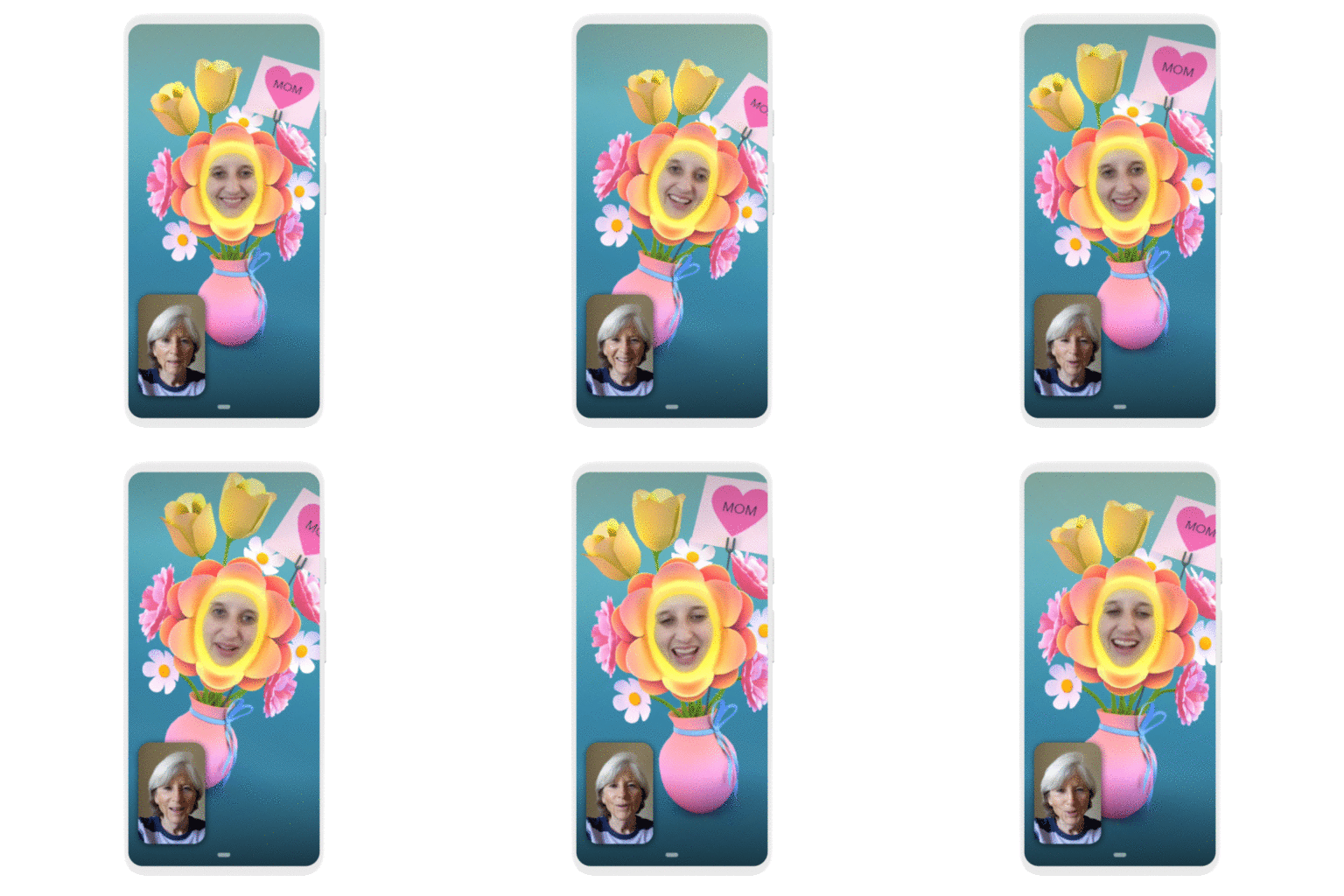
Once you activate this mode, you can start doodling on the screen, activate a number of new effects and virtually dress up with new masks. These effects and masks are now also available for one-on-one calls.

For Mother’s Day, Google is rolling out a special new effect that is sufficiently disturbing to make sure your mother will never want to use Duo again and immediately make her want to switch to Google Meet instead.

Only last month, Duo increased the maximum number of chat participants to 12 on Android and iOS. In the next few weeks, it’s also bringing this feature to the browser, where it will work for anyone with a Google account.

Google also launched a new ad for Duo. It’s what happens when marketers work from home.


from Android – TechCrunch https://ift.tt/2Lb4eTv
via IFTTT