Saturday, 30 May 2020

This Week in Apps: Facebook launches trio of app experiments, TikTok gets spammed, plus coronavirus impacts on app economy

Welcome back to This Week in Apps, the Extra Crunch series that recaps the latest OS news, the applications they support and the money that flows through it all.

The app industry is as hot as ever, with a record 204 billion downloads and $120 billion in consumer spending in 2019. People are now spending three hours and 40 minutes per day using apps, rivaling TV. Apps aren’t just a way to pass idle hours — they’re a big business. In 2019, mobile-first companies had a combined $544 billion valuation, 6.5x higher than those without a mobile focus.

In this Extra Crunch series, we help you keep up with the latest news from the world of apps, delivered on a weekly basis.

This week we’re continuing to look at how the coronavirus outbreak is impacting the world of mobile applications, with fresh data from App Annie about trends playing out across app categories benefiting from the pandemic, lockdowns and societal changes. We’re also keeping up with the COVID-19 contact-tracing apps making headlines, and delving into the week’s other news.

We saw a few notable new apps launch this week, including HBO’s new streaming service HBO Max, plus three new app experiments from Facebook’s R&D group. Android Studio 4.0 also launched this week. Instagram is getting better AR tools and IGTV is getting ads. TikTok got spammed in India.

Meanwhile, what is going on with app review? A shady app rises to the top of the iPhone App Store. Google cracks down on conspiracy theory-spreading apps. And a TikTok clone uses a pyramid scheme-powered invite system to rise up the charts.

COVID-19 contact-tracing apps in the news 

  • Latvia: Reuters this week reported that Latvia aims to become one of the first countries to launch a smartphone app, Stop Covid, using the new toolkit created by Apple and Alphabet’s Google to help trace coronavirus infections.
  • Australia: The role of the country’s Covidsafe app in the recovery appears to be marginal, The Guardian reports. In the month since its launch, only one person has been reported to have been identified using data from it. A survey even found that Australians were more supportive of using telecommunications metadata to track close contacts (79%) than they were of downloading an app (69.8%). In a second survey, their support for the app dropped to 64%. The app has been maligned by the public debate over it and technical issues.
  • France: The country’s data protection watchdog, CNIL, reviewed its contact-tracing app StopCovid, finding there were no major issues with the technical implementation and legal framework around StopCovid, with some caveats. France isn’t using Google and Apple’s contact-tracing API, but instead uses a controversial centralized contact-tracing protocol called ROBERT. This relies on a central server to assign a permanent ID and generate ephemeral IDs attached to this permanent ID. CNIL says the app will eventually be open-sourced and it will create a bug bounty. On Wednesday, the app passed its first vote in favor of its release.
  • Qatar: Serious security vulnerabilities in Qatar’s mandatory contact-tracing app were uncovered by Amnesty International. An investigation by Amnesty’s Security Lab discovered a critical weakness in the configuration of Qatar’s EHTERAZ contact-tracing app. Now fixed, the vulnerability would have allowed cyberattackers to access highly sensitive personal information, including the name, national ID, health status and location data of more than one million users.
  • India: India’s contact-tracing app, Aarogya Setu, is going open-source, according to Ministry of Electronics and Information Technology Secretary Ajay Prakash Sawhney on Tuesday. The code is being published on GitHub. Nearly 98% of the app’s more than 114 million users are on Android. The government will also offer a cash bounty of $1,325 to security experts who find bugs or vulnerabilities.
  • Switzerland: Several thousand people are now testing a pilot version of Switzerland’s contact-tracing app, SwissCovid. Like Lativia, the app is one of the first to use Apple and Google’s contact-tracing API. Employees at EPFL, ETH Zurich, the Army and select hospitals and government agencies will be the first to test the Swiss app before its public launch planned for mid-June.
  • China: China’s health-tracking QR codes, embedded in popular WeChat and Alipay smartphone apps, are raising privacy concerns, Reuters reports. To walk around freely, people must have a green rating. They also now have to present their health QR codes to gain entry into restaurants, parks and other venues. These efforts have been met with little resistance. But the eastern city of Hangzhou has since proposed that users are given a color-coded health badge based on their medical records and lifestyle habits, including how much they exercised, their eating and drinking habits, whether they smoked and how much they slept the night before. This suggestion set off a storm of criticism on China’s Weibo, a Twitter-like platform.


from Apple – TechCrunch https://ift.tt/2U9yNht

Thursday, 28 May 2020

Google makes sharing Plus Codes easier in a push to simply addressing system globally

Two years ago, Google open-sourced Plus Codes, a digital addressing system to help billions of people navigate to places that don’t have clear addresses. The company said today it is making it easier for anyone with an Android device to share its rendition of an address — a six-digit alphanumeric code.

Google Maps users on Android can now tap the blue dot that represents their current location to view and share their unique six-digit coordinate with friends. Anyone with the code can look it up on Google Maps or Google Search to get the precise location of the destination.

The codes look like this: G6G4+CJ Delhi, India. Google says it divides the geographical surface of the world into tiled areas and attributes a unique six-letter code and the name of the city and country to each of them.

More than 2 billion people on the planet either don’t have an address or have an address that isn’t easy to locate. This challenge is more prevalent in developed markets such as India where a street address could often be as long as a paragraph, and where people often rely on nearby landmarks to navigate their way.

Google is not the only firm that is attempting to simply the addressing system. London-based what3words has broken the world in 57 trillion squares and assigned each of those blocks with three randomly combined words such as toddler.geologist.animated that are easier to decipher and share. The company told TechCrunch earlier that it had partnered with a number of firms including several carmakers to expand its reach.

But what3words and five-year-old project Plus Codes have both struggled to gain wider traction. When Google announced this project in India, its executives told this correspondent that they were exploring ways to work with logistics firms and government agencies such as the postal department to get wider adoption — though none of it has materialized yet. At the time, the company had also tested Plus Codes at some concerts in India, the executives said.

To get wider adoption, Google open sourced Plus Codes in 2018 so that developers and businesses could find their own use cases. “If you’ve ever been in an emergency, you know that being able to share your location for help to easily find you is critical. Yet in many places in the world, organizations struggle with this challenge on a daily basis,” the company said today.


from Android – TechCrunch https://ift.tt/3dbXYXP
via IFTTT

Wednesday, 27 May 2020

Appeals court rules in favor of Google, Apple, Facebook and Twitter in anti-conservative bias suit

The same day Donald Trump took to Twitter to threaten to regulate or shut down social media sites, the U.S. appeals court in Washington D.C. dismissed a lawsuit accusing top tech companies of silencing conservative voices. Filed in 2018 by nonprofit Freedom Watch and rightwing gadfly Laura Loomer, the suit accused Apple, Facebook, Twitter and Google of stifling first amendment rights.

The suit alleged that four of tech’s biggest names “have engaged in a conspiracy to intentionally and willfully suppress politically conservative content.” It specifically cited Loomer’s ban from Twitter and Facebook, following a tweet about Congresswoman Ilhan Omar. Also noted is her inability to grow an audience base and revenue on Google’s YouTube, suggesting that after Trump’s election “growth on these platforms has come to a complete halt, and its audience base and revenue generated has either plateaued or diminished.” Apple’s alleged role is less clear.

In the ruling, District Judge Trevor McFadden notes that Freedom Watch and Loomer failed to back up a claim that the companies were “state actors,” involved with the regulation of free speech.

“The Plaintiffs do not show how the Platforms’ alleged conduct may fairly be treated as actions taken by the government itself,” the judge writes. “Facebook and Twitter, for example, are private businesses that do not become ‘state actors’ based solely on the provision of their social media networks to the public.”

In other words, the companies cannot violate the first amendment, because banning users doesn’t constitute government abridgment of free speech. Per the decision, “Freedom Watch fails to point to additional facts indicating that these Platforms are engaged in state action and thus fails to state a viable First Amendment claim.”


from Apple – TechCrunch https://ift.tt/2B9V1Jt

Bang & Olufsen’s latest Beoplay E8 fully wireless earbuds offer top sound and comfort

Bang & Olufsen has an excellent reputation in home audio, and its original Beoplay E8 fully wireless headphones were a category leader when there was barely a category to lead. The company recently launched the third version of the E8, a new generation of hardware that comes with a number of improvements for better audio quality and convenience, including wireless charging, up to seven hours of continuous use on a single charge, and the latest Bluetooth standards for improved audio quality, operating distance and latency.

B&O’s latest wireless headset is a must-have for sound quality enthusiasts as a result, providing all-day comfort and wearability, excellent passive sound isolation and rich, sophisticated audio performance that does a good job of rendering the low end but without sacrificing any detail at higher frequencies, either.

Design

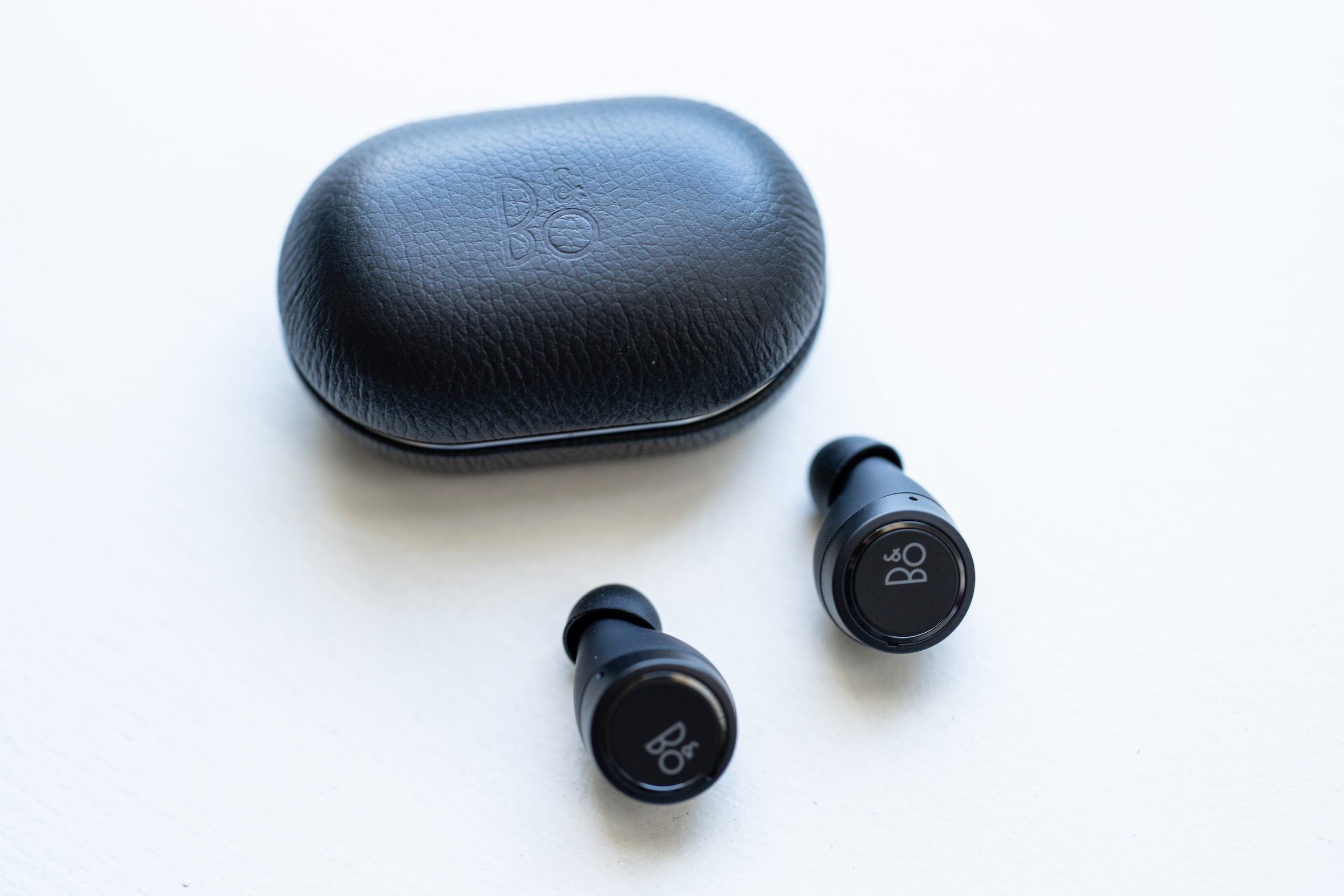
The design of the actual Beoplay E8 buds hasn’t changed much since the original version – but in this case, that’s a very good thing, because the original design has remained one of my all-time favorites for fully wireless in-ear buds. You get a small, sleek bud with a rounded face and touch-sensitive surfaces for manual control.

B&O have made some updates to the design, including getting rid of a irregular nub that stuck out somewhat from the otherwise circular sides of the original, and on the black version I tested, what was once an inner silver-colored metallic accent band on the face now has a shiny black finish. The overall effect is to make them even more understated and attractive.
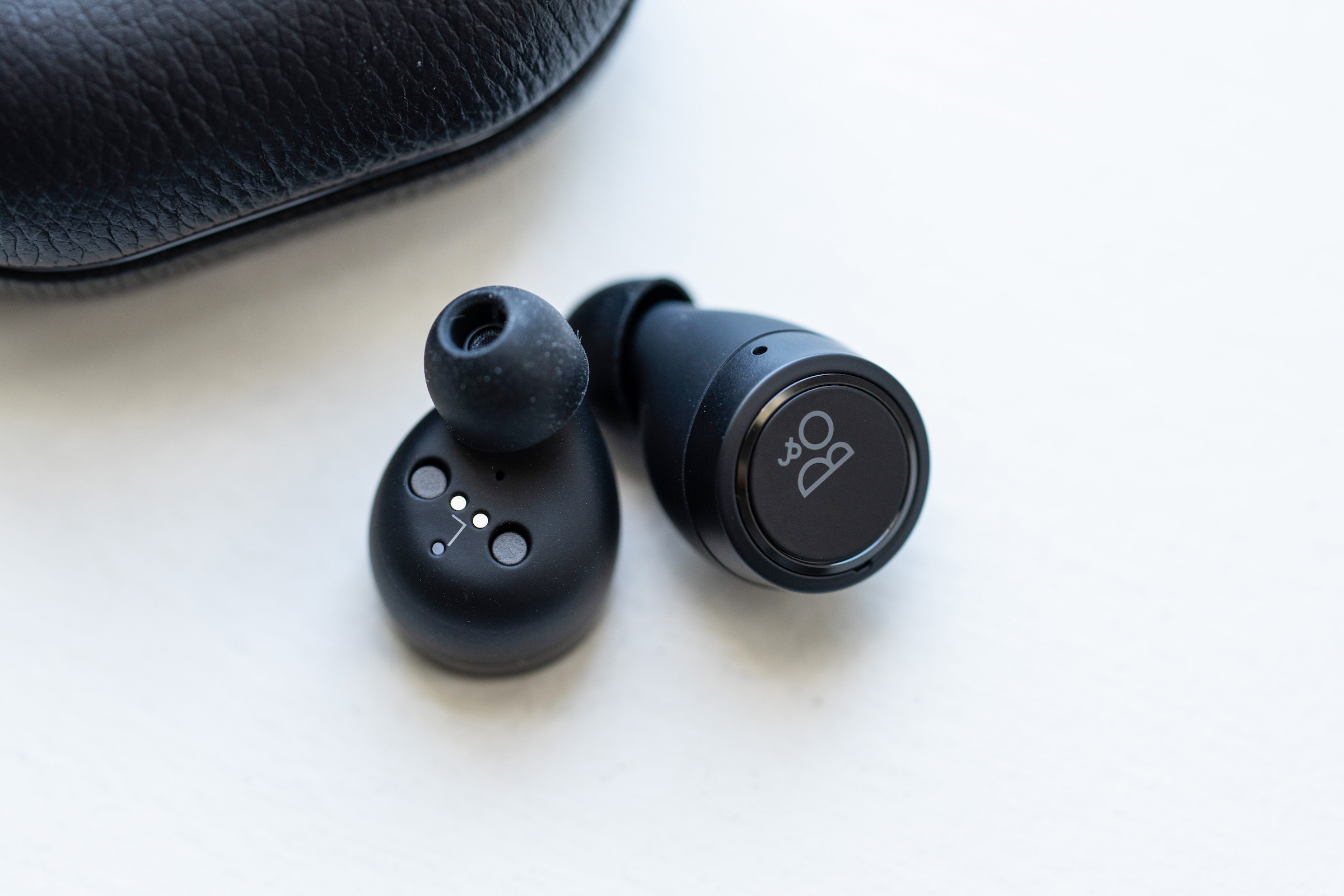
While the originals also offered great fit, in my use it seems like B&O have improved the physical design on that scale, too. Whereas before I would occasionally have to reseat one or the other of the buds to get a proper noise isolating seal, the E8 3rd generation seems to just fit properly one they’re in, no matter how long you wear them.

The last thing to mention regarding design is the case. It’s somehow both smaller and more pocketable than the case for the original, but also includes wireless charging so that you can set it down on any Qi-based wireless charging pad (the same kind that works with modern iPhones and Android devices) and have it charge both the case, which contains additional battery capacity for the buds (bringing total play time to up to 35 hours, per B&O), and the buds themselves. The case is wrapped in a pebbled leather finish that feels fantastic, and a magnetic clasp ensures it stays closed while in transit. Magnets also help you make sure your buds are properly seated in the case to charge.

Performance

The first point to make about the 3rd generation Beoplay E8 is that they sound fantastic. By just about every measure, they are the best-sounding wireless earbuds I’ve used, including the AirPods Pro and Sony’s WF-1000MX3, both popular options. The E8 manage sound separation and clarity that is sure to please even hardcore audiophiles, and they sound great regardless of what kind of music you’re listening to, but they excel with high-quality, lossless recording formats.

In terms of sound isolation, the Beoplay E8 are also outstanding performers. They don’t have active noise cancellation, but their passive blocking is extremely good at keeping out ambient noise. So much so that it’s good B&O included a transparency feature (accessible by tapping the left earbud) to pipe in ambient sound, which is great for when you want to be more aware of your surroundings. Sound isolation and comfort both get even better when you make use of the included Comply memory foam eartips that ship with the Beoplay E8, which is an excellent bonus since generally speaking, Comply tips require an additional purchase for just about every other set of earbuds.

The E8 is also a great headset for making calls, thanks to onboard mics that provide clear vocals mostly free of background noise. And because they feature both aptX and use Bluetooth 5.1, they’re also excellent for watching video and taking video calls on both mobile devices and computers, without any real noticeable lag.

Bottom line

Bang & Olufsen make premium products, and they come with premium price tags – at $350, the Beoplay E8 3rd Generation is no exception. But for that money, you’re getting premium build quality, great aesthetics and class-leading sound. For those who want the best audio possible in fully wireless buds, these are the ones to get. They’re fantastic for all-day wear for a work-at-home lifestyle, and offer great portability and sound transparency for taking with you on the go, too.


from iPhone – TechCrunch https://ift.tt/2ZFz2Eo

Bang & Olufsen’s latest Beoplay E8 fully wireless earbuds offer top sound and comfort

Bang & Olufsen has an excellent reputation in home audio, and its original Beoplay E8 fully wireless headphones were a category leader when there was barely a category to lead. The company recently launched the third version of the E8, a new generation of hardware that comes with a number of improvements for better audio quality and convenience, including wireless charging, up to seven hours of continuous use on a single charge, and the latest Bluetooth standards for improved audio quality, operating distance and latency.

B&O’s latest wireless headset is a must-have for sound quality enthusiasts as a result, providing all-day comfort and wearability, excellent passive sound isolation and rich, sophisticated audio performance that does a good job of rendering the low end but without sacrificing any detail at higher frequencies, either.

Design

The design of the actual Beoplay E8 buds hasn’t changed much since the original version – but in this case, that’s a very good thing, because the original design has remained one of my all-time favorites for fully wireless in-ear buds. You get a small, sleek bud with a rounded face and touch-sensitive surfaces for manual control.

B&O have made some updates to the design, including getting rid of a irregular nub that stuck out somewhat from the otherwise circular sides of the original, and on the black version I tested, what was once an inner silver-colored metallic accent band on the face now has a shiny black finish. The overall effect is to make them even more understated and attractive.

While the originals also offered great fit, in my use it seems like B&O have improved the physical design on that scale, too. Whereas before I would occasionally have to reseat one or the other of the buds to get a proper noise isolating seal, the E8 3rd generation seems to just fit properly one they’re in, no matter how long you wear them.

The last thing to mention regarding design is the case. It’s somehow both smaller and more pocketable than the case for the original, but also includes wireless charging so that you can set it down on any Qi-based wireless charging pad (the same kind that works with modern iPhones and Android devices) and have it charge both the case, which contains additional battery capacity for the buds (bringing total play time to up to 35 hours, per B&O), and the buds themselves. The case is wrapped in a pebbled leather finish that feels fantastic, and a magnetic clasp ensures it stays closed while in transit. Magnets also help you make sure your buds are properly seated in the case to charge.

Performance

The first point to make about the 3rd generation Beoplay E8 is that they sound fantastic. By just about every measure, they are the best-sounding wireless earbuds I’ve used, including the AirPods Pro and Sony’s WF-1000MX3, both popular options. The E8 manage sound separation and clarity that is sure to please even hardcore audiophiles, and they sound great regardless of what kind of music you’re listening to, but they excel with high-quality, lossless recording formats.

In terms of sound isolation, the Beoplay E8 are also outstanding performers. They don’t have active noise cancellation, but their passive blocking is extremely good at keeping out ambient noise. So much so that it’s good B&O included a transparency feature (accessible by tapping the left earbud) to pipe in ambient sound, which is great for when you want to be more aware of your surroundings. Sound isolation and comfort both get even better when you make use of the included Comply memory foam eartips that ship with the Beoplay E8, which is an excellent bonus since generally speaking, Comply tips require an additional purchase for just about every other set of earbuds.

The E8 is also a great headset for making calls, thanks to onboard mics that provide clear vocals mostly free of background noise. And because they feature both aptX and use Bluetooth 5.1, they’re also excellent for watching video and taking video calls on both mobile devices and computers, without any real noticeable lag.

Bottom line

Bang & Olufsen make premium products, and they come with premium price tags – at $350, the Beoplay E8 3rd Generation is no exception. But for that money, you’re getting premium build quality, great aesthetics and class-leading sound. For those who want the best audio possible in fully wireless buds, these are the ones to get. They’re fantastic for all-day wear for a work-at-home lifestyle, and offer great portability and sound transparency for taking with you on the go, too.


from Android – TechCrunch https://ift.tt/2ZFz2Eo
via IFTTT

Quibi inches toward usability by adding AirPlay streaming support

When it launched in April, Quibi carried the express mission statement of offering short-form videos designed to watch on-the-fly. The service’s narrow focus rubbed a lot of potential subscribers the wrong way, with many requesting a more traditional method for watching the service’s series.

Ultimately, Quibi’s launch was a disappointing one, with founder Jeffrey Katzenberg blaming the COVID-19 pandemic for the service’s rocky start. It was a strange assertion, given how other streaming services have thrived amid lockdowns. In the same interview, the exec also alluded to the addition of support for streaming to TV.

The move followed an earlier suggestion that the feature was already on the roadmap, though the pandemic and Quibi’s disappointing performance may have accelerated the launch of the feature, which honestly ought to have been present since day one. Quibi has just delivered on that promise by adding support for Apple’s AirPlay. That means iOS users can now stream Quibi’s frustratingly short content directly to their AirPlay-enabled sets.

Chief Product Officer Tom Conrad noted the change on Twitter, “Sure we designed Quibi for on-the-go, but these days visiting the family room is like a day trip… so AirPlay support is live for iOS in Quibi 1.3.” What’s more, support for Chromecast streaming will arrive next month, according to the executive.

Interesting that the news comes the day HBO is launching its eagerly anticipated Max service, the latest powerhouse in an already crowded streaming market. But it’s certainly nice to see the company continuing to evolve after what’s been mostly regarded as a disappointing launch. Now might we recommend doing something about show length?


from Apple – TechCrunch https://ift.tt/3eq67IG

Apple begins offering Macs with custom configurations in India

Apple is finally giving customers in India the ability to order customized versions of iMac, MacBook Air, Mac Mini and other Mac computers.

The Cupertino-giant has started to offer a full-range of the Mac portfolio with configure-to-order (CTO) or build-to-order (BTO) option in India, allowing customers in the country to request specific custom needs such as additional memory or storage when they purchase a computer.

Customers in India, a key overseas market for American technology giants, have long requested this feature, which Apple offers in several regions. Prior to this, Apple only offered select variants of its Mac computers in India and gave no option to customers to ask for specific upgrades.

Those interested can get in touch with their local Apple Authorized Reseller to discuss the various upgrade options, pricing information, and place the order. The options are also listed on Apple India website.

Apple is currently committing to deliver customized computers in four to five weeks from the time of order.

“This is a very huge deal,” said Preshit Deorukhkar, a Mumbai-based executive who closely tracks Apple development. “Previously, there was no real way to get a built-to-order or configure-to-order Mac in India. So you were stuck with the base models — say a Mac Mini or 13″ MacBook Pro with 8GB of RAM. Now that the company is officially offering this, you get the computer you want and the standard warranty on it.”

“The component upgrade pricing is still whack, though, like charging $400 to go from 16GB to 32GB for the RAM, but at least the option is available now,” he added.

The new move comes as Apple prepares to launch its online store in India this year and open its first brick-and-mortar retail store next year, as chief executive Tim Cook revealed earlier this year.

The company is still on track to launch its online store in India this year despite the coronavirus outbreak, a person familiar with the matter told TechCrunch.


from Apple – TechCrunch https://ift.tt/36wJ6RA